

The Culinary Faux Pas Bobby Flay Admits To Making Constantly
For someone who owns multiple restaurants, has hosted several cooking shows, and is often praised for his spectacular skill in the kitchen, you would think Bobby Flay doesn't make mistakes when he's in his element. The Food Network star knows how to build flavor-packed dishes, refuses to commit the "sacrilegious" practice of breaking pasta, and he has also mastered the art of making perfectly melted cheese on burgers. Despite his culinary expertise, however, Flay has admitted to making one food-prep mistake over and over again when cooking with chicken: he washes poultry before tossing it in the pan.
In a TikTok video shared by the Food Network, the celebrity chef is seen answering some of the most controversial questions about cooking, and someone asks if he rinses raw chicken before cooking. He confidently responds: "I wash my chicken before I cook it." While there's nothing wrong with upholding cleanliness when preparing food, there's a reason why food safety experts advocate against rinsing poultry.
A 2019 study done by the U.S. Department of Agriculture (USDA) found that rinsing chicken doesn't effectively remove harmful bacteria. In fact, the practice actually increases the risk of spreading contamination in the kitchen. Modern food processing standards already ensure that chicken is clean before it reaches consumers' homes, and the little bacteria left are killed off during cooking. Washing or rinsing the meat pre-cooking just spreads the bacteria in the sink or on the kitchen counter via splatters.
What the USDA recommends for preparing poultry safely
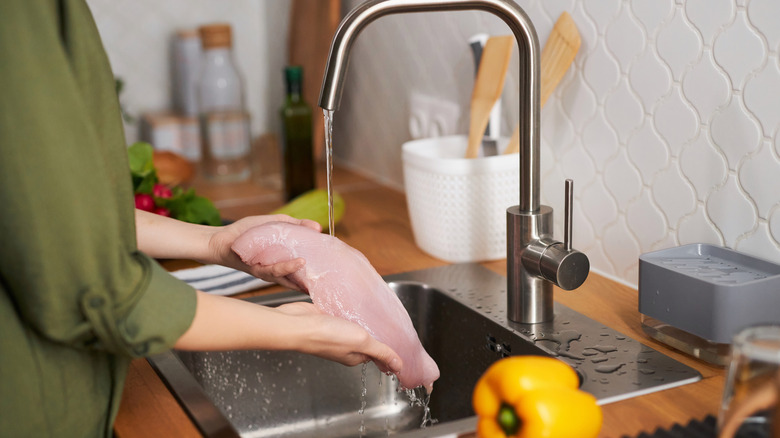
Bobby Flay isn't the only celebrity chef who washes raw chicken. His fellow Food Network star, Antonia Lofaso, has also openly admitted to rinsing poultry when she's preparing food in the kitchen. But while doing so may feel like a good idea, the USDA has made it clear that it is one of the common mistakes people make when handling raw chicken. This is mainly because the bacteria that thrive on poultry, including Salmonella and Campylobacter, can't be washed away with water. They need to be destroyed by heat during the cooking process. Therefore, the USDA is pushing for safer preparation practices instead of washing.
The agency has created a three-pronged approach for handling raw chicken. First, prepare any food that does not need cooking, like salads or raw vegetables, before handling poultry. This aims to prevent cross-contamination. Next, wash your hands thoroughly and sanitize every surface that has come into contact with the chicken or its juices. The liquid from chicken can spread bacteria, so thoroughly clean any surfaces where it has spilled or splattered. Finally, use a food thermometer when cooking chicken to ensure that its internal temperature has reached at least 165 degrees Fahrenheit — the ideal temperature needed to eliminate harmful bacteria and ensure that your food is safe to eat.