

11 Different Types Of Cabbage And How To Use Them
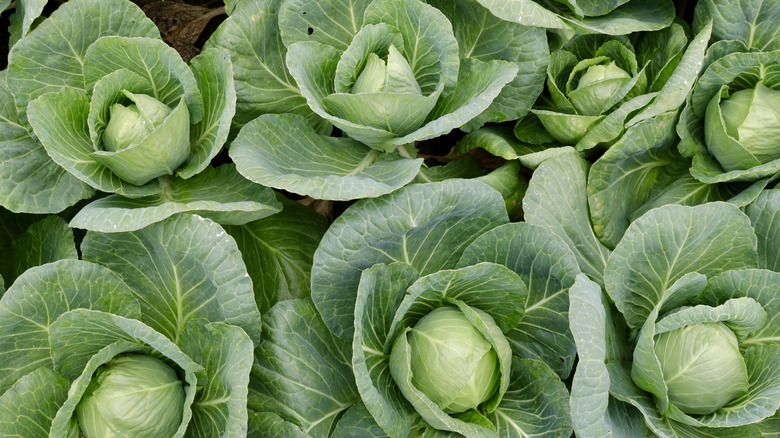
The green cabbage can easily be confused with iceberg lettuce at a passing glance. Both of them sport leafy green profiles that are commonly used in salad dishes. However, upon closer inspection, these two vegetables have far less in common than they appear. Lettuce is part of the Asteraceae family, while cabbage is part of the Brassicaceae family of plants. Based on this fact, lettuce actually has more in common with artichokes and sunflowers than with cabbage, as they are part of the same Asteraceae family. Cabbage also has thicker and stronger leaves, perfect for recipes that aim for crunchiness, such as coleslaw.
Cabbage is also considered a superfood, aka a food that packs a real punch in nutrients and vitamins. Due to its nutritional value and the fact that it's low in calories, sugars, and sodium, incorporating more cabbage into your diet is a health-conscious decision. But, of course, this begs the question of where to even start with adding this type of vegetable into your meals, and how you can make cabbage more exciting. There's nothing worse than having that slowly wilting head of cabbage staring you in the face each time the fridge is opened, with no idea of how to use it.
The answer to this depends on the type of cabbage purchased, as there are more varieties of this vegetable out there than you might think. Some of the additions on the list may even already be sitting in your fridge, their cabbage heritage unknown.
Napa cabbage
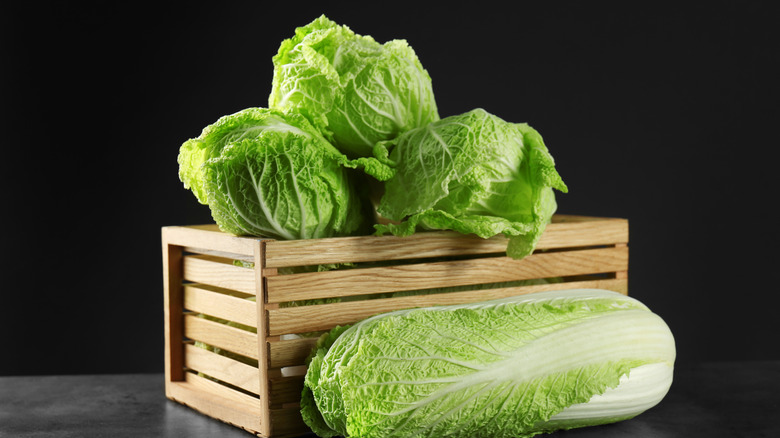
Napa cabbage goes by several names, such as wong bok, Chinese white cabbage, and celery cabbage. This yellow-green cabbage with white stems originated in China and is believed to be a naturally occurring hybrid between turnip and bok choy. It was first farmed in China over 1,000 years ago, and the cabbage spread quickly to Japan, though it was first brought to the U.S. in the 19th century. It is taller and thicker than the run-of-the-mill green cabbage, with a less rounded and more oblong shape.
The taste of napa cabbage is mild with a hint of sweetness, similar to the flavor of celery. It is a versatile addition to plenty of recipes as it can be eaten raw, grilled, stir-fried, or even boiled. It is commonly added to stir-fries and dumplings. When finely chopped, it can be used as stuffing for steamed buns, spring rolls, and even fried to make a pancake. It is also used as one of the main ingredients in baechu kimchi, a popular dish in Korea created from fermented cabbage. Trader Joe's actually sells its own kimchi created from napa cabbage, but based on the reviews, creating your own will be far more satisfying.
Green cabbage
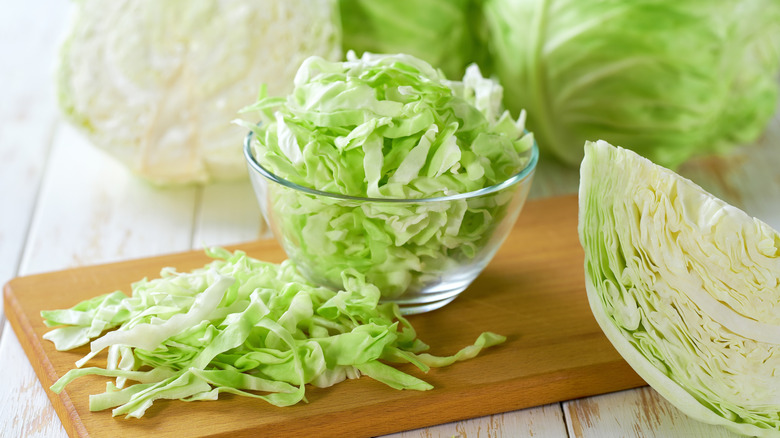
Green cabbage is a well-known type of cabbage, and one typically found in most grocery stores. It originated in southeastern Europe and central Asia and was a popular food item as far back as ancient Rome and Egypt. It is believed that green cabbage has been cultivated as food for thousands of years, with it serving as a core food item throughout history in the likes of Ireland, Russia, and Germany. Green cabbage is spherical in shape, with leaves that overlap tightly around each other to create a round head of cabbage. This appearance inspired its alternative name: cannonball cabbage. Green cabbage has a mild, sweet, and peppery flavor.
This type of cabbage is commonly eaten raw, cooked, or pickled and can be roasted, stir-fried, grilled, or even juiced. When shredded, green cabbage is often used in sauerkraut and is considered one of the best types of cabbage to use for creating American coleslaw. Its leaves can be swapped out for bread and used for sandwiches and hamburgers, or even used to wrap cabbage rolls. Green cabbage is also a great go-to option to accompany corned beef, a dish often enjoyed on St. Patrick's Day, made from simmering a brisket that has been pickled in a spiced brine, as the texture and taste of cabbage are complementary to the beef.
Purple or red cabbage
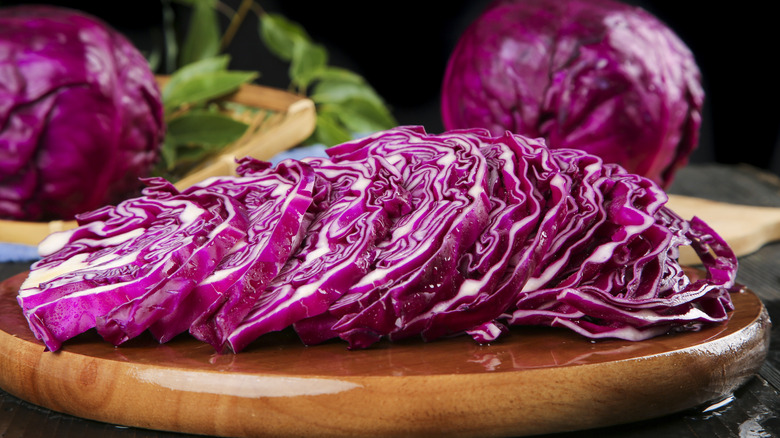
Purple cabbage is one of the more aesthetically pleasing cabbage varieties with its unique and vibrant coloring. The color of this vegetable is caused by an unexpected reason; it changes color based on the amount of acid in its environment. This is why it also goes by the name red cabbage, and can change coloring when cooked, taking on a much less appetizing blue-gray hue.
There are several methods of cooking that will maintain the color for those who want a pop of purple in their meal, which work by maintaining the correct level of acidity. Some of these include tossing in apple cider vinegar and then baking, or adding lemon juice or red wine vinegar after sautéing.
Purple cabbage is very similar to green cabbage in terms of its shape, size, and the dishes for which it is used. This raises the question of whether there is a true difference between green and purple cabbage. The main difference, besides the color, is in the vitamin content. Purple cabbage contains more vitamins E, C, and beta carotene. It can be eaten raw, pickled, braised, or used in stir-fries and is often chosen to add a burst of color to dishes such as coleslaw and salads. It can also take center stage at a dinner just fine when added to soups, rice dishes like risotto, or used in cabbage steaks.
Savoy cabbage
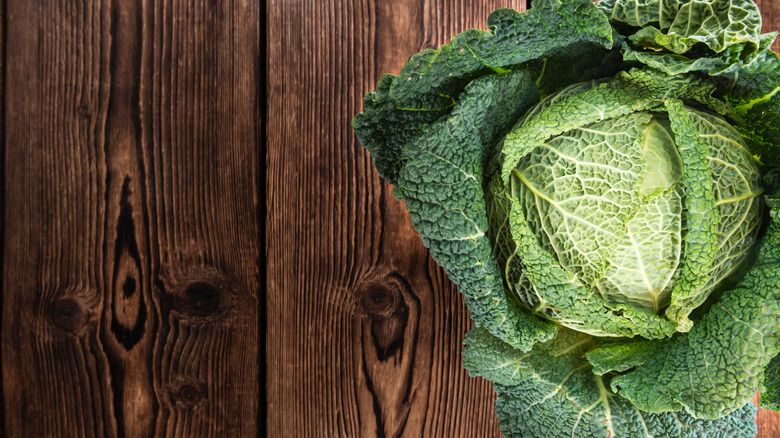
Savoy cabbage has a spherical head, surrounded by crinkled, soft green outer leaves, with inner leaves that appear slightly more yellow with a more crispy texture. The leaves are thinner than those found on green cabbage and have prominent veins, which provide a lumpy texture.
Like plenty of the other cabbages out there, it goes by many names around the world, including curly cabbage and blistered cabbage. Comparatively, the flavor of Savoy cabbage is considered milder than regular green cabbage, with a heightened hint of sweetness. The name Savoy cabbage actually reflects its origins, with the cabbage thought to hail from the Savoy region of France.
Savoy cabbage can be braised, steamed, boiled, or served raw. As its outer and inside leaves differ in texture, they are often used for different things. The outside leaves are better suited for wraps, such as wrapping around grains or meat. The inner leaves hold up better during braising, stir-frying, or sautéing. It can be shredded and added to salads, or, when thinly sliced, used to make sauerkraut. The Savoy cabbage is often incorporated into cream and cheese sauces or turned into cabbage rolls in Europe. It is also commonly used in a traditional Italian stew called cassöeula, which is created from pork and cabbage and is particularly popular in Milan.
Bok choy
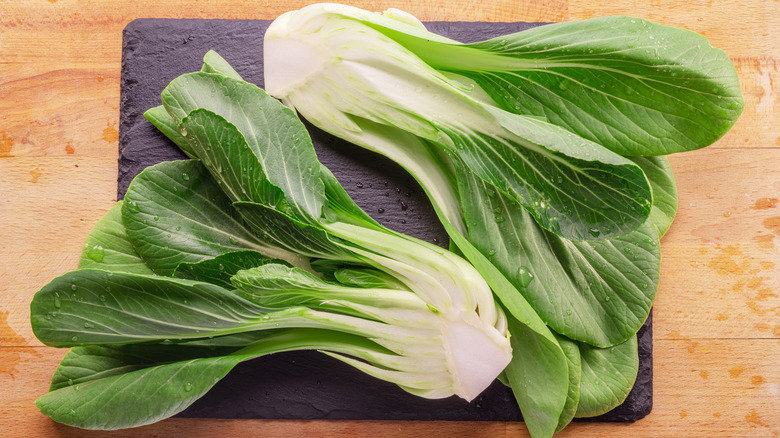
Bok choy is a vegetable that originates from China and has been used throughout history as both a cooking ingredient and an aid in traditional Chinese medicine. Some of the other names this vegetable goes by are pak choi and spoon cabbage. The shape is more unique than the previous listings, with leafy stalks growing from a rounded base as opposed to the typical circular shape. Bok choy is also sold in miniature versions, which are the same vegetable, just harvested earlier than its full-grown counterpart. Both the stems and the leaves are edible, with the flavor considered mild and slightly bitter.
Bok choy can be stir-fried, grilled, steamed, braised, or sautéed. In Asia, it is common to add a dash of soy sauce, sesame oil, oyster sauce, or scallion oil to the vegetable once it has been cooked for additional flavoring. It can be added to soups, rice dishes, and curries, or even finely chopped and added to dumpling filling. Grilled bok choy is also an easy-to-make and flavorful side dish, especially when paired with toasted sesame oil, sweet chili sauce, and salt. Although both parts of bok choy are edible, it is recommended to slice apart the stems from the greens and keep them separate. The stems cook more slowly than the leaves and are often blanched in an attempt to soften them before they're added to a dish.
Brussels sprouts
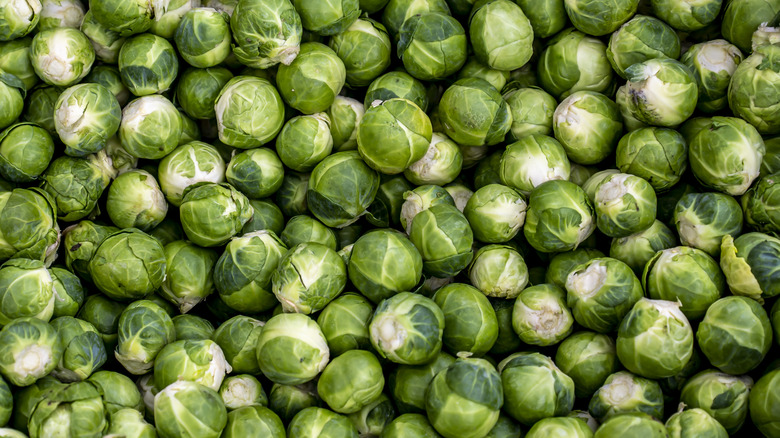
There is no doubt that Brussels sprouts look like baby green cabbage, with their round shape and overlapping leaves. It's easy to see how this resemblance could lead you to assume that they are green cabbages harvested before maturing fully, as happens with baby bok choy, but this is not the case. Brussels sprouts actually grow in bunches along the thick stalk. Green cabbages, on the other hand, have one head that grows close to the ground with a short stem. While Brussels sprouts are not just the premature version of green cabbage, they are part of the same species of plant called Brassica oleracea, making them a relative.
Brussels sprouts are considered both denser and more bitter in taste than green cabbage. This bitter taste is what makes them slightly more undesirable for consumption when raw, but there are numerous options for cooking them. They can be steamed, fried, boiled, grilled, and roasted, to name a few. They can make a great side dish when roasted in the oven with a drizzle of oil and a bit of salt, as the roasting process brings out the sweetness in the vegetable due to the caramelization process.
Broccoli
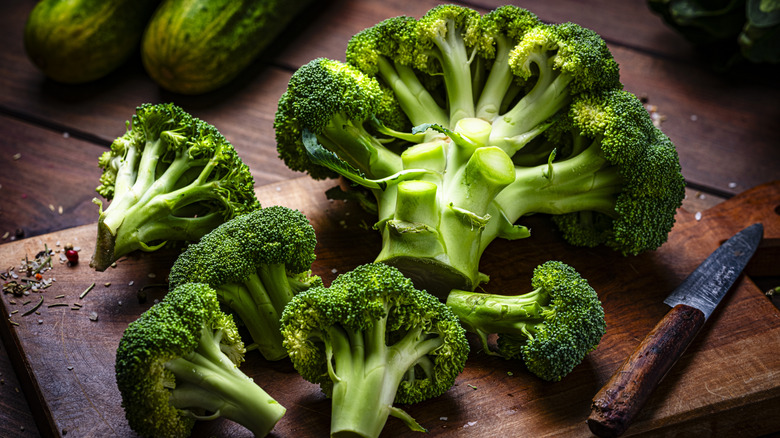
This might come as a surprise since it looks nothing like your typical cabbage head, but similar to Brussels sprouts, broccoli is also a member of the Brassica oleracea species, making it a relative of the green cabbage. Crops of broccoli were first cultivated during the time of the Roman Empire, with the vegetable later brought to England and America in the 1700s. Thomas Jefferson himself experimented with growing broccoli in the late 1700s, but it did not become a commonplace food in the U.S. until the 1920s. Today, broccoli is very popular throughout the U.S. and was even chosen as America's favorite vegetable in a 2021 poll by Green Giant.
There are numerous ways to prepare broccoli. It can be blanched, steamed, sautéed, and roasted, to name a few. For a quick and easy side dish, it can be steamed either by using the microwave or the stovetop, and sprinkled with salt, pepper, olive oil, and lemon juice. It can be eaten raw and is an integral part of countless veggie snack trays everywhere, often with a dipping sauce. Broccoli can also be thrown in as an addition to stir-fries, pastas, soups, and even quiches.
Choy sum
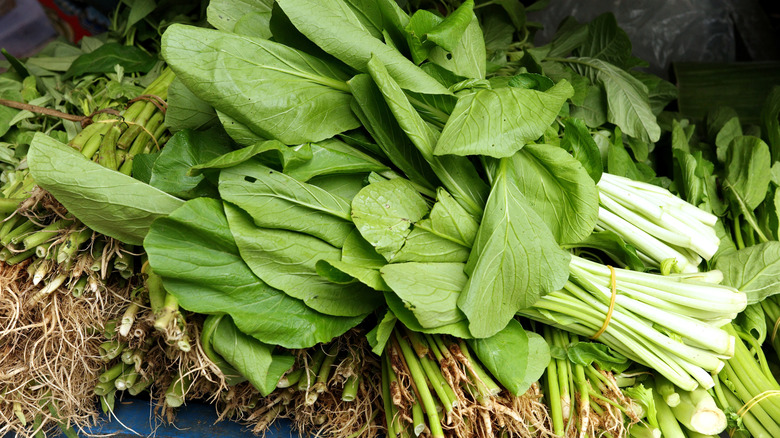
Choy sum, like some of the others on the list, may not strike you as a cabbage at first sight. However, it is part of the Brassicaceae family, also known as the cabbage family. It originated in China and has been cultivated for centuries. Today, it is quite popular throughout Asia, commonly used in side dishes. Choy sum — also known as yu choy – features flat and deep green leaves. The plant produces bright yellow flowers, which are edible along with the stems and leaves.
The taste of choy sum is said to be similar to that of spinach. It is well-suited for light cooking methods such as stir-frying, sautéing, blanching, or steaming, or can be eaten raw when used in salads. In Asian dishes, it is often used as an addition to soups, noodle dishes, or even stir-fried along with sauces or chicken broth, with the latter used instead of water to add a more umami flavor. A pesto can be made from the vegetable, which can then be served in conjunction with wagyu beef and potatoes. It is also a popular inclusion in a Cantonese dim sum meal.
Conehead cabbage
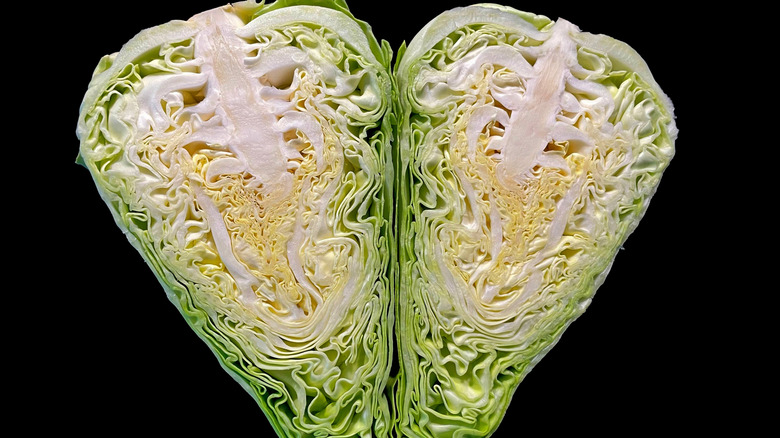
As you can probably picture from the name, conehead cabbage is shaped like a teardrop with a rounded bottom and pointed top. Some of the other names for conehead cabbage are pointed cabbage, sugarloaf cabbage, and arrowhead cabbage. The further inside the cabbage you go, the lighter the color of the leaves, going from a vivid green hue to a much lighter shade. The leaves are considered on the thinner side, with a mild sweetness in taste, and are considered more tender than many other types of cabbage.
Some popular methods for cooking conehead cabbage are steaming, roasting, or grilling. This type is often used for sauerkraut, shredded for salads, or used in types of slaw. It is also commonly used as a topping in Mexican dishes such as tacos and burritos. You can swap out the napa cabbage in kimchi for conehead cabbage, as it makes a great substitute for the dish. Wedges of conehead cabbage can be baked in the oven with a bit of salt and olive oil for a quick and easy side dish. The possibilities for this cabbage seem endless, with it easily being added to a casserole, soup, curry, or even rolled into a wrap.
Black Italian cabbage
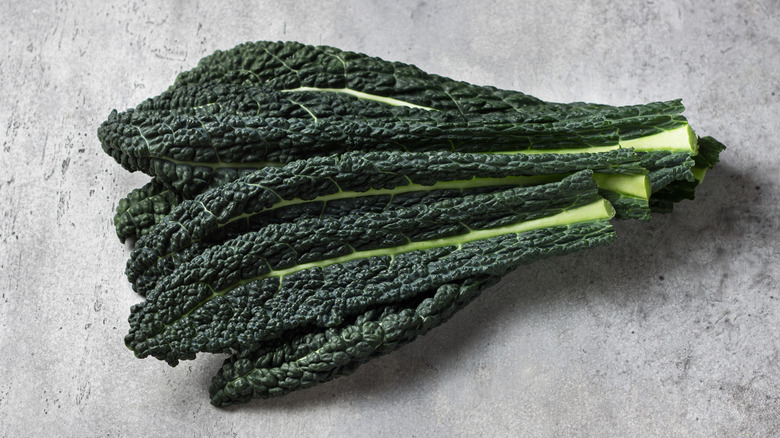
Black Italian cabbage also goes by several names, such as dinosaur kale, Tuscan cabbage, or its Italian name, cavolo nero. The appearance is unique in that its leaves have a bumpy texture, and the color is so dark green that they almost appear black. Despite the name having cabbage in it, this is actually a type of kale. Yes, this means kale is a relative of the headed cabbage as well, with both of them belonging to the same Brassica oleracea species. In fact, another name for kale is leaf cabbage.
Described as both tangy and bitter in taste, with a hint of sweetness in the aftertaste, black Italian cabbage can be boiled, steamed, baked, braised, or stir-fried. As it's a type of kale, it can be used in the same ways regular kale is, such as used as a topping on pizza, or as an added ingredient in stews or pasta dishes. The vegetable can be eaten raw, but its leaves are tough. Tenderizing the leaves prior to tossing them in a salad can make a huge difference by adding some olive oil, salt, and either lemon juice or vinegar. Black Italian cabbage is also a popular choice for the traditional Tuscan dish ribollita, a soup born of the desire to use up leftovers.
Curly kale
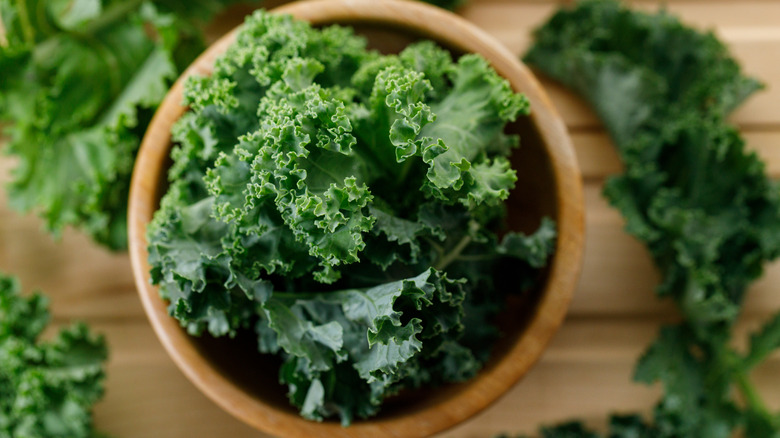
Before it became such a widespread phenomenon in the food world, kale was mainly used as a garnish — or, if we're being honest, for decoration on the salad bar at Pizza Hut. However, over the last decade or so, kale has gained popularity as consumers become more health-conscious and learn about its superfood status. This brings us to today, where curly kale is the most popular type of kale in the U.S. and is found in the produce aisle of most grocery stores. Curly kale is part of the Brassicaceae family, just like its cousin, the black Italian cabbage, keeping it a part of the cabbage family. Its flavor is considered peppery and bitter.
Curly kale can be steamed, roasted, eaten raw, or fried. Kale chips can be made from curly kale, or they can be tossed into a salad. Steamed curly kale can make a lovely side dish, or when chopped into small pieces, it can be mixed with mashed potatoes. True to its history in the restaurant business of being a garnish, it can also be used as an aesthetic topping when sprinkled on top of soups or pasta. And of course, curly kale can be blended into an ever-popular kale smoothie when the stems are removed.