

12 Things People Hate About Shopping At Aldi
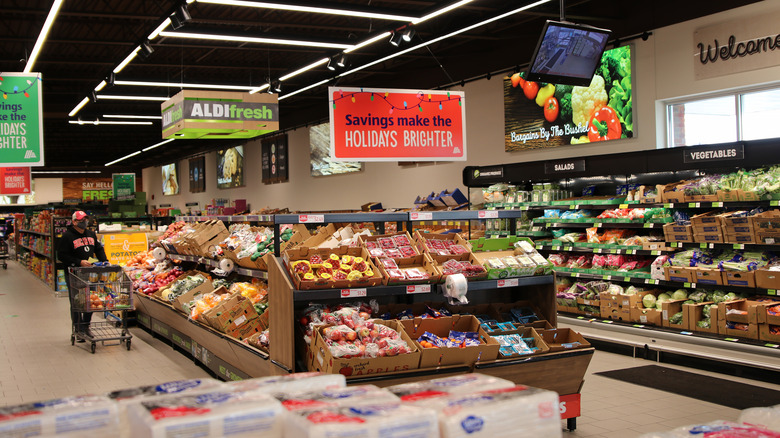
Some retail chains boast a significant fan base, and Aldi is one of them. You'll find Facebook groups, subreddits, blogs, and more all dedicated to shopping at Aldi and using Aldi products. People love the Aldi "dupes," those products which are emblazoned with one of the chain's in-house private label brands, but that some shoppers suspect are actually name-brand products in different packaging. Fans bemoan discontinued products, and rave about their favorites. Devotees flock to stores the second these items are in stock, and buy anything in-demand before it's gone. They'll even passionately defend the beloved grocery chain in internet arguments.
However, for all the love that Aldi gets, it's not 100% perfect. While the online noise is generally positive, you'll find some very dissatisfied customers if you dig a little deeper. In fact, some believe the very elements that make Aldi what it is — and the business decisions that allow the chain to offer lower prices than its competitors — are the very source of Aldi's decline. Whether you fall into the pro- or anti-Aldi camp, see if you agree with the things that customers absolutely hate about shopping there.
Aldi's produce can be poor quality
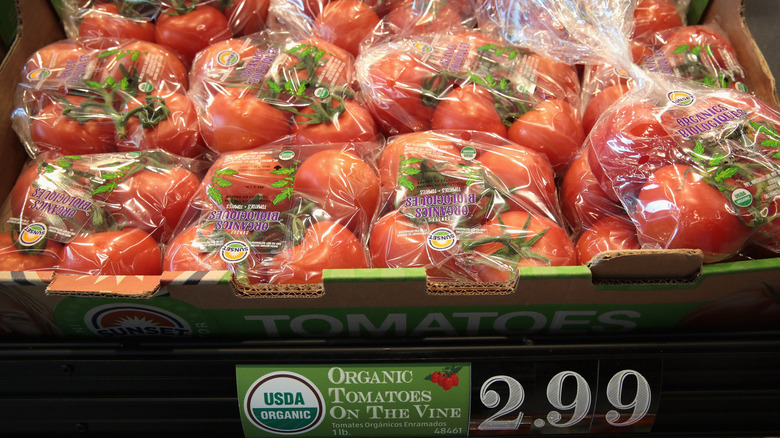
While some frequent Aldi shoppers claim that the produce is a great deal, others believe that the fruits and vegetables aren't quite as reliable as you might hope. This is for a few reasons. One is that some Aldi stores don't refrigerate certain produce items that other grocery stores might. This means that produce goes bad faster, especially since certain items can have dramatically extended lifespans with refrigeration. For example, lemons will decline in quality after about a week when kept at room temperature. Meanwhile, they'll last up to six weeks in the fridge.
Another reason why Aldi's produce might not be the best quality is that its fruits and veggies are often only sold in bulk packages, rather than individually. This too can make items go bad faster. For example, potatoes deteriorate in quality more rapidly if they're kept in their plastic bag long-term, as the plastic traps moisture.
If you absolutely want to buy your produce at Aldi, some employees recommend stopping by specifically on days that items are restocked. Though some say that Aldi restocks its produce daily, the veracity of that fact is up for debate.
The small store sizes make for crowded shopping

Aldi stores aren't known for being particularly large. Typically, you'll walk in and find that there are only a handful of aisles. In general, the average Aldi store measures in at around 16,000 square feet. Comparatively, a big chain supermarket will be four times that size. This small footprint results in a few benefits. The stores are more affordable to run, and Aldi can pass those cost-savings along to the consumer.
However, it also results in one big downside. Aldi stores can get pretty packed as all those customers try to cram their way into a relatively small space. This leads to a very chaotic and overstimulating experience for those who want to browse at their leisure, or who aren't terribly familiar with the store's layout.
According to some Redditors, these crowds can get a bit rowdy — if not fairly inconsiderate. These posters report finding products such as frozen food abandoned where it's not supposed to be, as well as carts scattered in the parking lots, and a general lack of care for the store or fellow shoppers.
Aldi stocks a limited inventory
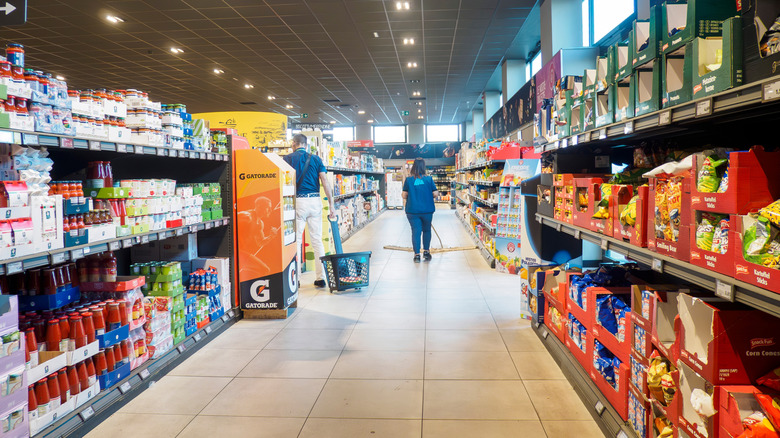
Since Aldi stores are so much smaller, you won't find the same expansive number of options that you would in a Walmart or Target. There's no entire Aldi aisle dedicated to cereal or soda. Instead, you'll get a handful (if that) of options and have to work with what's available. While some shoppers are totally fine with this, others prefer to have those extra options available. In fact, they find the lack of options creates the need to go to another grocery store, complicating their shopping rather than allowing them to purchase everything they want in one spot.
It's important to note that some customers say the extra work of going to multiple stores is worth it, if this means they save money by picking up whatever they can at Aldi. Aldi itself reports that the chain can save shoppers up to 36% on their grocery bills, which averages out to about $4,000 per year for a family of four. The company additionally claims that it saves shoppers more than $8 billion per year in total, with the biggest savings seen in produce, meat, and bakery items.
Needing to have a quarter on hand for carts
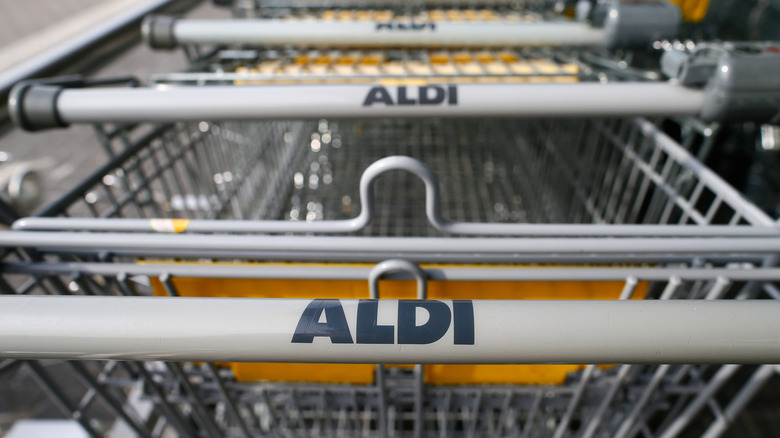
People just don't use cash or coins all that much anymore. The Federal Reserve reports that consumers currently only use cash for 14% of their purchases, and with the penny on the way out, it's likely that coin usage will only decline further. As such, if you show up to Aldi and need a cart — but don't have a quarter on hand — it wouldn't be all that surprising. However, it would be plenty annoying.
Sure, you can try to poach a cart off another shopper. That can be awkward though, and enough to turn off even the least introverted among us. Employees say you can also ask a cashier for a quarter, and return it at checkout ... but if asking to borrow a cart is too much, you may not care for this option either.
That said, why does the Aldi quarter process even exist? It's yet another way that the chain cuts costs, so it can pass those cost-savings on to you. As customers are incentivized to return their carts to the front of the store to get their quarter back, the chain doesn't need to pay a staff member to wrangle all those carts from the parking lot.
Aldi keeps its staff at a minimum
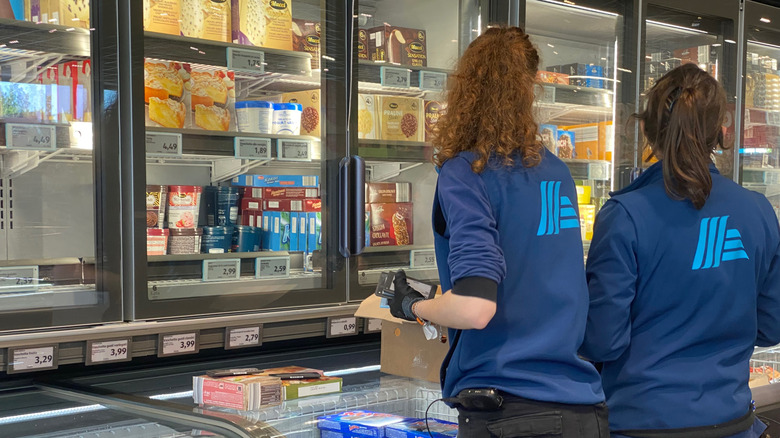
Just as you won't find an Aldi staff member herding carts in the parking lot, you also won't find that many staff members in the store itself. Again, this means fewer costs for Aldi and cheaper groceries for shoppers. In fact, you may only see two or three people working at an Aldi at any given time. You might only have one individual working the cash register (with self-checkout options available), and one person working to stock shelves. The stocking at Aldi is pretty simple too, thanks to the minimal displays and the fact that a lot of products are kept in shipping boxes or on palettes.
However, some say that this leads to a lot of frustration for shoppers. Customers who prefer to avoid self checkout might end up waiting in massively long lines. Additionally, if you ever need help or have a question, you're not exactly going to find an extra employee readily available to assist.
Items are frequently discontinued
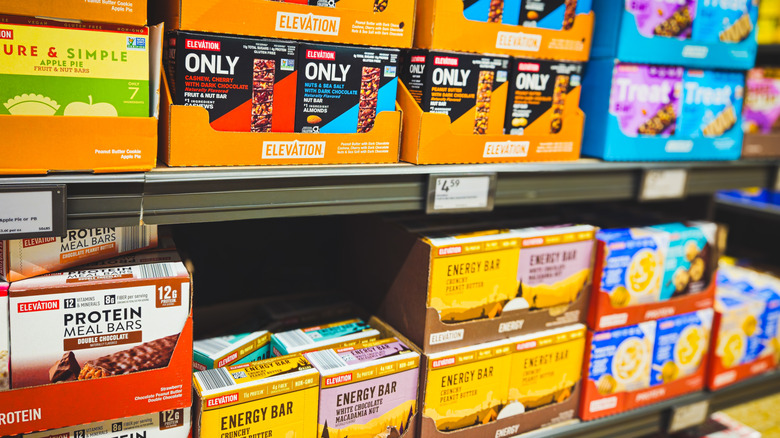
It's no secret that Aldi has a continually rotating door of specialty products. Yes, you can reliably find some basic items at the store, but there are many items that come and go seemingly on a whim. If you want them, you'd better act fast.
This, of course, is a big problem for anyone who falls in love with a product which disappears a few weeks later. Plus, there's really no telling when or if a product will come back at all. For example, Aldi's Specially Selected Creamy Wonton Crispy Stuffed Shrimp is (in addition to a mouthful) a seafood appetizer that shoppers can't get enough of — but it's only been available briefly in 2022, 2024, and twice in 2025. It's currently unavailable as of late 2025.
Beyond items being discontinued, there's also the issue of an item's flavor and ingredients being changed in a noticeable way. Redditors mourn the loss of the chain's original versions of Fiber One dupes, water enhancers, and fruit snacks. Additionally, many note that Aldi has specifically discontinued swathes of items in particular categories — such as vegetarian options and infant products.
The Aldi product dupes are unreliable
Some Aldi dupes are exceptionally good, and taste like the real deal. In these cases, you'd think that you're eating a brand-name product that would cost significantly more. However, by and large, Aldi dupes aren't reliable. When purchasing an item that's suspiciously similar to another well-known product, you may get a winner or a clear loser.
For example, among the Aldi dupes that are actually better than their name-brand counterparts, you'll find chopped salad kits, marinara sauce, naan, a Biscoff knock-off, a Laughing Cow knock-off, spaghetti, and brownie mix. In contrast, the dupes that fall short include honey, Irish butter, pre-biotic soda, and Prosecco. When you look more broadly at the items you should avoid at Aldi, the Doritos dupes and Pillsbury crescent dupes top the list, as well as the aforementioned reconfigured Fiber One dupes.
As such, it's difficult to gauge whether or not a dupe will be worth the buy without trying it first. There's no single category of food that's reliably good or bad, and customers end up either pleasantly surprised or woefully disappointed.
The stores have gloomy and grim interiors
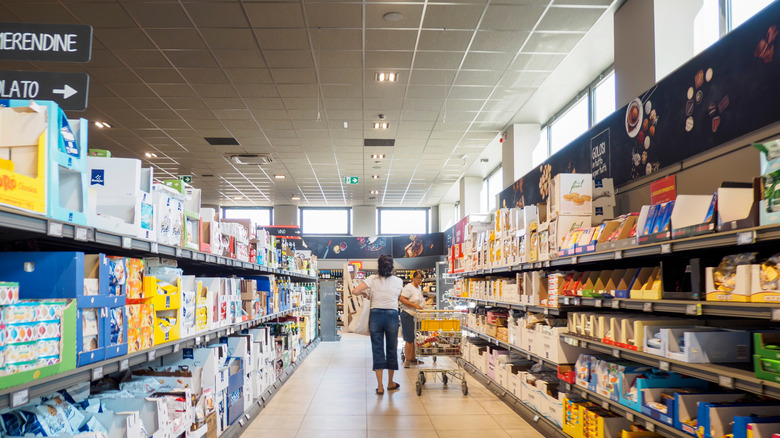
Few grocery stores feel like the happiest place on Earth, but you'll likely opt for a pleasant shopping environment if you're able to. Unfortunately, Aldi doesn't necessarily put "pleasant environment" at the top of its priorities.
We've already discussed how Aldi doesn't bother with fancy displays, and much of its inventory is left in boxes or on palettes. This definitely doesn't work in the store's favor, but have you also ever noticed that Aldi stores don't play any music? Once again, this is a cost-saving measure, as grocery stores must pay licensing fees to play music in public spaces. This can rack up to millions of dollars in costs every year, with chains paying anywhere from a few hundred to over a thousand dollars in licensing fees per individual store annually.
Elements like these are what prompted one Redditor to compare Aldi to the grocery stores of "Soviet-era Russian scarcity:" dimly lit, small, and sparse. Other shoppers chimed in, defending the Aldi aesthetic. They implied it's a nice alternative to the overly bright, overstimulating environment of a typical grocery store, but many others agreed with the original poster.
You have to bag your own groceries
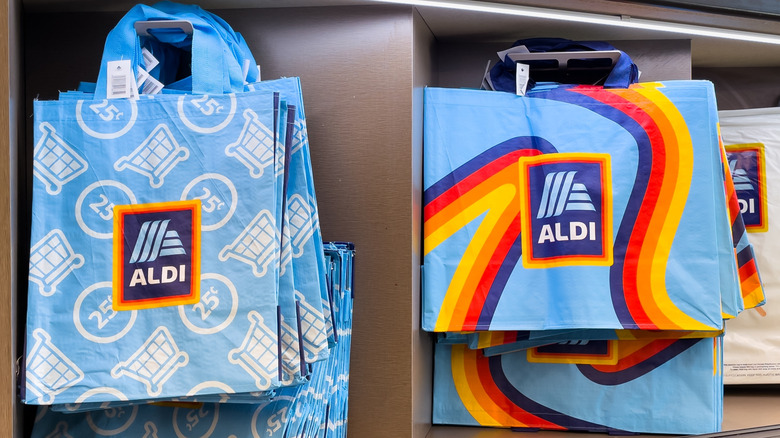
When it comes to bagging your own groceries in a self-checkout line, at least you can usually do so at your own pace (unless there's a line forming behind you, in which case you may very well start to sweat). However, if you've ever bagged your own groceries in a traditional checkout lane, then you've probably experienced the anxiety-inducing rush to bag all your items while the cashier moves through them at a rapid pace, arriving at your total before you have even half your purchases stowed away. This is the experience you'll have at Aldi, especially since Aldi cashiers are encouraged to move fast and memorize bar codes.
Aldi at least provides customers a separate bagging area in order to keep lines moving, but even that solution isn't ideal as these areas can crowd quickly. Then, if you didn't bring your own bags, you're left paying for the store's bags — another eye-rolling annoyance.
You can't trust Aldi's meat
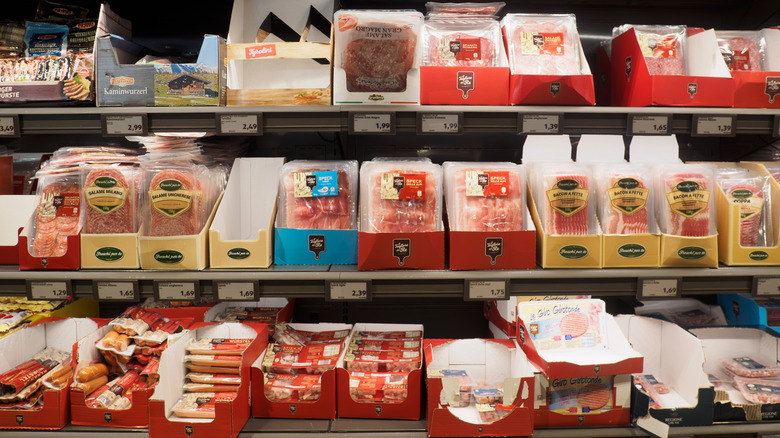
Look through any list of products to skip at Aldi, and you'll notice one item consistently mentioned: the meat. Whether it's lunch slices or other meat like chicken breasts, shoppers regularly report problems that prove why customers should avoid meats at Aldi.
The deli meat, for instance, isn't actually sliced in-house as Aldi doesn't have in-store delis. It comes prepackaged, and as such, its freshness is up for debate. Consumers have reported buying Aldi deli meat that ends up being way past its prime, and some even claim that they experienced food poisoning as a result of eating the deli meat.
The chicken breasts are less than ideal too, with many consumers reporting chewy, stringy, tough, and nearly inedible meat that's often linked to a "woody chicken" issue. Woody chicken is a term that refers to chicken breasts that are overly tough, an issue that often arises because the chicken itself grew too quickly. In other examples, shoppers report discovering bone shards in their boneless chicken.
Still, as with just about every Aldi complaint, this is one that differs depending on who you talk to. Some shoppers say they've never had a problem with Aldi meat, but just as many do, reporting poor texture, color, and overall quality across the board. You'll just have to decide for yourself if this is a purchase you want to risk.
You won't reliably find your favorite name brands

Aldi doesn't exclusively sell its own in-house, private-label brands. It also offers name-brand products, with the ratio of private-label to name-brand items being about 9/10. Often, these name-brand products are overstocked or discontinued items that Aldi can get for a lower price. As such, if there's a name-brand item that you have your heart set on buying, you probably shouldn't look for it at Aldi.
That said, some shoppers report they've seen more name brands in Aldi stores — and they're also seeing the higher prices that come with those name brands. This probably won't be a trend though, especially as Aldi announced a big 2026 rebrand which will double-down on its in-store offerings and see the Aldi logo added to just about all of those private labels. Omitted are a few well-known private label brands that consumers have become accustomed to, such as Clancy's, Simply Nature, and Specially Selected. However, those brands will be still given the additional mark of "an ALDI Original" on each package.
Aldi has shorter store hours
It's always convenient to have a grocery store that's open at least the majority of the day, if not 24 hours. If you desperately need a snack at 11 p.m., or need to pick up some necessities before heading to work at 7 a.m., these stores will be there for you — unless that grocery store is Aldi. While hours may differ by location, Aldi typically isn't open for even 12 hours a day, which is another cost-saving measure. It's also a big inconvenience for many shoppers.
One Redditor noted their local store doesn't open until 9 a.m., which is later than they prefer to do their weekly grocery run. When arriving shortly before opening on Saturdays, they and other commenters report that shoppers actively wait in the parking lot for the doors to open. Meanwhile, many say their Aldis close at 8 p.m., with employees actively trying to lock the doors before that. In the chain's defense, Aldi employees were quick to point out that not only do these shorter hours make for cheaper prices, but also better working conditions. This is because employees have to arrive three to four hours in advance of opening to prep, as well as stay an hour or longer after closing.