

Old-School Lunchbox Juices That Were Actually Unhealthy
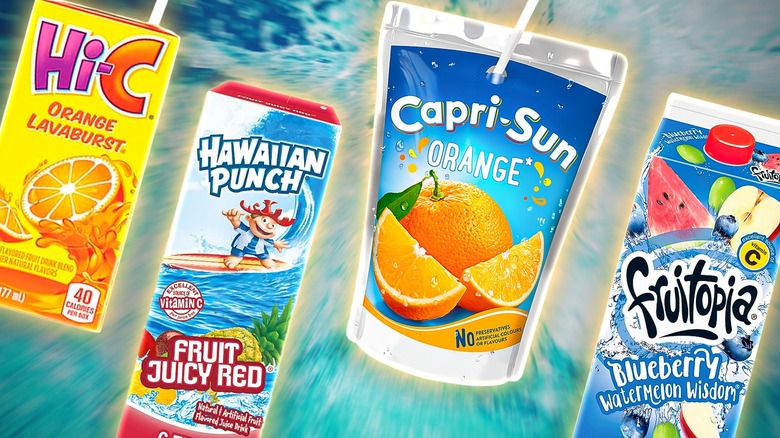
For many of us, opening a school lunchbox involved the momentary thrill of reaching past that good old PB&J sandwich, the requisite fruit roll-ups, and those Little Debbie snacks to grab that brightly colored juice box or pouch. These sweet, fruity drinks that daily graced our lunch pails sure felt like a treat, and with words scrawled across their labels promising pie-in-the-sky health benefits (like "100% vitamin C"), bolstered by cheerful mascots and fruit imagery splashed across the snazzy packaging, these sips were often seen as a far healthier choice than soda.
Sounds like sweet memories, right? Not so fast, because looking back with today's nutritional knowledge really is a hindsight 20/20 kind of deal. Sadly, behind the playful branding and fun, fruity names lurked shockingly high amounts of added sugar, artificial flavors, and preservatives. Some of these juices contained as much sugar as a candy bar or soda, making them more like a midday dessert bomb than a healthy lunchtime drink. And perhaps most disturbing? There was sometimes very little actual fruit juice inside!
While they may not have made our official list of retro foods that completely flopped, this nostalgic yet eye-opening list does look at old-school lunchbox juices that were actually unhealthy, revisiting the drinks that defined cafeteria culture and after-school snacks for an entire generation.
Kool-Aid Jammers
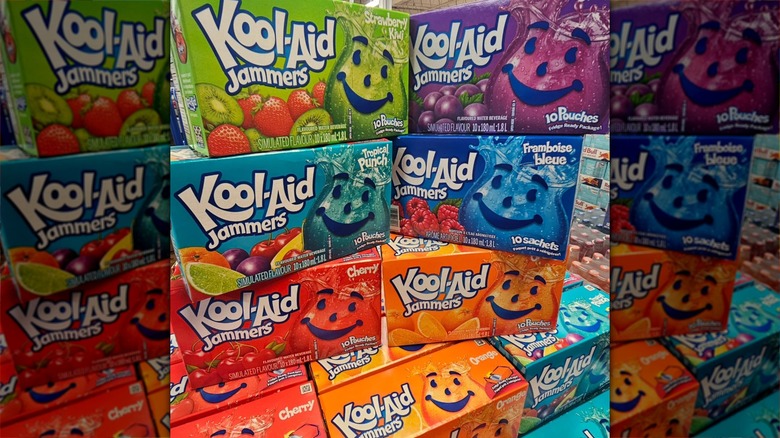
Nostalgia hits hard when thinking of the discontinued Kool-Aid flavors we'll probably never drink again. We can't help but remember the days when Kool-Aid Jammers were the ultimate lunchbox sip. We all loved that satisfying straw poke and the neon-colored sugar rush we got as we literally sucked all that crazy "juice" up!
Looking back in the cold light of day, it's time to unmask what actually lurked inside those nostalgic lunch juice pouches. Sadly, it is anything but "Kool". In fact, in 2011, each 6.7-ounce pouch packed up to a staggering 24 grams of sugar (that's equivalent to six full teaspoons in one go). Beyond the high fructose corn syrup, these drinks were also a cocktail of additives. We're talking artificial dyes like Red 40 and Blue 1.
The good news? Packing a "fun" lunch doesn't necessarily require a sugar bomb anymore these days. You can be a grocery store sleuth and find better swaps. (Think drinks with mineral-rich electrolytes or actual fresh fruit infusions). These give them that exciting flavor and "cool" factor without the synthetic flavors, corn syrup, or controversial colors.
Little Hug Fruit Barrels
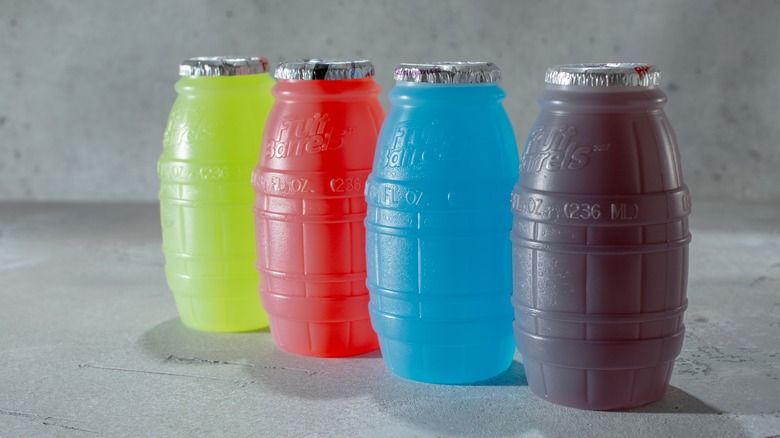
We best remember Little Hug Fruit Barrels for those flimsy little foil tops you basically had to bite open to access the sweet elixir lurking within their wee bellies. These little barrels really did feel like a drinkable hug, earning them a high ranking among the ultimate '90s lunchbox flexes! (Let's not lie, we know we all felt like kings chugging those miniature "juice" kegs like the rock stars we totes believed we were.)
But we have bad news. Despite the "fruit" mentioned in its name, these barrels – which are still around today — are basically just processed cocktails of water and high-fructose corn syrup. Even the fact that they are low-calorie isn't the win you think. Studies suggest that some artificial sweeteners – such as sucralose, which is used in Little Hug Fruit Barrels — may actually trigger an increase in your appetite. Some research suggests that sucralose may also increase inflammation.
The ingredients list for Little Hug Fruit Barrels is as colorful as you'd expect. Literally. Those bright little barrels from our beloved memories actually gain their hues from artificial dyes, such as Red 40, Blue 1, and Yellow 5. They also contain the preservative sodium benzoate, which can react with vitamin C under certain conditions to create small amounts of benzene, which is a known carcinogen. Combined with the increased risk of dental cavities that comes from regularly consuming these kinds of beverages, these barrels pack a punch that's anything but a "hug" for your health.
Fruitopia
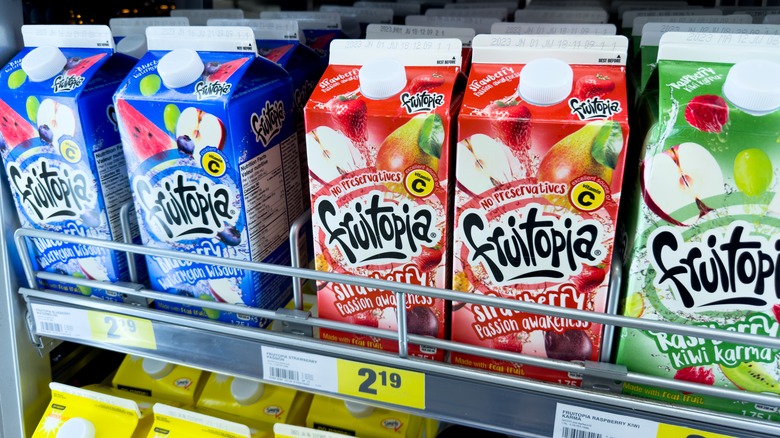
If you have ever wondered what happened to Fruitopia, the discontinued drink that ruled the '90s, then you are in the right place. Who could forget the iconic psychedelic swirls of Fruitopia? In the mid-1990s, Coca-Cola launched this beverage to rival the then-wildly popular Snapple, thus filling school vending machines with a promised paradise of flavors, like Strawberry Passion Awareness and Kiwiberry Ruckus. Because the name sounded natural (after all, it says fruit right there in bold print), many schools actually permitted Fruitopia machines while banning soda, believing they were offering students a healthier alternative.
Well, little did we know that this promised drinkable "utopia" was a total misnomer. It was essentially colorful sugar-water disguised as fruit juice. Despite the trippy branding aimed at teens, Fruitopia was really nothing much more than a faux-aspirational, drinkable dessert. It was loaded with massive amounts of sugar, making it just as sweet and processed as the soft drinks it was attempting to replace.
While the labels boasted happy, cool imagery of actual fruits, the drink (which was discontinued in the U.S. by 2003 but is still available in Canada) itself used juice concentrate. Juice concentrate lacks much of the natural fiber and some nutrients found in whole fruits, and is more likely to spike blood sugar levels as a result.
Capri Sun
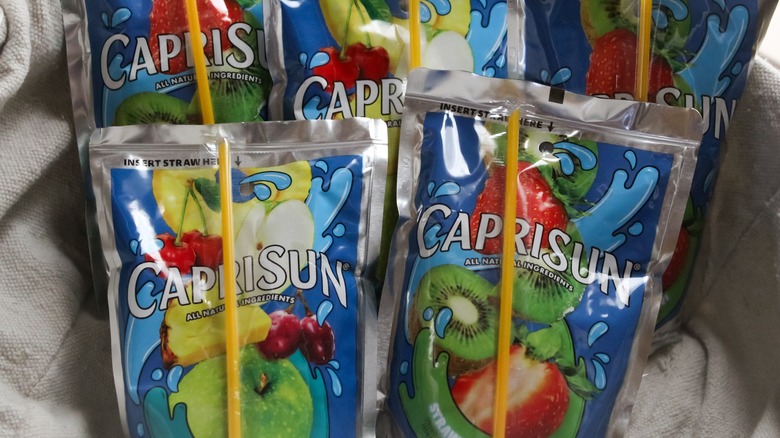
Take a trip down memory lane with me for a moment — not quite to the actual origin story of Capri Sun, but at least back to the ultimate lunchtime challenge of piercing that silver Capri Sun pouch with that tiny yellow straw and somehow managing to not spray it absolutely everywhere. We loved Capri Sun, but looking back from keener eyes, that "Sun" was more like a dark cloud in terms of nutritional value. Granted, the recipe has improved a bit, but we are talking about way back when, fam!
While the packaging dazzled us with shiny, cheery, and bright images of fresh fruit, the reality was far less refreshing. The exact recipe has changed a few times over the years. Capri Suns once leaned heavily on high-fructose corn syrup before ditching it for sugar and stevia in 2015. It then reformulated to cut added sugar and reduce the drink's overall sugar content by roughly 40% in 2022. Considering that some Capri Sun pouches today contain up to 20 grams without any added sugar, we shudder to think just how much of the sweet stuff we were actually sipping back in the day.
Capri Sun bragged about being preservative-free, but it turned out that this had a gross side effect. In 2013, a researcher found that Capri Sun pouches damaged by microscopic punctures were at risk of becoming a breeding ground for common food mold. Yes, mold! Finding a fermented fungus surprise at the bottom of your drink is a far cry from a tropical vacation.
Sunny D
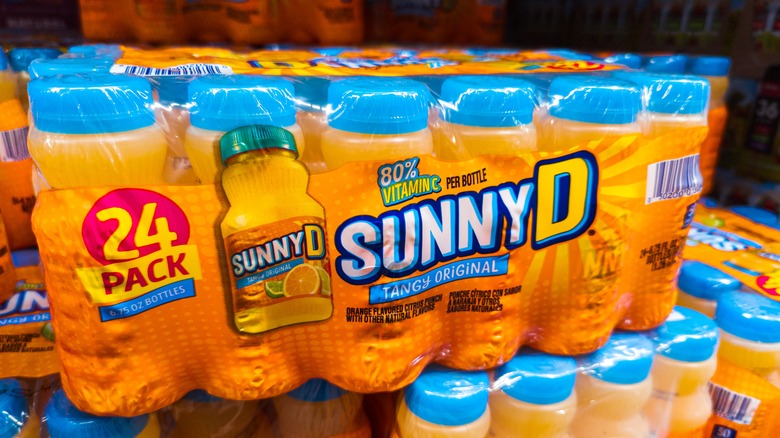
Close your eyes and conjure up those childhood memories of the catchy commercials and that bright, Sunny D orange glow waiting for you in the fridge. We all begged our folks for Sunny D, knowing it tasted yummy, but maybe also actually thinking we were getting a head start on our vitamins (at least that's what our parents hoped). But, as we look back, it's clear that "Sunny" was a major misnomer for this drink. However, the latter part admittedly tracks, as it earns a solid "D" in nutrition!
We hate to break it to those still living in Sunny D denial, but this liquid concoction is absolutely not orange juice. Sunny Delight has had its fair share of wild controversies, including a young child in the U.K. whose skin changed hue after consuming large amounts of the beverage in the 1990s. Today, it contains up to a measly 5% real juice, with the rest of the neon orange bottle consisting of water and high-fructose corn syrup, equalling 12 grams of added sugar per serving.
While the label does indeed boast about a full day's supply of Vitamin C, we can't ignore the fact that this perk is laden with an alarming amount of sugar per glass. Even though today's version is less of a sugar bomb than its old-school iteration (according to TIME, a glass of Sunny D contained a whopping 27 grams of sugar as of 2014), Sunny D still delivers a saccharine hit. There's also a long list of additives used to achieve that signature OJ look and texture, including canola oil, Yellow 5, and Yellow 6. These synthetic colors are a far cry from the natural hues of real fruit.
Mondo Squeezers
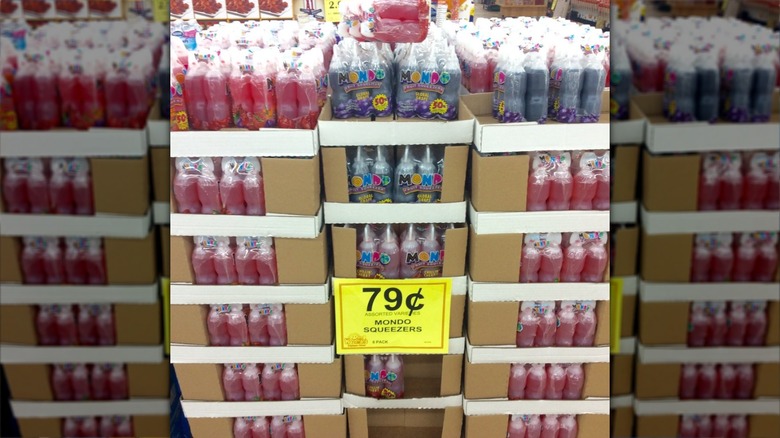
Who still recalls the strangely satisfying feeling of twisting that plastic winged tab off a Mondo Squeezer back in the day? Described by one Reddit user as the "poor man's Squeezeit" (how we laughed at that description), these colorful bottles were a '90s staple that likely helped put many dentists' children through college with the sea of cavities they left in their sugary wake.
While we loved the flavor and neon hues, looking back on all those Mondo-filled lunchbox days with a far more perceptive eye reveals that Mondo was more of a "Mon-Don't" from a nutritional standpoint. As with many others on this list, despite the fruit mentioned on the packaging, there was no actual fruit involved in this sipping scenario. Instead, Mondo was a highly processed concoction of water, high-fructose corn syrup, and additives.
The ingredient list read more like a chemistry project than a wholesome snack, including the likes of sodium benzoate, a preservative that can form small amounts of benzene, a known carcinogen, when combined with certain ingredients. Mondo Squeezers may have been fun, but they were certainly light on nutritional highlights.
Welch's Concord Grape Juice
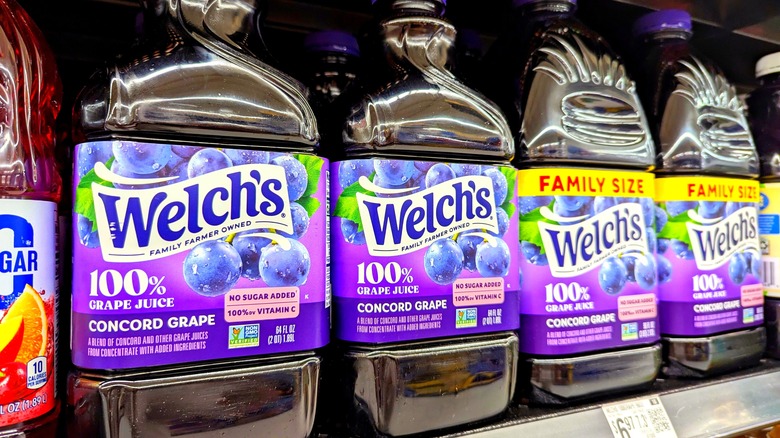
Welch's Concord Grape Juice sounds wholesome, tastes pleasantly sweet, and boasts that deep purple color that just seems to promise natural health benefits, right? Not so fast. While we may likely remember the juice as a fixture at childhood family gatherings and even heard its claims to offer a natural, heart-healthy option for the pantry, in reality, this old-school kid favorite is more unhealthy than you'd think.
Despite advertising itself as containing 100% juice, just one serving of Welch's Concord Grape Juice contains a whopping 35 grams of sugar. That amount is comparable to a can of soda, with a regular Coca-Cola containing just 4 grams more sugar. While the sugar comes from natural sources, the grape juice used is from concentrate, which lacks the dietary fiber found in grapes that can help manage your blood sugar levels.
But the bad news doesn't end at sugar. Another concern comes from independent testing conducted by Consumer Reports. This found measurable levels of heavy metals (including inorganic arsenic, cadmium, and lead) in many popular fruit juices, including grape brands. Clearly, this nostalgic favorite is less wholesome than we may have thought in our youth.
Hawaiian Punch Fruit Juicy Red
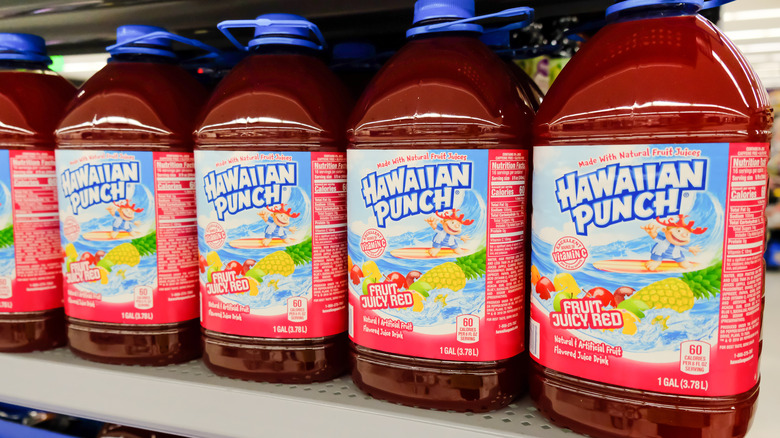
Think back to your childhood. Who wasn't feeling the awesome energy from the Hawaiian Punch Fruit Juicy Red commercials, complete with the way cool surfboards and tropical vibes? After seeing these savvy marketing gems, we were practically begging our parental units for a pantry full of Hawaiian Punch, probably even delusional in our thinking that we might actually be sipping on a wholesome treat from the tropics.
But as full-on adults that know better, that flavor-filled "punch" feels more like a direct gut hit to our health. Despite its fun marketing, this Hawaiian-inspired drink offers little to no nutritional value. For that reason, you won't find it in some stores. Due to containing several components featured on Whole Foods' list of banned ingredients, Hawaiian Punch is effectively banned from the iconic health-focused retailer.
So, yeah, that lovely gift of real tropical fruit is actually a decidedly not-too-sunny. It is primarily water and high-fructose corn syrup, containing less than 2% of actual juice. A single serving of Hawaiian Punch Fruit Juicy Red packs 20% of your daily recommended added sugar intake. It is also loaded with Red 40 and Blue 1, with the former being a controversial dye linked to increased hyperactivity in some children in select studies. It even features synthetic preservatives like potassium sorbate and sodium hexametaphosphate, a chemical actually used as a corrosion inhibitor.
Squeezit
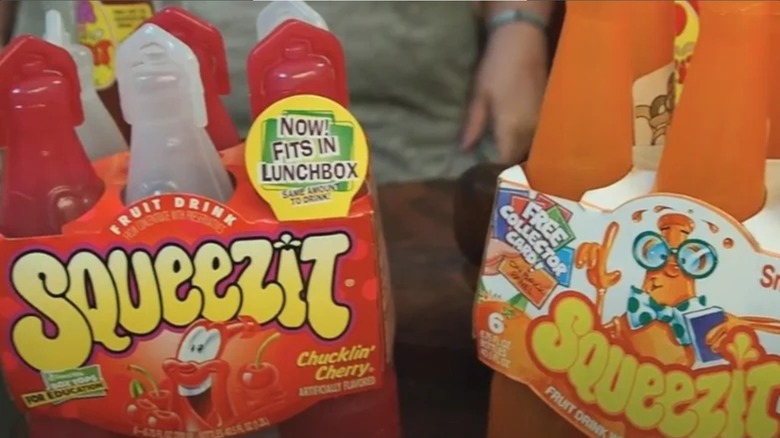
Just like Mondo, there was something so thrilling about the high-stakes drama involved with the twisting off of that Squeezit's plastic tab. To say Squeezits were popular picks in the '90s lunchroom would be a gross understatement. With character bottles like Chucklin' Cherry and Grumpy Grape, General Mills didn't just sell us a drink to fill our lunchbox. This brand sold us a whole sensory-driven and super-tactile experience that, ironically, could double as a squirt gun for annoying our siblings (be honest, we all did it).
Let's face it, Squeezits were a nutritional dumpster fire. Each bottle contained a measly 10% fruit juice. The remaining 90% was a cloyingly sweet concoction, containing around 16 grams of sugar. But they were flying off the shelves, so why should the brand care about silly things like nutrition? In fact, it wasn't until 1993 that the brand even attempted a "healthier" 100% concentrate version.
By 2001, Squeezits were clearly feeling the squeeze, so to speak. As health consciousness rose, the gimmick in all its sugar-fueled glory faded out once and for all. Looking back with cynical 30-something eyes, it's easy to see how award-winning advertising masked a product that was essentially liquid candy in a toy bottle. Hindsight really is 20/20.
Hi-C
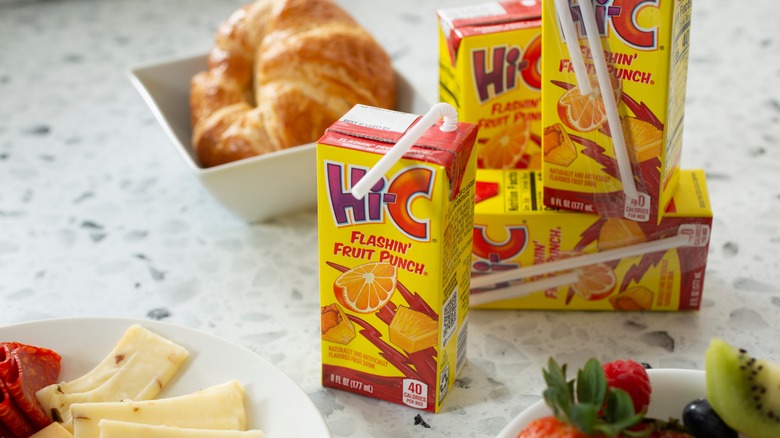
Nostalgia hits hard when thinking back to the neon-orange glow of a Hi-C juice box, an old-school drink that is still around today. It was the quintessential lunchtime companion, promising a "high" dose of vitamin C with every sip. But upon reflection, that name feels more like a marketing myth than an actual, verifiable health claim. In reality, it was "Hi" time to say "Bye-C" to this sugary relic. While many of us spent years debating whether it officially counted as juice, the cold truth is that it bears more resemblance to soda than anything grown on a tree.
The "is it juice?" argument has certainly sparked its fair share of online debates, but the math makes the answer pretty simple. The reality is that Hi-C contains more high-fructose corn syrup than actual fruit juice. The rest is a cocktail of filtered water, natural flavors, sweeteners, and additives. Today, the drink contains half the sugar it once did. That means the versions packed in lunchboxes of the '90s contained significantly more than the 10 grams of added sugar found in Hi-C Orange Lavaburst as of 2025.
While some parents may have viewed Hi-C as a better alternative to soda, dentists have warned that the sugar content in this "juice" is just as damaging to tooth enamel. What's more, without the fiber found in whole fruit to slow down absorption, that "juice" hits your bloodstream like a sugar bomb. Sadly, we now can see that sucking down these lunchbox treats meant trading real nutrition for liquid candy.
Tang
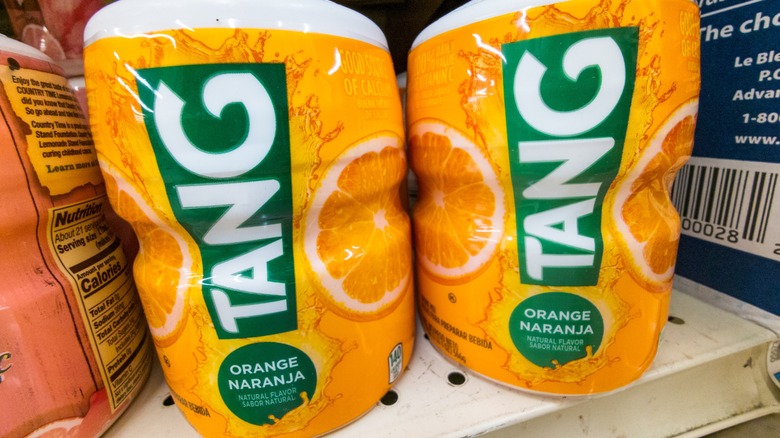
Remember the buzz (Aldrin) of it all surrounding Tang back in the day? If you recall, this citrus-flavored breakfast drink (not OJ), launched in 1959, actually went to space with real-life astronauts in the 1960s. And just like that, in the blink of an eye, mastermind marketing campaigns made Tang an instant breakfast favorite.
However, as it turned out, Tang may not have been the best choice for a nutritious breakfast (or our lunch boxes). Tang contains no actual fruit juice and relies mainly on ingredients such as sugar, fructose, citric acid, and additives including maltodextrin, calcium phosphate, and sodium acid pyrophosphate. Also on Tang's not-so-stellar list? Artificial colors Yellow 5 and Yellow 6.
While the marketing may have indeed been magic, Tang isn't quite as popular today as it was in its heyday. There was no masking that the product was high in sugar and low in wholesome ingredients, despite what its fruit-themed labels would like you to believe.