

Never Use Ziti In Baked Pasta Dishes With This Type Of Sauce — Here's Why
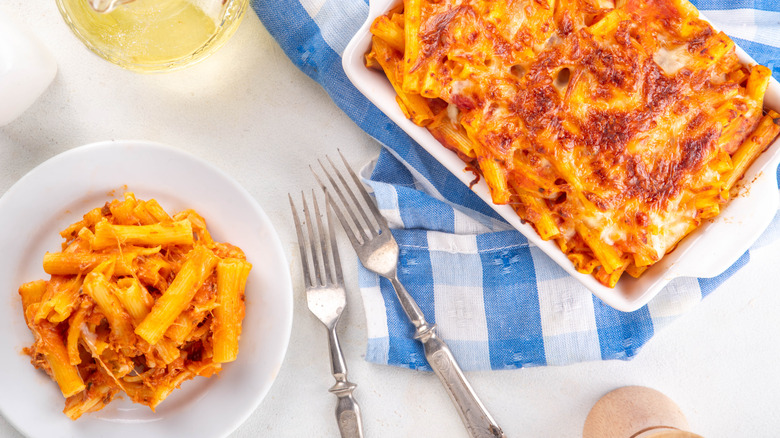
Some would classify pasta as the ultimate comfort food, and cheesy pasta dishes with scrumptious, crusty, oven-browned edges, such as homemade lasagna and baked ziti, raise the bar. Of course, everything still needs to come together as a cohesive dish. If your sauce slides right off your noodles when you lift your fork for a bite, baked pastas quickly turn into disappointment on a plate.
The Takeout spoke with chef Glenn Rolnick, the director of culinary operations for the legendary Carmine's in New York City, about how to make sure the sauce in baked pasta adheres to smooth noodles like ziti. "Ridges or grooves in ziti or rigatoni help keep the sauce on each piece of pasta," he explained; however, "It still depends on the consistency and texture of the sauce. A more dense or heavier style sauce will stick to a smooth pasta as opposed to a thinner, more liquid texture."
Think along the lines of a hearty Genovese ragu or a simple vodka sauce. If you want a little kick in the dish, a spicy arrabbiata would also work well with smooth pasta like ziti. Thinner options such as a classic carbonara, pesto, or an aglio e olio aren't your best bet if you want the sauce to stick to your noodles.
Do certain pasta shapes work best in baked dishes?
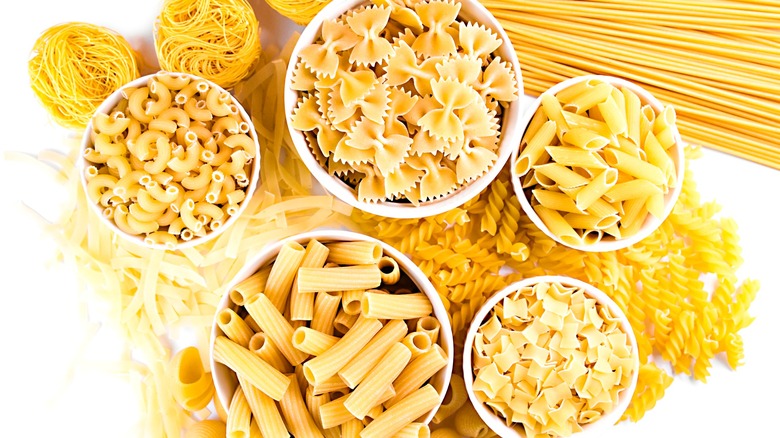
As long as the sauce has some structure to it, chef Glenn Rolnick said, "So many shapes and styles of pasta work well for baking. Some of my personal favorites are cavatelli, gemelli, ziti, and rigatoni." However, that doesn't necessarily mean one is better than another. It really boils down to personal preference and cooking the pasta to a perfect al dente.
"You might think thin or finer noodles like spaghetti or capellini wouldn't work well, but I use these to make a mean spaghetti or capellini pie," he shared, though being especially mindful of cooking time is particularly important with these shapes. During that final stint in the oven, "Thinner noodles can become overcooked," Rolnick explained. "It depends on how al dente they start, how much liquid or sauce is in the casserole, and how long it's cooked for. All of these are contributing factors in whether the pasta is cooked to the proper texture or not."
There are benefits to cooking pasta right in the sauce for some dishes, but Rolnick doesn't prefer that approach for baked pastas. "I prefer pre-boiling the pasta ahead of time to reduce cooking time and to have a better-textured finished product," he said. Using a thick, flavorful sauce an Italian nonna would approve of and properly timing your bake is really all that's necessary to cook a baked pasta dish that hits all the right notes.