

The Most Common Mistakes People Make With Parchment Paper
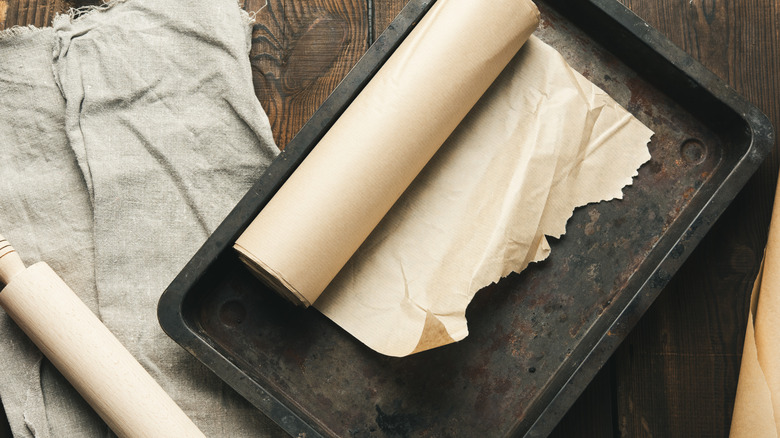
Parchment paper has a long history – so long, in fact, it's difficult for experts to nail down the exact time it was first invented. Before the product we know today, animal skins were used for similar purposes. In 1847, the process for creating a paper version — largely used for wrapping diary products — was pioneered by French scientists Jean-André Poumarède and Louis Figuier. The parchment paper that graces shelves today was developed later, when the product was coated with silicone. Though mentions of silicone-coated paper go back to the 1950s, the exact date of this development is debatable.
These days, parchment paper is a common household tool for baking and cooking alike. It helps to minimize kitchen mess by lining the bottom of pans, but has countless other uses when combined with a drop of creativity — one of many reasons why stocking up on parchment paper is a good idea. It can be used as an icing dispenser, or even a rustic wrapping solution for baked goods when paired with twine. However, this kitchen essential comes with parchment paper pitfalls, which can be learned and avoided to keep preparation routines seamless.
Confusing parchment paper and wax paper
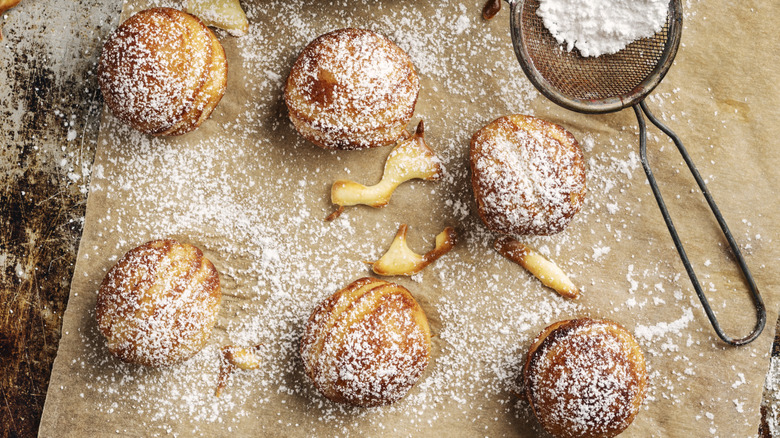
Although both have similar features — such as being food safe, and being used for freezing and non-stick purposes – it's important to note that parchment paper and wax paper are very different. The difference comes down to the coating: Wax paper is coated in wax of course, whereas silicone is applied to parchment paper. This contrast is important, as wax and silicone react to heat in different ways.
The silicone coating of parchment paper is able to withstand the high temperatures of the oven. If wax paper goes into the oven, it starts to melt just as a wax candle would. It's not heat-resistant, and therefore a bad substitute for parchment paper during baking or cooking. Wax paper, however, has other nifty uses in the kitchen. This includes lining pans for non-bake treats such as fudge, or wrapping sandwiches that will go into the fridge or freezer. Wax paper also usually costs less than parchment paper, but as a general rule should only be used for room-temperature items or for freezing, while parchment paper is a better option when using the oven.
Struggling to get parchment paper to lay flat
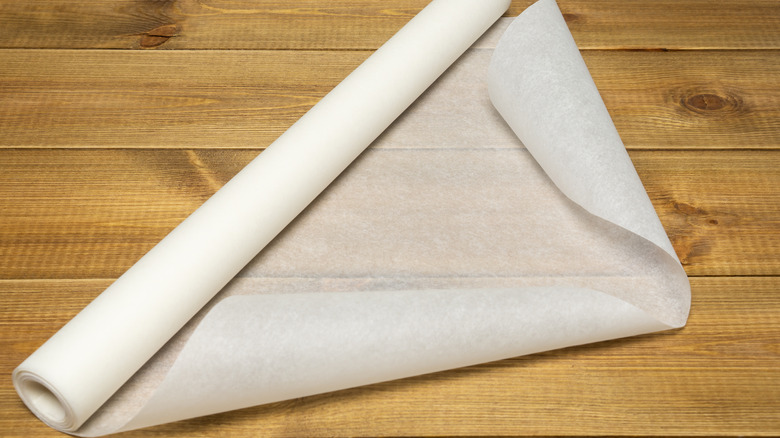
Parchment paper seems to fight bakers at every turn. The corners immediately curve in; attempting to return to a cylinder shape. The process of shoving the paper into a baking pan can be a fruitless endeavor, as it instantly springs back into a roll if released. It's such a hair-pulling dilemma that you might want to crumple the paper into a tiny little ball and chuck it straight out the window. Surprisingly, that urge isn't far from the solution ... minus throwing it out a window.
As it turns out, all that needs to be done to stop parchment paper from rolling back up is cutting the paper into the required size, and then crumpling the paper into a little ball before smoothing it back out. By crumpling the paper, it becomes pliable and more willing to fit into whatever container it's placed into. Using this method will crease the parchment paper, so those creases may show up on the bottom of whatever item is placed in the oven for baking. If you don't mind a little imperfection however, go ahead and show that parchment paper who's boss. A true win-win, as you can let some of that parchment paper-induced frustration out while still getting the paper to lay flat.
Allowing parchment paper to touch heating elements or the oven
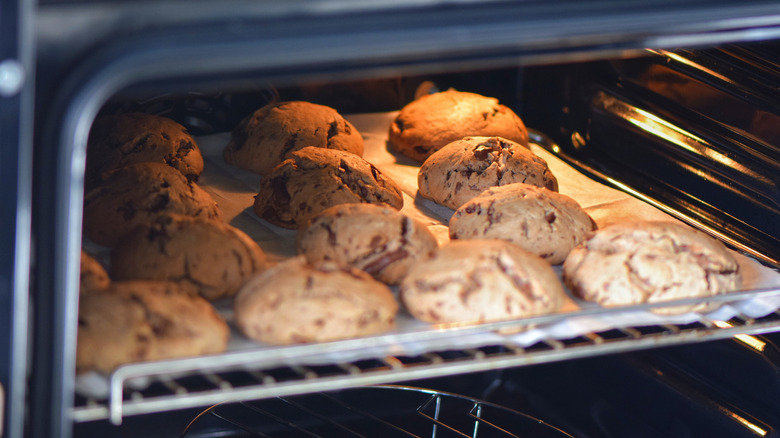
Just because it's considered safe for oven usage doesn't mean you should test the limits of how heat-resistant parchment paper really is. As with every kitchen tool and appliance, there are safety precautions that those using parchment paper in ovens should pay close attention to. An accidental parchment paper fire isn't in many recipes, and certainly is not an error anyone would want to make.
Most parchment papers can withstand heat up to 420 degrees Fahrenheit, but it's important to check instructions on the box before assuming. Care should also be taken with the pan containing parchment paper, ensuring that it's placed far enough from the oven's heating elements by placing it on the middle rack. Minimizing the overhang of parchment paper by trimming also helps ensure that it won't accidentally touch the sides of the oven or any heating elements. Lastly, never use parchment paper with a grill or open flame, as the flames can easily touch the paper and cause disaster.
Using parchment paper only for lining pans
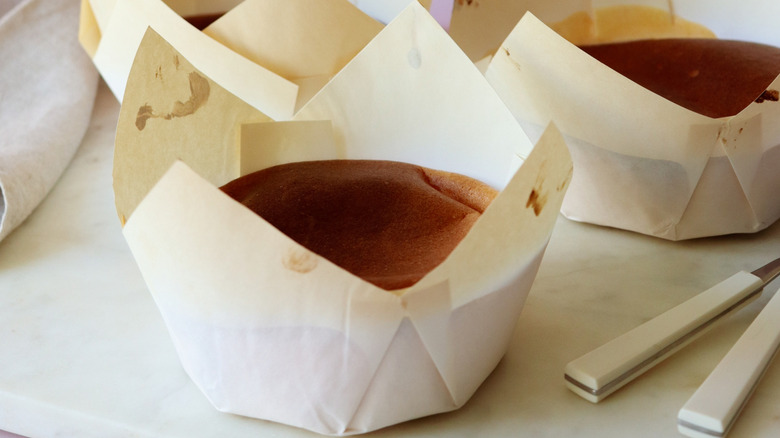
Although parchment paper is commonly used as a non-stick tool thanks to the silicone coating, there are tons of creative uses for the product. For example, it can be employed as lining for cupcakes by cutting five-inch squares of paper and pressing each square over the bottom of a glass to shape it properly. If decorating pastries with frosting, parchment paper can be used as a piping bag by cutting it into a square, scooping frosting onto the paper, and curling the sides around.
Parchment paper can also be used to enhance cooking, such as fashioning a parchment paper lid to better poach proteins like fish and chicken. If the parchment paper in your kitchen is only used for lining the occasional pan, then reconsider the full scope of this tool. Keeping a roll close by can save a whole lot of frustration, or prevent you from frantically running to the nearest grocer in a pinch.
Not taking advantage of the parchment sling technique
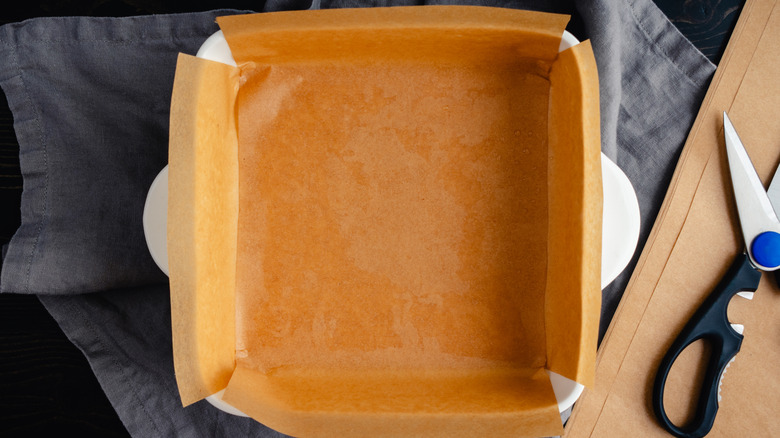
Sure, parchment paper is used for lining the bottom of pans, but it can be a method of transporting baked items onto plates as well. By using the sling method of lining your pan, you can easily pick up more delicate, crumble-prone baking items — such as lemon squares — and transport them onto the plate without worrying about fumbling.
The sling method is accomplished by using enough liner to create approximately one to two inches of overhang, which is then folded against the sides of the pan. A good idea prior to pouring any batter is to secure the overhang using binder clips, which keeps flaps away from the mixture and avoids paper shifting at the wrong moment. Make sure to use oven-safe clips, or remove them after pouring batter so they don't become a hazard. At this point, the overhang can be used as handles once the baking is done. With how seamless this makes transferring baked goods to a plate, not taking advantage of the method is an easily avoidable error.
Not greasing parchment paper if a recipe calls for it
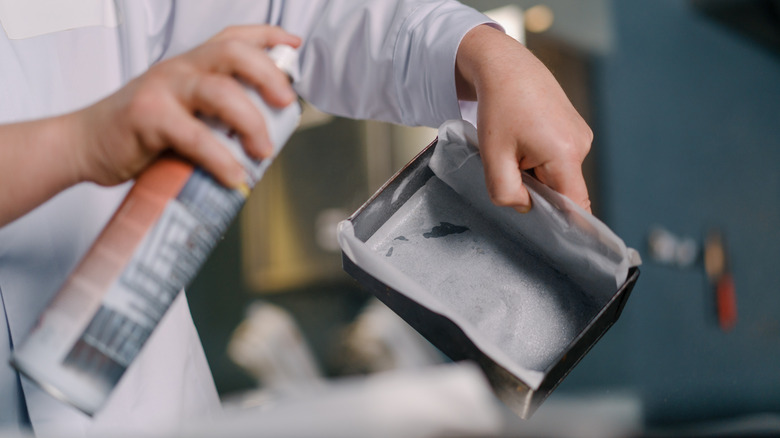
If parchment paper is meant to be an all-encompassing anti-stick go-to for cooking and baking pans, then it's not surprising home chefs would question recipes that ask for both parchment paper and the application of non-stick grease. However, it's helpful to follow the directions; even if a recipe instructs to grease both under the parchment paper and on top.
If a recipe is telling you to grease underneath, oftentimes this is to help the parchment stick to the pan. Greasing on top of the paper is meant to give reassurance and ensure a completely non-stick experience. It's far better to put down a cautionary layer of cooking spray than to pour effort and time into a food creation that doesn't turn out as planned, or falls apart when taken out of the pan. So yes — if the recipe specifies to do so, leaving the grease out is not a mistake you want to make.
Spending extra money on pre-cut round parchment paper
Fitting a square peg into a circular hole is emblematic of trying to accomplish something that won't work. So, when faced with the dilemma of putting rectangular parchment paper in a round pan, you'd think that purchasing round linings would be the solution. Shoving a square into a circle never works, after all. However, it's possible to fix the problem while saving money and using the parchment already available. All the hassle can be avoided by cutting parchment paper into circles at home; a shockingly simple process.
First, cut a sheet of parchment paper that is the width and length of the round pan. Next, fold the paper in half; and then fold it in half a second time to produce a square. Then fold the square diagonally to produce a triangle, and then fold the triangle once more for a very thin triangle. Now, turn the cake pan upside down and hold the papers' edge against it with the triangle's point in the center. Finally, trim away any paper that doesn't fit in the pan's circumference. Presto — a perfect round lining in the blink of an eye.
Assuming all brands have the same temperature thresholds
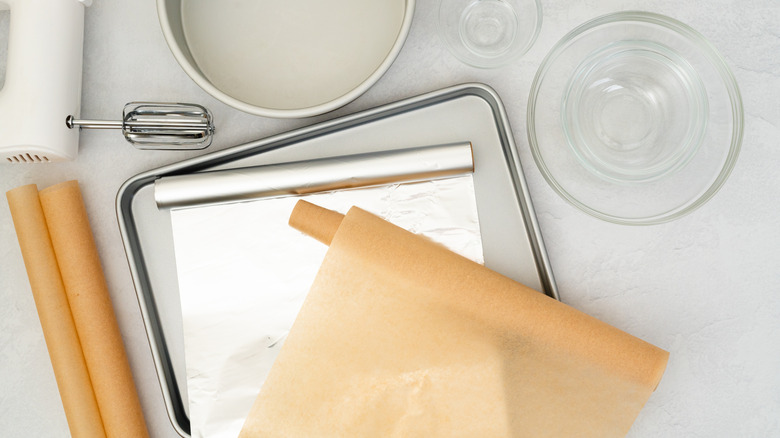
Parchment paper is oven safe, but the threshold for safe oven temperatures can change depending on brand and type of paper. Most papers can be used up to 420 degrees Fahrenheit, but some recipes — such as those for baking bread or pizza — may need to be heated at temperatures up to 500 degrees Fahrenheit. However, heating paper beyond the listed threshold may risk the parchment paper burning, releasing harmful chemicals or smoke, or potentially affecting flavor and ruining the food.
If the maximum temperature listed on the paper's packaging is too low for a recipe, head down to the store for parchment paper with a higher threshold. The parchment marketed for use with higher temperatures often has an additional coating, which creates a more heat-resistant product. It'll also have special markings on the box to indicate it is safe for higher temperatures. Keep in mind though, parchment paper is still not fully flame-proof. Even with parchment paper marketed for high-temperature usage, avoid contact with fire or heating elements.
Tossing away parchment paper after one use
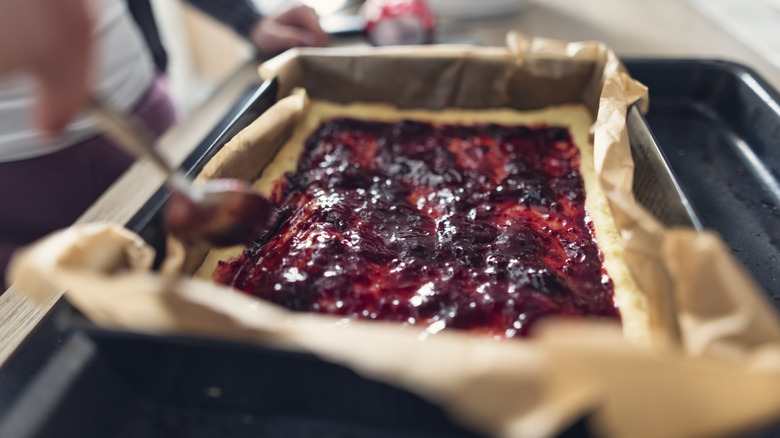
If you've baked an item and were left with a piece of parchment paper that looked relatively clean, you may have wondered if you can safely reuse it. Well, rest easy: Parchment paper can safely be reused at least one more time, as long as the paper isn't drenched in oil or grease. Grease in particular might soak into the next food, creating an unappetizing outcome. No one wants a chocolate chip cookie flavored with sausage grease from last night's dinner.
This is great news for both the environment and your wallet, as it saves on both money and waste. However, keep in mind that higher temperatures will degrade paper faster. If the used paper appears dark in color and rigid, then it's safer to toss it in the trash than create a health or safety risk by trying to use it again.
Placing parchment paper in the recycling bin
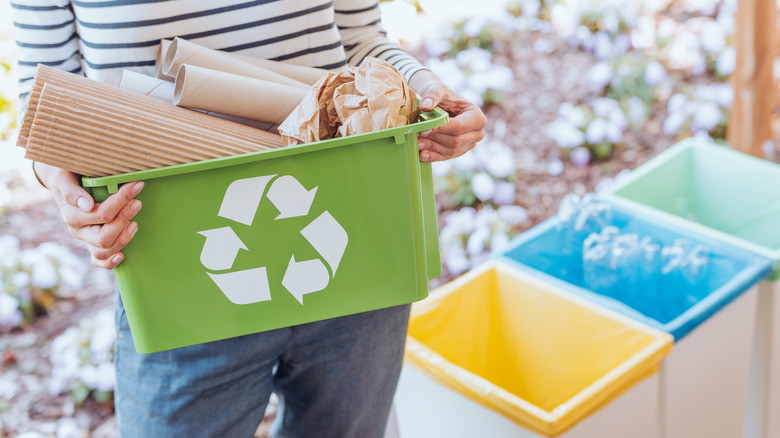
From a young age, most people are taught that recycling all types of paper is an important part of maintaining the environment — which is why this information might be surprising. However, parchment paper cannot actually be recycled, and many states and cities instruct that it be disposed of in the trash. Some instructions will differ slightly, but the takeaway is the same. Observe caution before simply throwing paper in regular recycling bins alongside cardboard boxes.
The main problem with recycling is that parchment paper's silicone coating causes issues with the process, as it isn't easy to remove from the paper itself. Not to mention that many used parchment paper pieces are coated with waste, such as grease and oil. This is considered a contamination risk, with the potential to soil other recycling as well. As parchment paper cannot be recycled, reusing sheets is important. By doing so, home chefs can contribute to environmental sustainability as frequently as possible; instead of the local landfill.
Thinking there's no difference between bleached and unbleached parchment paper
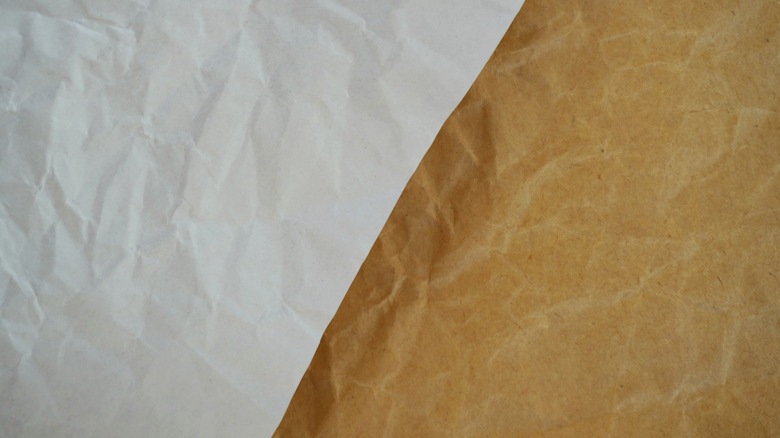
If you've shopped for parchment paper recently, you may have noticed there are two different colors of parchment to choose from. Although both are referred to as parchment paper, there is a major difference between the two types — and it comes down to the amount of chemicals used in the creation process. Parchment paper is naturally brown in color. When parchment paper has a crisp white look, it means it is bleached through treating the brown paper with chlorine.
The reason this differentiation matters is that some people consider bleached paper to be potentially dangerous. If bleached parchment is not treated properly, it runs the risk of containing harmful chemicals which can seep into food and cause health concerns. For this reason, assuming there's no difference between white and brown parchment is an error to steer clear of. To ensure this doesn't affect you or your cooking, opt for unbleached parchment paper, and double-check the box has a seal of approval from a reputable organization such as the U.S. Food and Drug Administration.