

The Only 3 Ingredients You Ever Actually Need For A Perfect Pizza Sauce, According To An Expert
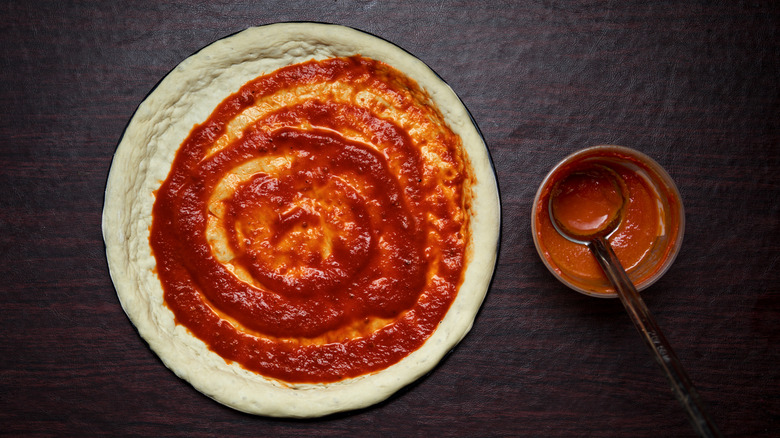
When homemade pizza is on the menu, simple is best. Pizza sauce is not a complicated Italian dish — you're not making your nonna's bolognese here. According to Rob Gentile, culinary director of Prince St. Pizza, you really only need three straightforward ingredients: tomatoes, olive oil, and salt. "Because the ingredient list is so minimal, the key is selecting the best quality ingredients," Gentile told The Takeout.
Professional chefs use canned tomatoes over fresh for pizza sauce precisely because quality is so important. Tomatoes in the tin are canned at peak ripeness, resulting in a reliable product with a sweet flavor and tender texture. Fresh tomatoes, on the other hand, can be hit or miss, especially when they're out of season. Even in-season tomatoes aren't always best for a pizza sauce because they are often quite watery.
Many cooks consider canned whole peeled tomatoes as the gold standard when it comes to simple sauces, especially when the tin contains nothing more than the fruit, salt, and maybe a basil leaf or two. Canned tomato brands worth buying often use San Marzano tomatoes imported from Italy, but there are also plenty of producers using tomatoes grown stateside to make great-quality products.
Can you use a simple marinara instead of pizza sauce?
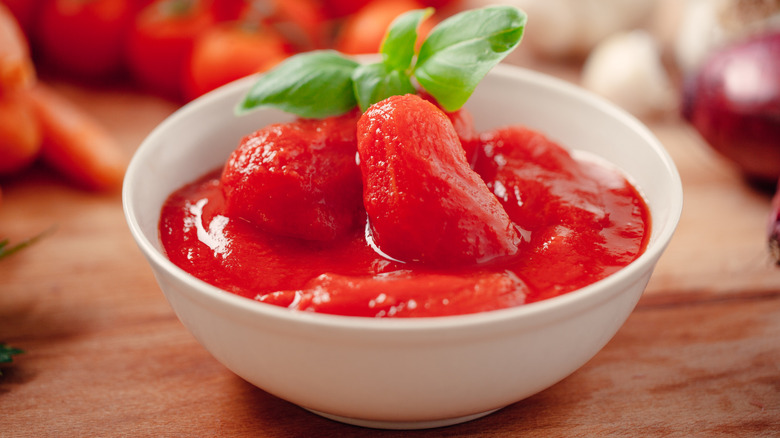
The very best marinara sauces only have a handful of ingredients as well, but don't be tempted to substitute marinara sauce for plain tomatoes — even if tomatoes are the first ingredient listed on the jar's label. " ... Marinara is typically a cooked sauce, whereas a standard pizza sauce is raw," Rob Gentile explained.
Canned tomato products are essentially lightly cooked in the preservation process, but jarred and homemade marinara cook for significantly more time. "For our marinara at Prince St. Pizza, we saute garlic and onion in olive oil, then add in various spices, and let it simmer for one hour," Gentile said. Canned tomatoes, importantly, have a more concentrated flavor and less moisture than their raw counterparts, but marinara takes it too far. A slow-cooked sauce loses the bright pop of acidity that is key in balancing out the starchy crust and rich toppings of a pizza — substituting marinara for pizza sauce can result in a pie with a more muted, muddled taste.
This is good news for pizza lovers everywhere because no additional cooking is required for the sauce. Simply crush tinned tomatoes with your hands, snip them apart with a pair of kitchen shears, or puree them with a stick blender right in the open can. Add a big glug of good olive oil, taste a spoonful, and sprinkle in enough salt to make the flavor pop.