

Most People Aren't Mindful Of This Important Soup Practice (Don't Be One Of Them)
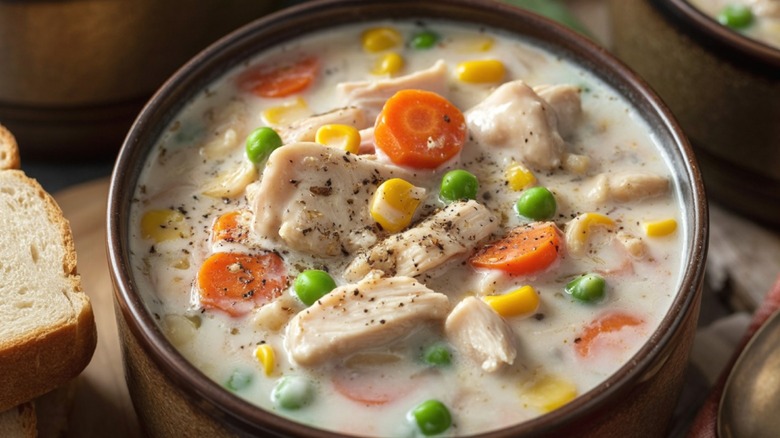
Winter is upon us, and you know what that means: It's time to make like George Costanza and shift into soup mode. Nothing warms you up on a cold day quite like a bowl of hot, savory soup, whether you made chicken noodle soup as the perfect sick day food or a copycat recipe of Panera's broccoli cheddar soup. Best of all, soup's always low maintenance — all you have to do is toss everything in a pot and let it simmer for a good long while, and it'll come out wonderful, right? Well, not quite. We talked exclusively to Katie Vine, an experienced cook and recipe blogger for Dinners Done Quick, and she tells us that there's a certain order of operations we ought to abide by when making soup.
"Different things have different cooking times!" Vine warns. "You'll affect the flavors and textures of things in particular by cooking them too long or too short. It's a balanced game." If you put in vegetables too early, for instance, you'll end up with a bunch of mushy, watery mouthfuls of veggie fibers. And if you make the mistake of letting your soup boil, it'll be even worse. By knowing when to put certain ingredients into the pot, you'll be creating a much more pleasant eating experience for yourself and others.
What should you cook first when making soup?
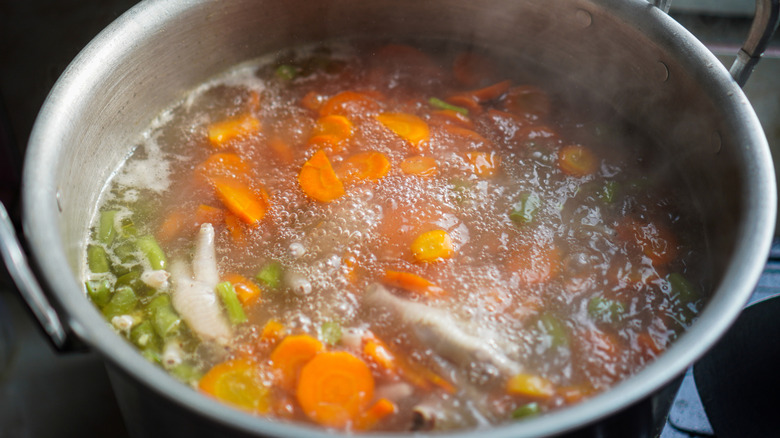
So, how do you make sure all your soup ingredients are ready at more or less the same time? Speaking to The Takeout, Katie Vine suggests following a general order, which will largely depend upon what kind of soup you're making. "Sear your meat first [to] get that beautiful caramelized flavor," she says. Once you do that — or if you're using a meatless recipe — it's time to deal with your vegetables. "Add onions and garlic that need time to soften and develop flavors, then tough veggies (potatoes and carrots) that need time to cook," she tell us. Notably, if you're using a mirepoix, or a base of diced carrots, onions, and celery, that may change the calculus somewhat.
After that, you should pour in your broth, whether you made it from scratch or bought it in a carton from the supermarket. "Then comes the broth, scraping up all the brown bits, along with broth building ingredients like sauces and seasonings," Vine says, before adding that you should "add quick-cooking veggies in the last few minutes." Again, every recipe is different, but having a general idea of what goes in when can only help you as a cook.