

The BBQ Sauce Red Flag That Can Scream Poor Quality At A Restaurant
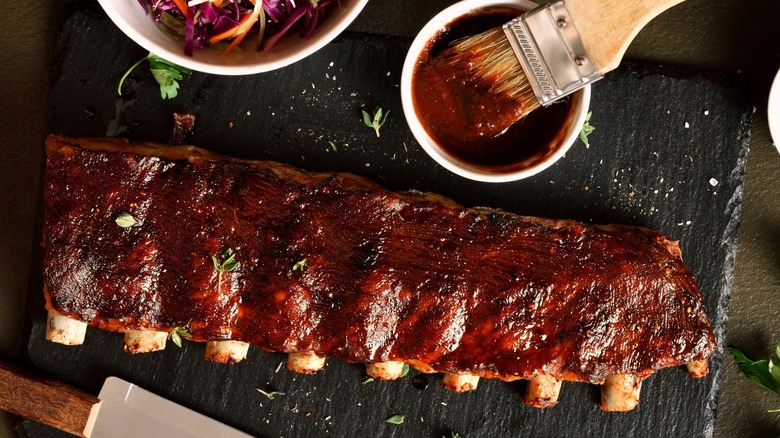
While there are specific components every barbecue sauce should have, there's a plethora of different ways to give it a unique personality. You can turn ketchup into a bold barbecue sauce using just maple syrup and bourbon; give barbecue sauce an umami makeover by incorporating miso; or amplify its depth of flavor by adding a splash of coffee to your barbecue sauce. Yet, whether it's smoky, sweet, spicy, or a combination of all three, if a barbecue joint drowns its slow-cooked meat in the sauce, that might be a sign it's got something to hide.
The Takeout spoke with Chip Carter, producer and host of "Where The Food Comes From," about barbecue restaurant red flags to be on the lookout for. He noted that, while it's not always the case, too much sauce on a dish could be an attempt to mask the taste of mediocre meat. "If you're seeing chunks or shreds of something that looks like meat swimming in a sweet, spicy, saucy sea, that could certainly be a red flag," he said. "Most reputable barbecue joints are proud of their meat first and their sauce second, whether they baste or add afterwards -– meaning it's much more likely your meal will be kissed with sauce rather than drenched ahead of time at a better establishment."
Carter emphasized this point by highlighting what "barbecue" actually is. "It's important to note the difference between 'barbecuing' and 'grilling' — they're not interchangeable," he said. "Grilling is just another cooking method; barbecuing is an art form that has evolved, like many cuisines, from the economic necessity of making less-tender or less-favored cuts of meat not only edible, but delicious." If a restaurant is slathering barbecue sauce all over your plate, it may have failed to make those inferior cuts appetizing.
Some BBQ dishes are supposed to be saucy
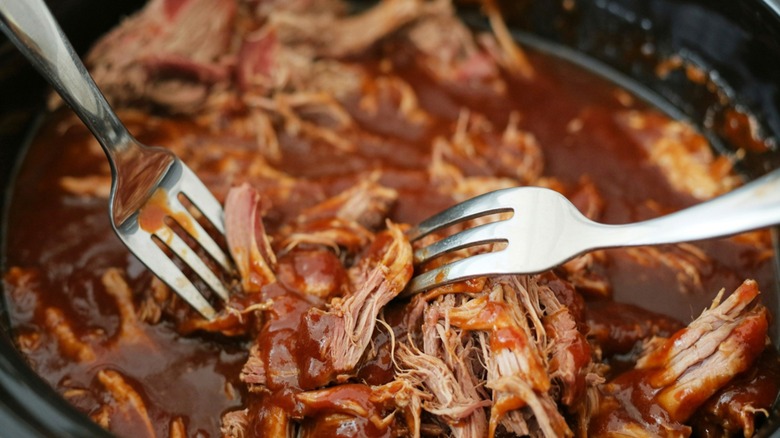
In fairness to establishments that apply barbecue sauce liberally, it's not always a red flag that the quality of meat is subpar. In fact, Chip Carter pointed out that some barbecue dishes are often presented with a generous helping of sauce. "Pulled pork in particular is typically served pre-sauced; slow-smoked, chopped or shredded pork shoulders, butts or hams — [are] served in a slurry that's most often sweet and tangy, on a plate or on a bun," he said.
Pulled pork isn't the only barbecued meat that benefits from being pre-sauced. "Short ribs are another that take that treatment very well," Carter said. "Chicken can go either way –- if I'm cooking a whole bird, I won't sauce it, but if I'm just throwing some thighs and legs or breasts on the grill, I'll add sauce after the first flip, and so do a lot of restaurants."
However, there was one dish Carter mentioned that shouldn't be swimming in barbecue sauce when it's presented at your table. "You'll sometimes see chunked or shredded beef brisket served that way — that actually is a significant red flag," he said. "That thing I said about barbecue making cheap, lower-quality meats edible and delicious? Well, brisket's not cheap, so it's rarely served drenched."
A brisket that's drowning in sauce could indicate that the cook on the meat is less than ideal. Yet Carter did note there is an exception to this rule, as well. The gastronomic gem of the barbecue world –- the charred, burnt ends of the brisket –- are sometimes doused in the condiment. Carter said, "It's common to see them in a chafing dish with sauce, and I recommend not passing them up."