

Costco Fans Aren't Happy With Kirkland's Trail Mix Packets: 'Mildly Infuriating'
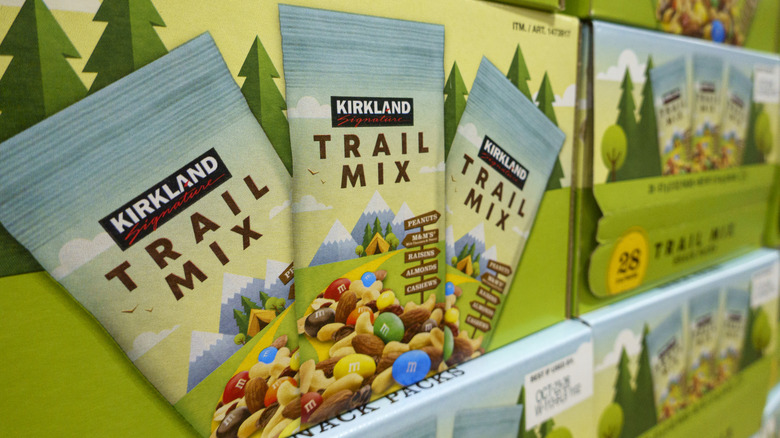
Those who love to snack don't need a research study to tell them that the nutrients inside nuts might make trail mix the ultimate aphrodisiac, but they also don't need the disappointment of opening a snack packet to find a lack of one nut in particular — cashews. On the r/Costco Reddit board, one user shared a recent experiment in which they opened and sorted the contents of Kirkland Signature Trail Mix packets. After several packets, the results were a big let down. The post said, "So normally, I'm not one to sort my trailmix packets, however I felt like I was going crazy when I opened a second packet and realized it only had like half a cashew ... So from then on out, I decided to sort them to make sure I wasn't just imagining it ... Three more packets, and across all three the max about of cashews I got was 1 and a half cashews. [sic]"
The poster's experiment led other Redditors to investigate their own Kirkland Trail Mix and share the results. "Had a package at the office and I thought I'd have a look. I have 2.5 cashews," said one. The trail mix packets advertise they contain peanuts, M&M's, raisins, almonds, and cashews. Granted, the package doesn't state how many cashews each packet contains, but one or two per pack seems almost insultingly low. Some commenters suggested purchasing trail mix contents in bulk separately to mix together at home. Someone else pointed out the cashew shortage the industry is currently facing.
The cashew shortage isn't Costco's fault
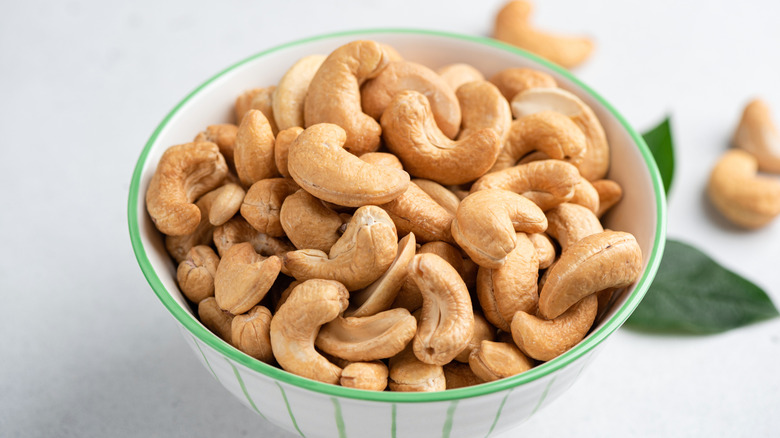
Checking the cashew numbers in the trail mix isn't normally one of the tips we offer to first time Costco shoppers, but with so few in each packet some people are starting to wonder if it's necessary. That said, no one should be turning torches and pitchforks on Costco over missing cashews since there really is a current shortage of the popular sweet and buttery nuts (that actually aren't nuts at all). According to the International Nut and Dried Fruit Council (INC), cashew production has declined in major growing regions while demand continues to climb. The Northern Hemisphere cashew crop is expected to end 2026 at least 6% lower than 2025.
Changes in climate patterns in India throughout 2026 have been a large reason for the impact on cashew crops. High humidity and out-of-season rain have caused cashews to spoil quicker than usual. Cashews absorb moisture from the air and too much moisture can lead to fungal growth that makes them unsafe to eat. Other reasons for the shortage include problems in Ghana, where a lack of reliable buyers has led to cashew prices that don't cover the cost of production. While it may be a bummer to get so few cashews in a packet of Kirkland Trail Mix, the issue may lie in the supply chain itself.