

The Big Seafood Chain With Unexpectedly High-Quality Menu Items
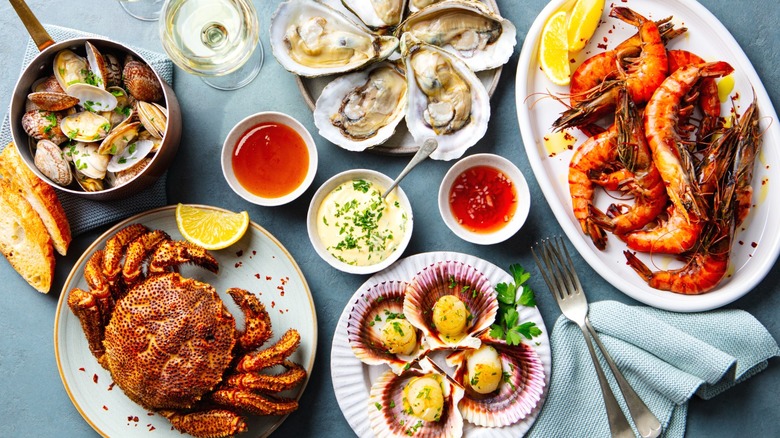
That vaguely sinking feeling you get on vacation when you find out that cool restaurant you happened upon is actually part of a regional chain — that's the stigma around chain restaurant food. There are some wonderful chains out there, of course (like the ever-popular Texas Roadhouse, with three different ribeye cuts), but others have a reputation for being ... well, budget options, for better or for worse. Sometimes, though, chains can surprise you. Take Red Lobster, the popular seafood chain that has some startlingly high-quality ingredients.
Consider its eponymous lobster, for instance (although lobsters aren't actually red, not until you cook them). The North American lobster used for most of its lobster dishes is popular for a reason: It has an appealingly sweet flavor and an agreeable texture. Its crab dishes are made from snow crab, which has a sweet, briny flavor and a softer (and therefore more easily crackable) shell than other crab species. These may not necessarily be the Rolls-Royces of the seafood world — a chain restaurant isn't going to spring for dungeness crab, after all — but they're clearly signs that Red Lobster doesn't skimp on quality. Indeed, Red Lobster has an extensive quality control and auditing system to make sure it's getting the best from its suppliers.
Red Lobster is committed to sustainability
Red Lobster, of course, is a chain that has a lot to recommend in general. Even if it's closed dozens of its locations in recent months, there's still that wonderful Endless Shrimp deal hiding in plain sight, and who among us could turn down those cheddar biscuits? But even aside from its solidly high-quality ingredients, Red Lobster is also committed to sustainable fishing practices.
"Sustainability" is a word you'll hear a lot in the food industry, especially when it comes to seafood. If you're not careful, you can overfish certain species, depleting its population and causing further knock-on effects in the ecosystem. That's bad news for the environment, but it's also bad news for fisheries and the restaurants that buy their catches. Nobody wants to jack up prices, after all, and naming your company "Red Lobster" would be pretty awkward if you run out of red lobster at some point. But while Red Lobster may not be following environmental protocol purely out of the goodness of its heart, it's done a pretty admirable job of following through on it. All its seafood can be traced to a trustworthy, sustainable source, and it follows whatever environmental regulations are in place.