

14 Old-School Breakfast Orders Missing From Menus These Days
Take your avocado toast and your cronut. Newfangled breakfast trends have nothing on the tried-and-true breakfast classics that we've been enjoying for decades or, in some cases, centuries. Bacon and eggs? Can't go wrong. Stack of pancakes? Perfection. Biscuits and gravy, maybe with a side of grits? You know that meal is going to be one you'll remember.
However, while some breakfast dishes have stood the test of time, others that were once beloved classics have fallen out of favor and you're very unlikely to find them on your typical diner menu. You're even less likely to find them being served up and dished out in your average home kitchen. That said, while some went the way of the dodo for good reason (like brains for breakfast) others could potentially deserve a comeback. Let's take a look at more than a dozen old-school breakfast orders that are missing from menus these days. You may just find a few that you want to try for yourself.
Cream chipped beef on toast
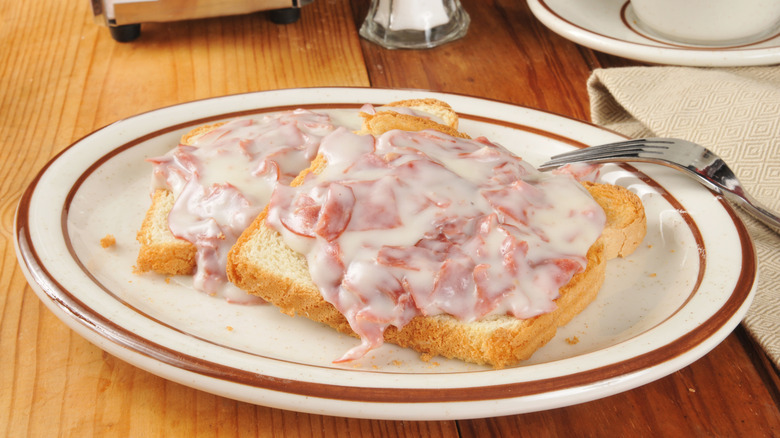
Beef and toast? Sounds good; that's basically a sandwich. Cream and toast? Still not terrible; dairy and bread work well together. But cream chipped beef on toast? That could seem slightly less tasty to the modern diner's palate. Still, if you were living under certain circumstances, you might be able to see the appeal — such as if you were serving overseas in a world war. That's right. This is a breakfast dish that can trace its origins to the military.
Cream chipped beef on toast takes a military ration and turns it into a star, utilizing the ultra-processed chipped beef and combining it with an extremely basic cream sauce (you're essentially making a roux and then adding milk). This concoction is slapped onto toast and you've got your breakfast. This meal did hold some popularity throughout the decades following the World Wars and was even served at chains like Cracker Barrel for a time. However, it's not as familiar these days.
Creamed eggs
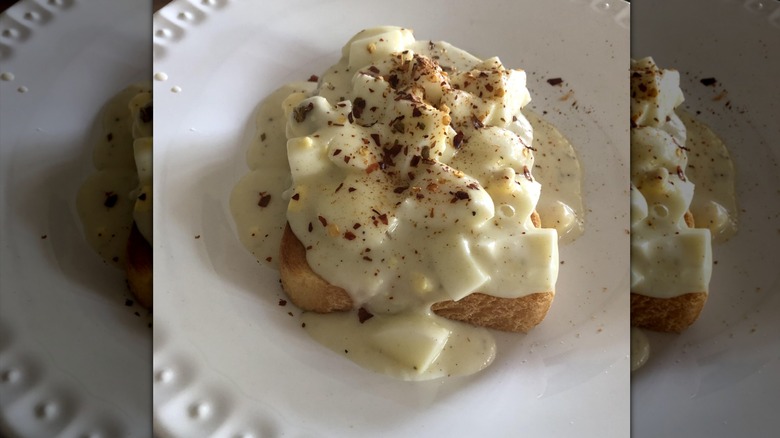
Another cream-based breakfast, the history of creamed eggs goes back even further, to at least the 1800s. Very similarly to cream chipped beef on toast, creamed eggs combines eggs with a very straightforward and creamy sauce, plus toast. However, despite this breakfast dish's age, it's not completely left the public consciousness just yet.
As recently as a few years ago, someone on Reddit posted the dish saying that it "looks stupid but it's some good broke food." Others chimed in noting that they make the dish after Easter in order to use up their hard-boiled eggs, while another redditor said that, in Sweden, the equivalent of creamed eggs is eaten along with cod and potatoes, rather than toast. Likewise, on Facebook, the dish was brought up in an "Old Recipes That Stir Childhood Memories" group post, with users reflecting on eating creamed eggs growing up. Still, even if this is a nostalgic dish for some, it's not exactly one that you're going to be able to easily find just anywhere.
Grapefruit
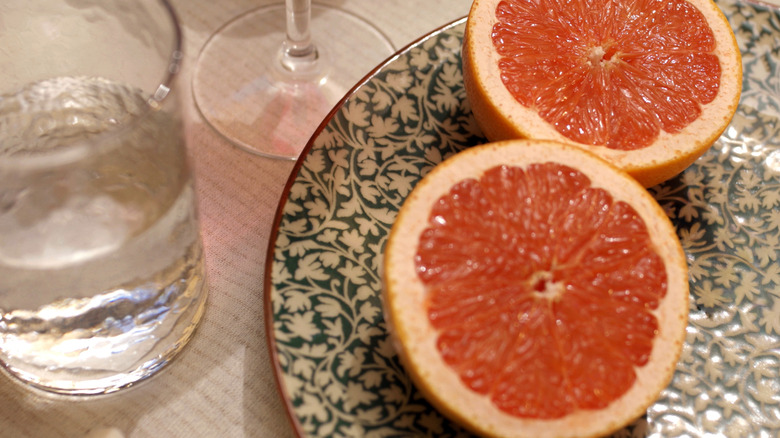
Grapefruit had a big moment as a breakfast food in the 1960s–1980s, thanks largely to the rise of the grapefruit diet, which encouraged partakers to eat grapefruit, grapefruit, grapefruit for an extended amount of time. While there wasn't a whole lot in the way of credible research to back it up, the idea was that if you were eating tons of grapefruit, you could potentially lose weight without putting in as much effort the old-fashioned way.
Thankfully, while fad diets still abound, the grapefruit diet isn't as widely relied upon as it once was — but as this diet disappeared, so did grapefruits from the breakfast table. Some foodies on Facebook have pondered the disappearance, recalling eating the fruit as a child, particularly with a bit of sugar on top and perhaps a maraschino cherry. One element that may be to factor into this breakfast item's lack in popularity these days? It's been theorized that people stopped eating grapefruit in such large quantities due to the interactions that grapefruit can have with a range of medications, including many anti-anxiety and antidepressant drugs.
Dutch babies
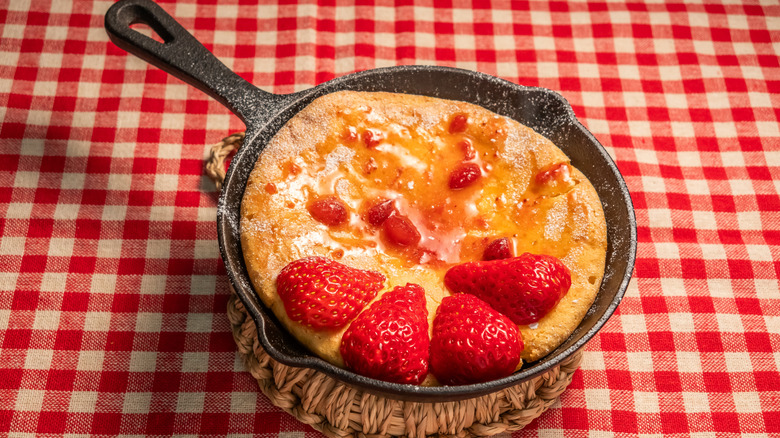
You're probably more likely to find Dutch babies on a menu today than you are creamed chipped beef, but that still doesn't change the fact that this is an old-fashioned breakfast dish that just doesn't get as much love as it once did — and it's also one of the dishes on this list that probably deserve a resurgence. Is it time for Dutch babies to have their moment in the sun? (Or rather, their moment on Instagram and TikTok?)
If you've never heard of this breakfast before, a Dutch baby is basically a big pancake, cooked in a cast iron skillet. It's a little bit like a popover and rather than being cooked on the stovetop like a normal pancake, it's baked in the oven. A Seattle restaurant claims to be the creator of the Dutch baby, but those origins are murky. We do know, though, that Americans were enjoying Dutch babies around the turn of the century.
Milk toast
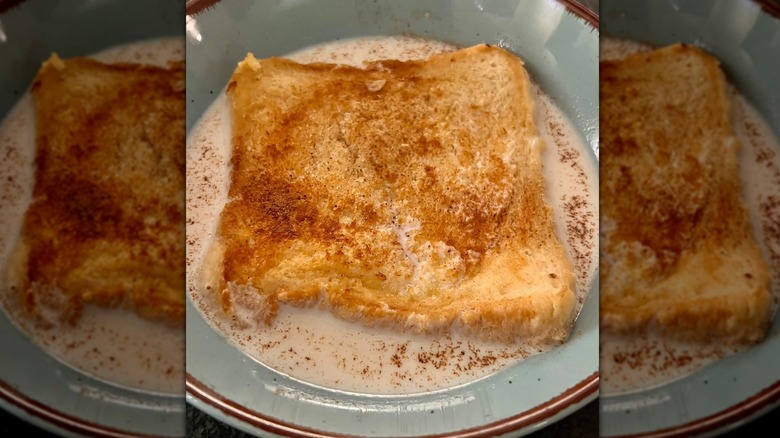
And we're back to the combo of dairy and toast! Yes, if cream chipped beef and creamed eggs weren't enough for you, if you were to travel back through the ages in order to taste-test the beloved breakfasts of times past, you would also have the option of milk toast (not to be confused with condensed milk toast).
Milk toast, however, is not merely just a piece of toast with a milky, creamy, savory sauce spread on top of it. Instead, we're going a bit of a different direction. Rather than adding the dairy to the bread, we're adding the bread to the dairy — tearing up our toast (or leaving it whole) and then plunking it right down into our (potentially heated) milk, like a strange cereal.
It makes sense that this breakfast was once favorited by the sick, all the way back in the 1800s. Luckily, there was some flavor added to the dish in the form of sugar, vanilla, and cinnamon. Still, it's bland, it's basic, it's easy, it's cheap — and it's not something that you're going to find sold on many restaurant menus today.
Shirred eggs
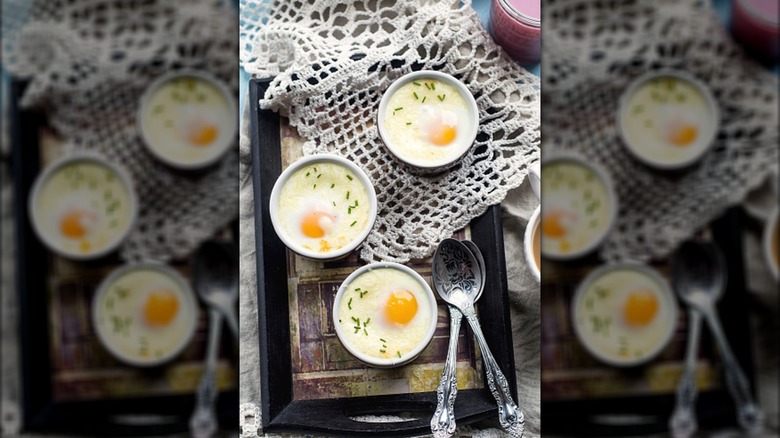
Many modern home cooks and diners around the United States likely don't even know what "shirred" means, let alone "shirred eggs." However, this egg dish was once quite the big deal. In fact, in the 19th century, the eggy concoction was basically fine dining, with the dish's popularity continuing on into the 20th century (it was served to first-class travelers on the Titanic).
The "shirred" part of this dish's name refers to the baking dish in which it is cooked and served, known as a "shirrer," which can be substituted by an oven-safe ramekin today. If we want to break down this breakfast to its most basic, essentially, it's just baked eggs. You toss an egg into a ramekin. You bake it. However, different recipes abound, with some requiring you to coat the baking dish with butter and breadcrumbs before adding the egg and others tells you to bake the eggs atop some pre-fried sausages, among other options.
Brains and eggs
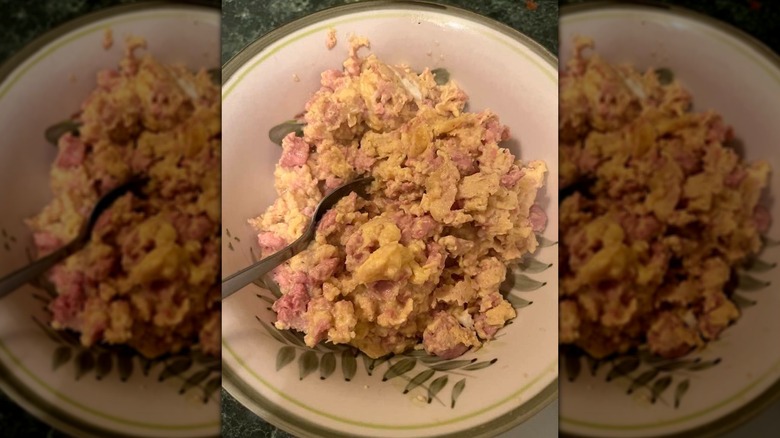
All the breakfasts on this list are difficult to come by in your average restaurant today. Most, though, can easily be recreated at home, if one were so inclined — save for the brains and eggs, as brains are an ingredient that can be a bit difficult to track down. At one point, though, at this dish's height in the 20th century, and especially in the South, you could easily find brains packaged and ready to buy at your neighborhood deli.
This breakfast is exactly what it sounds like: pig or cow brains with scrambled eggs. Again, on Facebook, this is an old-timey dish that folks reminisce about, even if they can admit it doesn't sound quite so scrumptious to the modern diner. As one commenter said, "My papaw loved them! I will never forget as a young child I saw a tub in [the] freezer that said 'pork brains' and thought it was a joke. I opened it and found out quick it was real ... just can't get past the thought of it... Y'all can have all of them."
Red-eye gravy
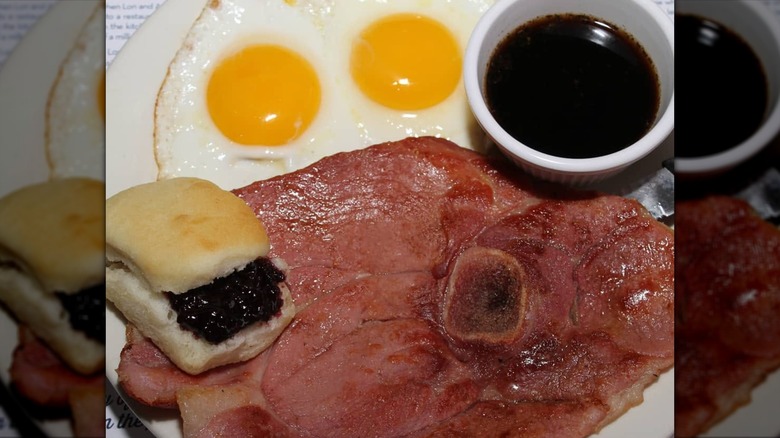
Another old-school breakfast classic with ties to the South, where and how red-eye gravy came about isn't precisely known. Some say that President Andrew Jackson coined the name, but that's not for certain. What is for sure is that this is a gravy unique in both its appearance and its ingredients.
This is no basic breakfast white gravy recipe that you'll pull together using just the basics, like butter, flour, and milk. It's not a thick, hearty side to spoon over your biscuits. As one person on Reddit described, "This is more like a seasoning sauce, like soy sauce, or hot sauce. You're not going to get the same quantity as a cream gravy when you make it, and that's fine because you wouldn't want that much anyway. Red eye gravy should be thought of more like a condiment used to season the food comparatively sparingly."
Red-eye gravy is made by frying up a piece of country ham, reserving the drippings, and then using some coffee to deglaze your pan. That's literally it. You can then use this hammy-coffee mixture on your biscuits, like you would with a typical gravy, but it also works as an accompaniment to any other breakfast items. As suggested in the Reddit quote above, use it as a condiment.
Kippers
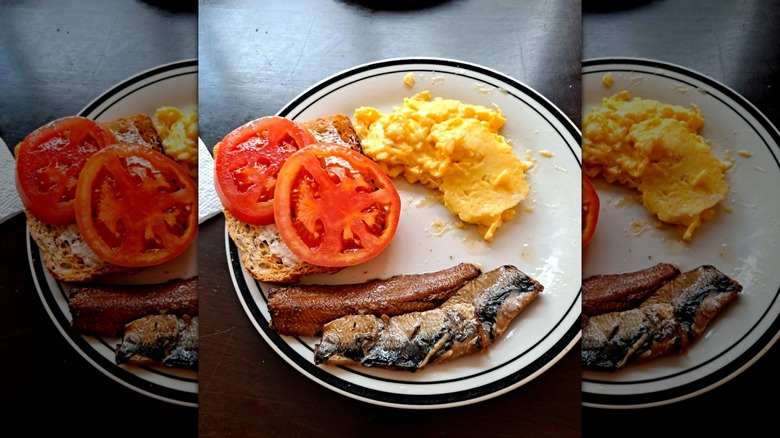
If you're having fish for breakfast, you might be reaching for some lox or adding a bit of salmon to your scrambled eggs — but kippers? These little fish, a type of herring, are often associated with an old-school British vibe and rarely make their way onto American breakfast plates, if at all, but this vintage option (the decline in kipper popularity began in the mid-century, though some are seeing a resurgence in the U.K.) deserves greater consideration (because, hey, if it's good enough for the Queen, it's good enough for the rest of us).
Serving kippers for breakfast is relatively easy. You can pour boiling water over the fish and let them stand to cook. You can grill them. You can fry them. You can bake them. (You can even microwave them but be prepared for a pretty pungent smell.) However you cook them, serve them up with some scrambled eggs and toast with butter.
Deviled kidneys
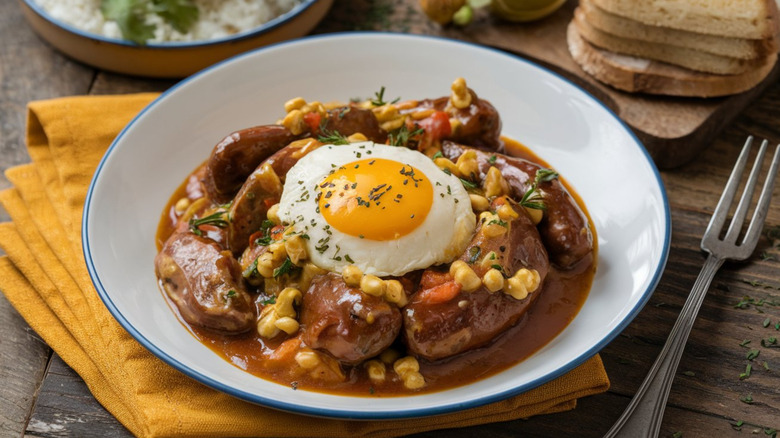
Deviled kidneys (or "devilled" if you're British) can be traced to the Victorian Era, when admittedly a whole lot of us were a whole lot cooler with eating animal parts that many just don't want to eat in the modern era — like kidneys. A breakfast specialty, deviled kidneys are often made using sheep kidneys. As for the deviling, that refers to the way in which home cooks would use a heavy hand with the spices. The cooking technique was applied to eggs, ham, crab, and more over the years (even though most American deviled eggs are mostly not that spicy).
There are many varying recipes for deviled kidneys, but the concept more or less stays the same. Kidneys are tossed in flour and spices, pan fried, and simmered in a sauce. The kidneys are then paired with — as is the case for so many dishes on this list — some toast. (Can't get your hands on any lamb or sheep kidneys? You can find recipes out there that utilize deer and pig kidneys as well.)
Egg in a hole
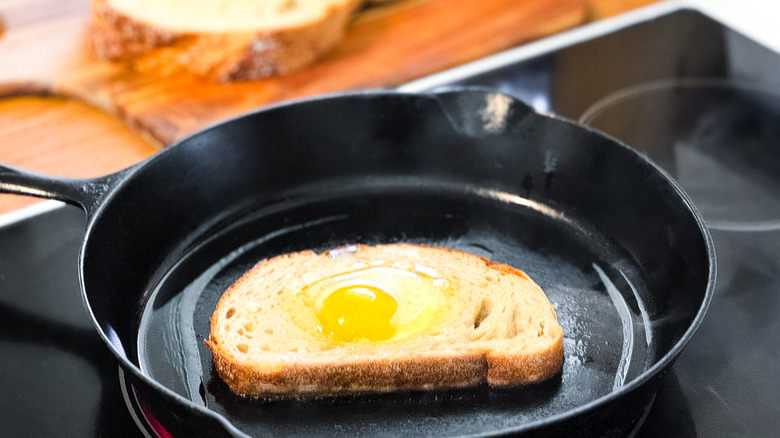
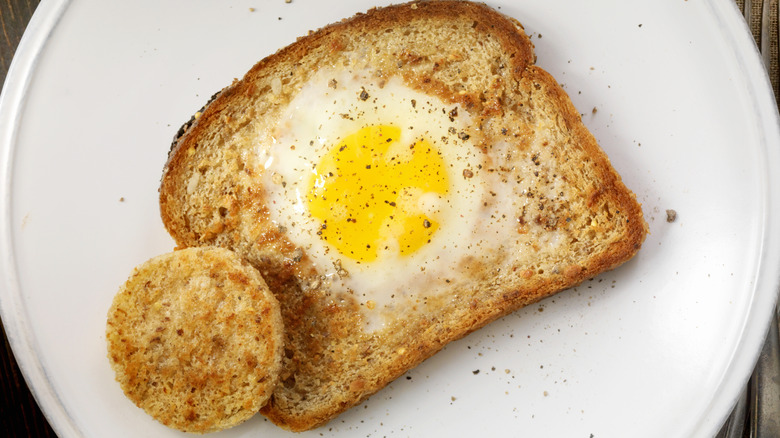
At its heart, egg in a hole is easy and simple, requiring just a few staple breakfast ingredients and a little time at the stove. Grab a pint glass from the cabinet. Use it to cut a perfect circle from the middle of a piece of bread. Butter that bread and cook it in a pan, crack an egg into the circle you've formed, and let the whole heavenly mixture cook, flipping it when necessary. You've just cooked your toast and egg all at the same time, using one pan and one spatula.
It's theorized that the egg in a hole (which goes by multiple different names, ranging from egg with a hat to egg in a basket, etc.) possibly first came about in the late 1800s — and yet, the egg in a hole has not gained the traction that other egg dishes have enjoyed. It's a shame, because this is a dish that possesses simplicity and charm that should've made it a continual household favorite, if it hadn't been more or less lost to the annals of time.
Apple pandowdy
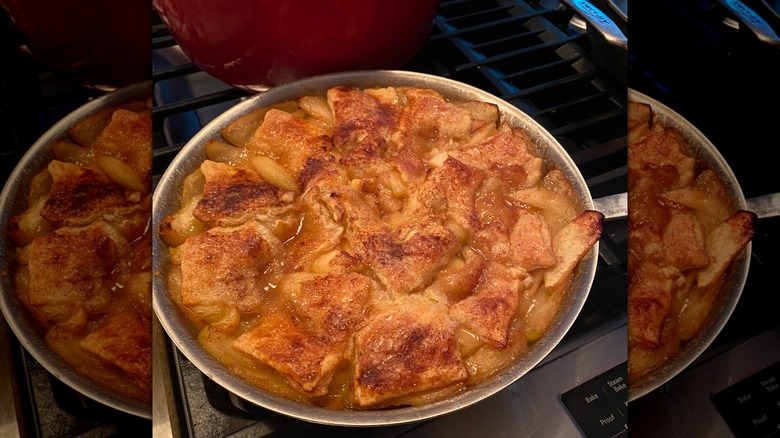
If there's a historic breakfast dish that has a fun-to-say name, it's the apple pandowdy. So, what is it? A 19th century darling, with additional fame in the 1940s thanks to a musical mention, the apple pandowdy can be and was eaten for breakfast, but if we're serious, it could be eaten with gusto any time of day (or night). It's almost an apple pie, but not quite.
To start, you make a pie crust and you make an apple pie filling. However, rather than rolling out your dough, pressing it into your pie pan, and placing your filling between two sheets of pie crust and letting it bake to golden perfection, you'll cut the top sheet of dough into pieces, allowing the pie filling to seep up and over the pieces during the baking process. The result is a more caramelized and softer top crust. Ultimately, this dish was born out of a home baking hack; you could make your tough or less attractive top crust look and taste a little better via this method.
Fried cornmeal mush
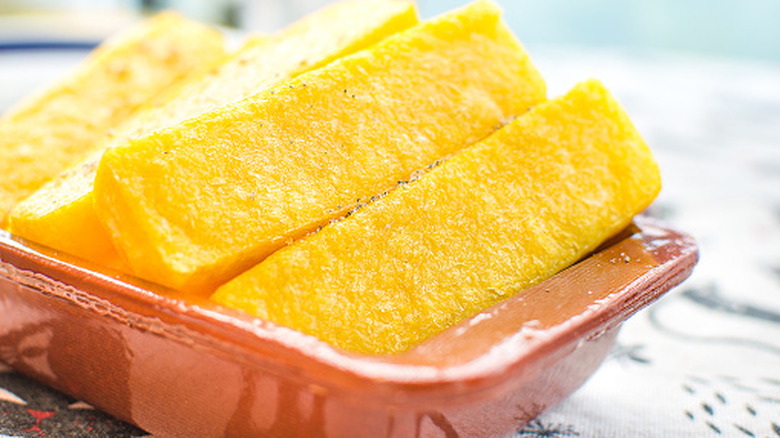
A Civil War-era and pioneer eat, fried cornmeal mush was a breakfast that would stretch your dollar as far as humanly possible. You could probably figure out how to make this breakfast on your own, but just in case, all you really have to do is mix cornmeal with a liquid (milk or water). That's the mush that you start out with and that you eat for your first meal. Then, though, you take your leftover mush, and you shape it and fry it in whatever fat source you have on hand. Thus, you get both dinner and the next day's breakfast in one easy, cheap meal. If you really want to get fancy with things, you can top your fried cornmeal mush with something sweet like syrup.
It may not automatically sound appetizing, but don't overlook this breakfast immediately. Some in the Midwest still think upon it fondly, much the way many think of grits in the South. Both are simple, hearty, filling — and done the right way, delicious.
Popovers
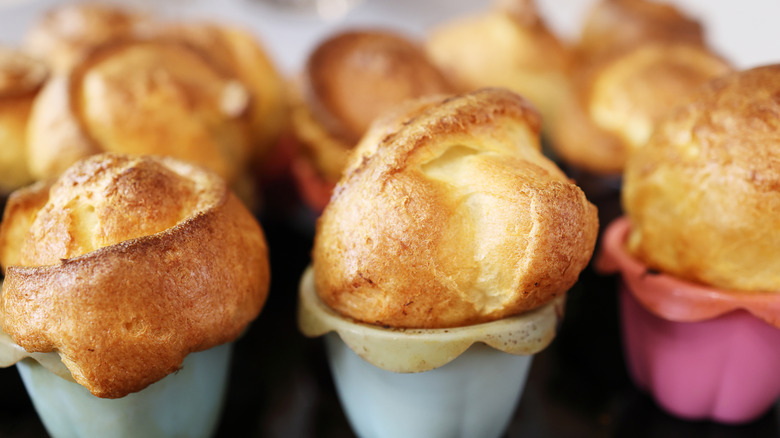
Lastly, we have popovers. Another 19th-century favorite, these are very Yorkshire pudding-adjacent pastries, adapted for the American diner. They started out as a breakfast item but have become more of an anytime pastry, though nowadays they're a little bit harder to find (with popularity strongholds still existing in New England).
Still, fans say that they're best served with breakfast, with one Reddit commenter noting, "Popovers are great for brunch, when you can use them as a vehicle for butter and jam or to mop up a runny egg or hollandaise, etc." Another Reddit user on the same thread noted that popovers are a great fit for cream chipped beef — an idea that combines two of the forgotten breakfast items on this list into one retro meal.
If you want to bake your own popovers at home, note that you don't need any special equipment. While popover pans are available, a muffin tin will do the trick if you're just trying your hand at making this breakfast item for the first time.