

5 Membership Drawbacks Costco Fans Never Really Talk About
Everyone knows that Costco is a shopper's paradise, filled with food items that have garnered a cult following, amazing deals on electronics and furniture, and high-quality staples that will last for months. Members often speak favorably of the gas prices, the Tire Center, Costco's legendary food court hot dogs, travel discounts, low-cost medications and vaccines, and, of course, the free samples.
However, it does come at a price — literally — as it's $65 a year for a Gold Star or Business Membership and $130 for an Executive Membership. For shoppers that frequent Costco regularly, this membership fee quickly pays for itself, but for those who only shop at Costco occasionally, it can be hard to justify the cost. The upfront fee isn't the only potential downside for Costco shoppers. From large crowds to limited product variety, these are five membership drawbacks that Costco fans should be talking about more.
Large crowds
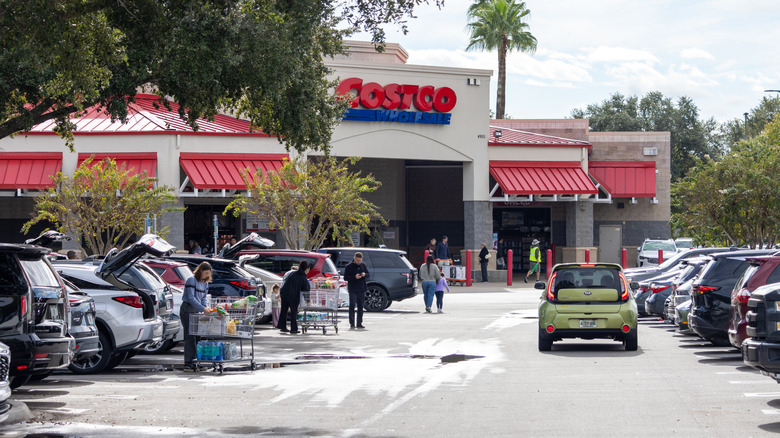
Costco has always been pretty popular, but now there seem to be large crowds no matter what day of the week you visit. As members like browsing around to find the best bulk deals, it's no wonder that it can get crowded inside. Not to mention, it's easy to accidentally run into other members with those massive carts and distinct orange flatbed utility carts.
In addition, there can be huge lines — whether it be for the food court, to check out, or even to wait for samples. And don't even get us started on those parking lots! You'll need a whole lot of time and patience to find a good spot (or wait for someone to leave).
What are ways to deal with the large crowds at Costco? Well, you can pay more for the Executive Membership, which allows only those members to go in to shop about an hour early at 9 a.m. or try to shop at Costco during times that are best for avoiding crowds, like when the store first opens or about an hour before closing.
Bulk waste
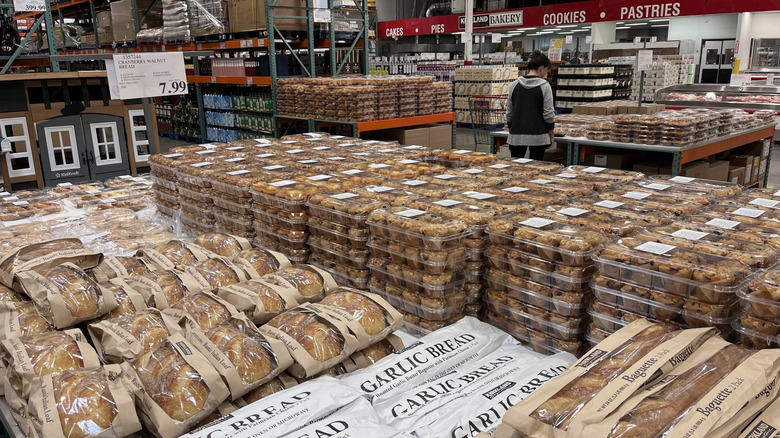
At Costco, it's a blessing and a curse that everything comes in bulk. It's honestly a great deal for nonperishable items like toilet paper, paper towels, and bottled water, whether you're in a large household or not. But for perishable items like salmon, cheese, or 12-count boxes of croissants from the bakery, it's difficult to finish all that food, which often leads to spoilage or waste. In addition, Costco's oversized items require a significant amount of pantry, garage, freezer, and fridge space. If you're not careful, all these extra items can quickly take over a dedicated storage area.
Many Costco members deal with bulk waste by reorganizing cabinets to fit those non-perishable items or freezing portions of fresh foods to make them last longer. Some people even share the costs of a haul with others, splitting two or three ways to make the bulk sizes more manageable on the wallet. With extra time and space, it's doable to combat waste, but not everyone has the storage, appliances, or capacity to effectively manage bulk groceries.
Credit card restrictions
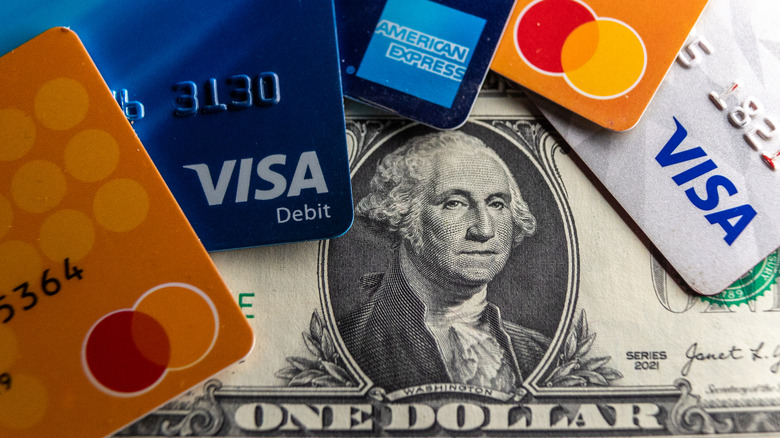
From 1999 to 2016, Costco only accepted credit payments from American Express cards; now the retail giant takes just Visa credit cards in-store. So, if your favorite rewards card is a MasterCard, Discover, or American Express, you're a bit out of luck. Costco entered a long-term agreement with Citi Bank back in 2015, with Citi issuing Costco co-branded credit cards on the Visa network. Because of the exclusive partnership, Costco was able to then negotiate lower transaction fees with Visa, and that savings ultimately gets passed on to customers in the form of lower prices. Honestly, that sounds like a great deal to us.
Fortunately, if members forget to bring a Visa credit card during checkout, there are alternative ways to pay. Of course, traditional methods like cash or check are always accepted at registers, as well as most debit cards that use a PIN system. In addition, members and non-members can use Costco Shop cards (digital gift cards) to pay at checkout. Finally, for online purchases at Costco.com, members can also use MasterCard credit cards.
Limited variety
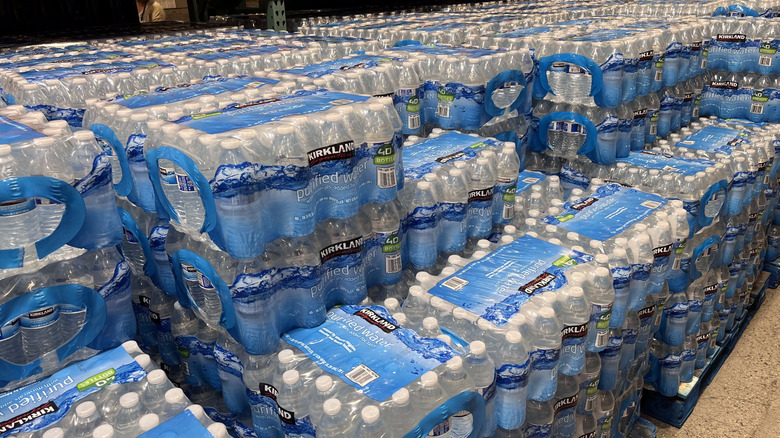
While Costco covers all the major categories of groceries (pantry staples, produce, dairy, prepared meals, and so on), the truth is that warehouse store is limited when it comes to how many choices there are for each product. To keep prices low, Costco focuses on its own generic Kirkland Signature line with just a few additional major name brands, unlike a traditional grocery store. Costco may not even have all the items on your list in stock — or if it does, the product may not be the exact one you want.
So, if you want the luxury of product diversity, it would be better to visit a different store, but if you're on the lookout for new foods or kitchen gadgets, Costco is a great place to be. In fact, the retail giant has introduced many highly rated items to a wider audience while giving better deals on some of your favorite brands.
Sneaky costs
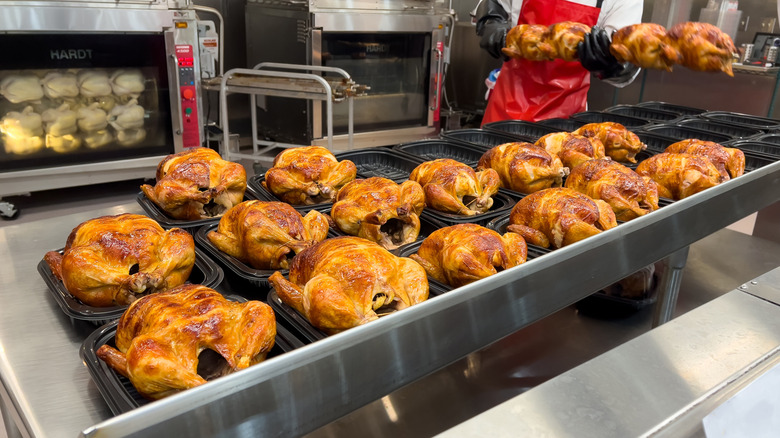
Due to the steep Costco membership fee, customers might feel obligated to spend more money to justify their time at the retail warehouse, leading to increased impulse buys. And, as Costco rotates out certain items, that sense of FOMO resonates with shoppers — they may grab that limited-edition product just in case they can't get it next time. Not to mention, the best deals, like that $4.99 rotisserie chicken, are actually strategically placed in the back, forcing shoppers to meander through the warehouse and be tempted by all the amazing deals along the way.
In addition, while the per-unit cost for certain bulk items is a great deal, they can still be pricey, especially if you only wanted a smaller amount of that item to start with. That initial steal can turn into a nasty surprise at the checkout counter after you've placed enough items in your shopping cart.