

The Best Campbell's Soup Flavor Money Can Buy Is Louisiana-Inspired
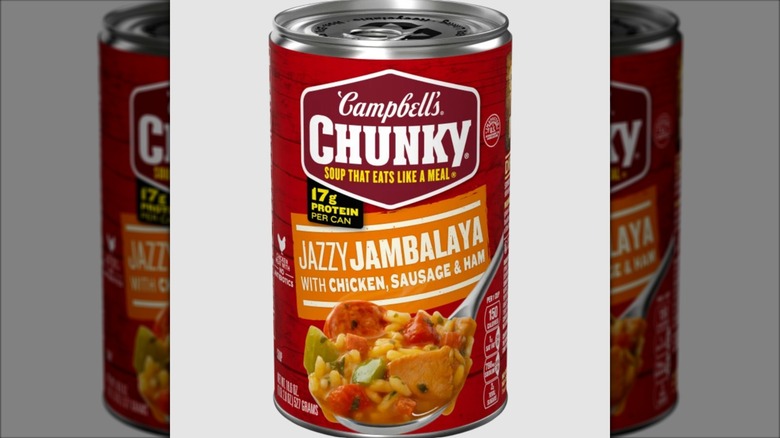
Soup is a bowl of warm fuzzies. It's good for the soul. And when it comes to canned soup brands, Campbell's is among the best-known. It also offers countless varieties, with ingredients that range from soup to nuts, so how can you decide which soup to go with? Luckily, we saved you the hassle of figuring it out. We tried and ranked 13 types of Campbell's Chunky Soup, and we can happily report that truly the most "M'm! M'm! Good!" of them all is Campbell's Chunky Jazzy Jambalaya Soup.
Louisiana is all about food and fun, parties and pralines. It's happy days, beignets, and étouffées as much as it is jambalaya, crawfish pie, and filé gumbo. Campbell's Chunky Jazzy Jambalaya Soup is Louisiana in a can, as it captures the culture, ingredients, and flavors of the Bayou State. With some typical Cajun zing thanks to a sprinkling of cayenne pepper, the soup has a bit of a kick without scorching your mouth. It also incorporates Cajun and Creole cooking's famous "holy trinity," which is celery, onion, and bell pepper. The addition of andouille sausage seals the deal on making this an authentic Louisiana-inspired soup. Heat up a can, put on some Louis Armstrong or Jelly Roll Morton in the background, and laissez les bons temps rouler.
Jambalaya is a classic Louisiana dish
Louisiana is the land where the jazz and jambalaya play, so it's not surprising these two elements came together here. As much a part of Louisiana culture as Mardi Gras and freshly boiled crawfish, jambalaya is a zesty, rice-based dish made with meat (usually chicken, sausage, and seafood), vegetables, and many spices. Jambalaya originated in southeast Louisiana with the French and Spanish settlers and is a direct descendant of Spanish paella.
There are two types of jambalaya. The first is Creole jambalaya (aka red jambalaya), which hails from New Orleans. It's a tomato-based dish, which helps explain its red color. The immigrants arriving in New Orleans had previously used saffron in their paella, but that spice was harder to come by in their new home. So, desperate for a worthy saffron substitute, they soon discovered that tomatoes were a readily available ingredient and an acceptable fill-in.
The other kind of jambalaya is Cajun jambalaya (aka brown jambalaya), which is more typical of the rural areas beyond New Orleans — the Cajun swamp country of southwestern and south-central Louisiana. Cajun jambalaya is tomato-less, and its brown color comes from browning the meat in the pot before the other ingredients are added. Since this dish comes from the swamplands of Louisiana, this jambalaya historically has been known to contain the meat of just about any swamp creature that slithers out of the bog and into the saucepan. Jambalaya has always been comfort food, happy food, served at celebrations and events. Just one bite and you know that everything is going to be all rice.