

10 Common 'Tricks' For Making Drinks That Don't Actually Work
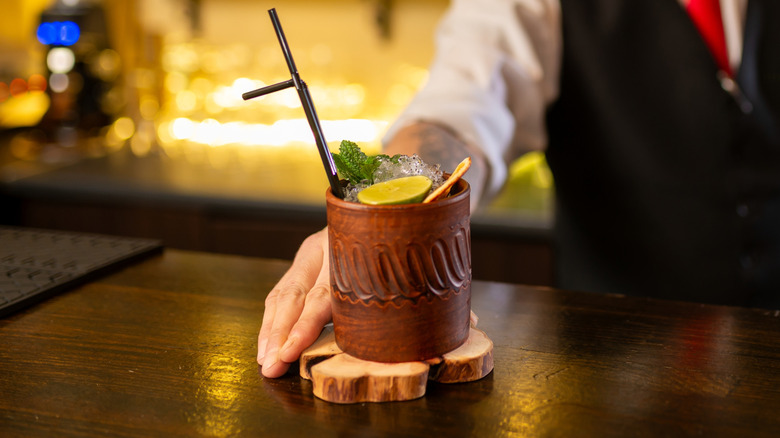
Whether you are a newbie to the cocktail world or an old-school expert, bar culture is full of confident advice. From rules about how long to shake a drink to what type of ice to use, how to garnish a drink to exactly how a classic "should" be made, a lot of rituals don't actually hold up once you begin to look closely into what your final drink should taste like. Even the advice on how to make expensive-tasting cocktails at home often skips over which steps genuinely matter and which ones are just for show.
To sort through this confusion and break down what's actually worth doing behind a home bar, we asked four bartending and spirits experts to share the tricks of the trade. We asked them to tell us what rules sound legitimate but don't really work, and what to focus on instead. Erin Bell is the distiller and owner of Silo, where she oversees production from grain to bottle. Gaby Varela is Silo's head of sales, bringing a bartender's perspective on what actually belongs in a cocktail. Aidan Contreras represents Dealer's Choice Hospitality, and he shares hospitality-industry insight on the habits worth breaking. He is joined by Luke Barr, a global master mixologist for Neft Vodka, with a sharp eye for the myths that persist even among professionals. Together, they walk us through which habits are just tradition dressed up as technique and which ones actually shape a better drink.
1. Clear ice and overclarifying is always necessary
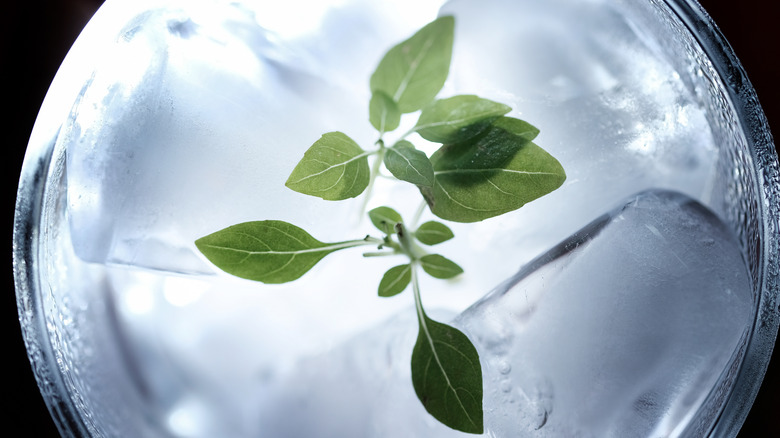
If you are a cocktail aficionado, you are probably well-versed with the current online obsession with perfectly clear ice. We are referring to the kind of glassy, bubble-free cube that takes (even professionals) special molds and a lot of patience to produce. According to Aidan Contreras, this obsession is largely misplaced especially if you're pouring drinks at home. "One trend that doesn't need to be held up is the need for clear ice," he says. "Clear ice is great for a cocktail bar, and does make cocktails extra pretty, but making ice at home with filtered water is enough to get the job done." Remember, a bar is chasing a specific aesthetic and has different priorities as compared to someone just trying to make a good drink at home.
Erin Bell points out a similar trend amongst home bartenders that she considers overrated: "One of them is overclarification. I don't know where that came from. I don't know why we got so afraid of little floaties and sediment and stuff like that." What all experts are saying is that while clear ice and crystal-clear cocktails look striking, neither one actually changes how a drink tastes. Filtered water in a standard ice tray, and a cocktail with a bit of natural texture, will do the job just fine.
2. Shaking longer to make a better drink

Aidan Contreras has a lot to say about bartenders who treat shaking time as a badge of effort — implying that the longer and harder the drink is shaken, the better the results. This instinct is working against you rather than for you, in their opinion. "'Shake for 30 seconds or until the tin is too cold to hold' is a common one I hear," he says. "Shaking is not just about making your drink cold, it's about dilution. If you are shaking your cocktails that long, chances are your cocktail is overdiluted." Once dilution goes past a certain point, a cocktail starts tasting watered down rather than balanced, no matter how well the original recipe was built. All your careful measuring of spirits, peeling of citrus, and pouring of syrup gets diluted into a flat, weak drink, simply because the shake ran longer than actually needed.
This connects to a broader point Gaby Varela makes regarding the tendency to overthink cocktail technique in general. Her rule of thumb is that if you're not going to taste something in the final drink, it doesn't need to be there. This rule applies just as easily to shaking (or stirring) your cocktail as well. A shorter, more deliberate shake, generally somewhere in the 10 to 15 second range depending on the drink, tends to hit that balance far better than chasing the coldest possible shaker.
3. Only using expensive spirits to make a better cocktail

When you consider what's going into a glass, price tag and quality should not be treated as the same thing. Gaby Varela makes the most direct case for matching the quality of the spirit used to the drink being made. "For me personally, I don't see a reason to [use] something super expensive when you're just going to cover it up," she says, pointing to drinks like a Bloody Mary as an example.
Aidan Contreras explains, "More expensive spirits shine on their own with little to no tweaking, they are meant to be sipped and savored and enjoyed for the beautiful product that they are," he explains. "If you're mixing a bunch of stuff into it, you might have a pretty good cocktail, but you're missing the point of the spirit."
Luke Barr takes a more measured stance, arguing the link between price and quality isn't entirely wrong. For him this is just unreliable as a rule since a higher priced spirit doesn't mean it's the highest quality available. "Spirits can reasonably be pricier due to the cost of using higher quality base ingredients and higher quality or time-intensive distillation processes," he says. "These factors do result in a better quality spirit, and in turn, make better drinks. But manufacturers can ultimately price their spirits how they see fit. So the highest priced spirit doesn't necessarily indicate it's the highest quality."
4. Following the original recipe
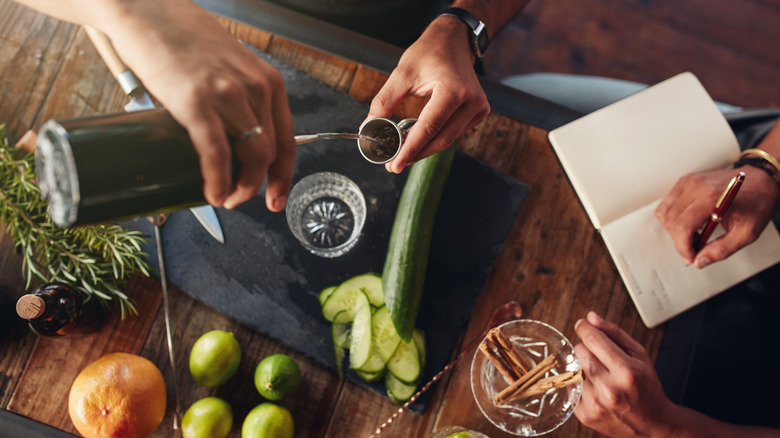
Cocktail culture can get weirdly rigid about historical accuracy. There is a false belief that there is only one correct version sitting in a rule book somewhere, and if you dare to stray away from it, you are making a huge mistake. Luke Barr points out that classic recipes were shaped by circumstances that no longer apply everywhere. "Specific cocktails are a product of their time and culture," he says. "Wartime meant fewer ingredients and simpler builds, what's locally available and enjoyed in Hawaii is different than in Paris."
For Aidan Contreras, this attitude says more about the person enforcing it than it does about the drink. "This comes up a lot with very pretentious bartenders: 'Actually, that's not the original spec.' Who cares? I like it better this way, and this is how we do things here," he says. "There are ... very few recipes that I believe should not be tweaked. But, for the most part, everyone has their own spec for the classics, and I think that's beautiful." Barr sums it up by reassuring us that, "There's no correct way to truly redesign a classic cocktail, but there's also no wrong way to design a cocktail in general. Original cocktail recipes provide an amazing foundation that still leave room to get creative."
5. Muddling harder for more flavor
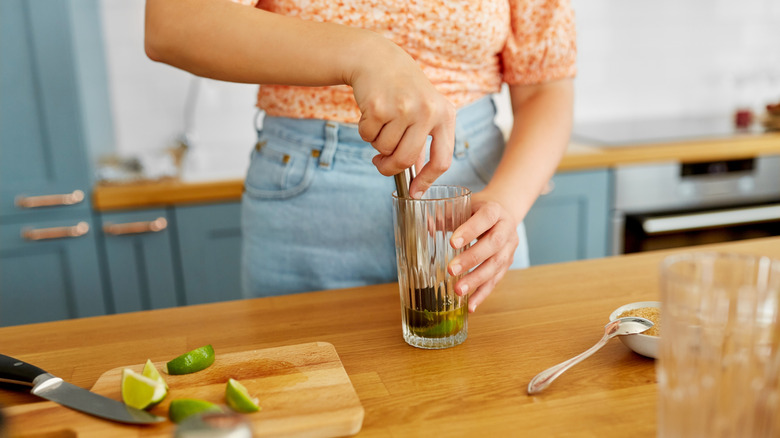
There's cocktail shaking and then there's muddling. Two techniques that bartenders seem to take to extremes. If muddling your ingredients starts to feel like a workout, you are probably doing it wrong. According to the experts, that approach usually backfires rather than helps. "Muddling mint or other soft herbs is constantly done way too vigorously, and it makes the mint too grassy and vegetal," Aidan Contreras says. "A very light press with the muddler, or even just slapping the herbs across the palm of your hand to release some of the oils, is plenty." Crush mint too hard, and it stops smelling bright and starts tasting closer to cut grass, which isn't the flavor anyone's chasing in a mojito.
Luke Barr argues that muddling is, "unnecessary and ... overdone like 80% of the time. Like when people started muddling lime wedges with the mint for mojitos ... it over-expresses the flavor profile, and muddling the lime peel adds a bitter taste. Shaking without muddling often results in better flavor." The real lesson is about matching technique to the ingredients and drink. Soft herbs need barely any pressure, citrus peel is often better left alone entirely, and some cocktails don't call for muddling in the first place — so don't fall into the trap without thinking through your recipe first.
6. Using any soda water available
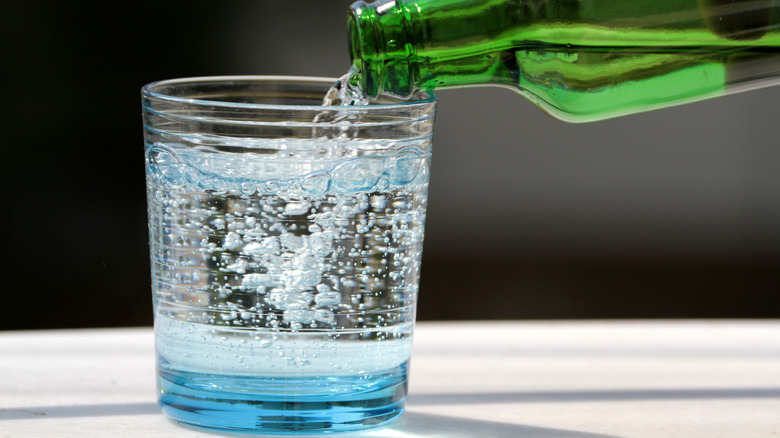
Soda water gets treated as an afterthought in most home bars, whatever's cheapest or already in the fridge, poured in without much thought about how it actually affects the drink. "All soda water is not made equal!" says Aidan Contreras. "Use a cold, crisp mixer with a flavor profile you enjoy, and avoid using mineral waters unless a recipe calls for it." Keep in mind that mineral water in particular can carry its own mineral taste and a different carbonation level than a mixer designed for drinks, which changes the final flavor in ways that might not be taken into consideration.
And finally, temperature matters just as much as the water itself. A soda water that's gone even slightly warm loses carbonation fast. This in turn flattens texture and mutes the hit a cocktail aims for on the first sip. Keep your mixers well chilled, and reach for one made specifically for drinks rather than whatever sparkling water happens to be on hand. These are simple things you can do that changes more about the final result than it gets credit for.
7. Mixing different spirits can make you ill

"There's a belief that mixing spirits makes you sick. In my experience, drinking too much is what makes you sick," says Aidan Contreras. "Split-base spirit cocktails are some of my favorite cocktails. No need to be scared, just drink responsibly!" The distinction here is between quantity and combination. A rough night after drinking usually comes down to how much alcohol went in overall, not whether it came from one bottle or several different ones mixed together.
Erin Bell points out that spirit quality rather than mixing is the more relevant factor. "Typically higher quality, not necessarily more expensive, but higher quality spirits will leave you feeling less bad the next day because they're usually much tighter on their cuts, so there's less likelihood that you'll have muddling between the heads and the hearts, and the hearts and the tails," she explains. She's careful to note that this isn't a free pass either. "All alcohol will give you a hangover if used in excess, but some will be a little less rugged." A split-base cocktail, built with two different spirits working together, is a common style that plenty of bartenders use, and should not be considered a blanket warning sign to steer clear of.
8. Only using ice to dilute a cocktail
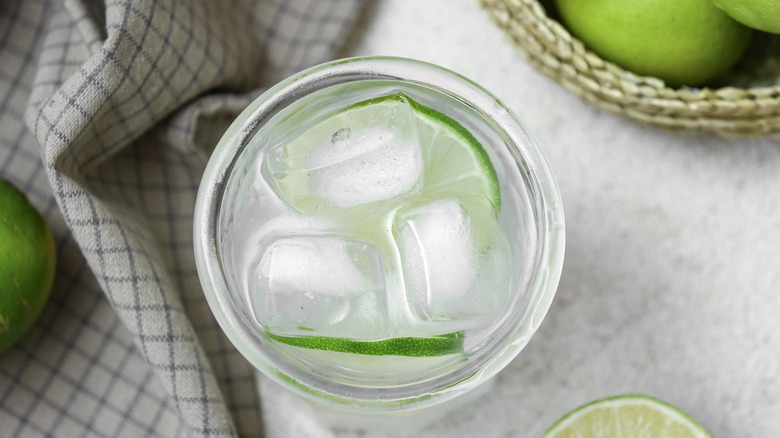
Ice gets all the attention when it comes to diluting a cocktail, but according to Erin Bell, plain water deserves just as much credit. "Something that people don't think about at home that will really inform how they approach experimenting is the power of water," she says. "I really love Old Fashioneds, and I've been told [I] make really good Old Fashioneds, and I personally think it's because right at the very end, I add just the smallest splash of water. It really opens up the drink a lot." Her reasoning ties directly into how we actually experience flavor. "Trust your nose means a lot more when it comes to alcohol because your olfactory glands are like 50% of your sense of taste," she explains. "So if you have something that's got a really heady nose, you're going to bury your taste buds."
Bell does however, draw a distinction between two different kinds of dilution. Ice dilutes a drink slowly and progressively as it melts over time, but a splash of water added to finish a cocktail off works differently. "It's a little bit more of an abrupt release, kind of like an off-gassing," she says. "It can really smooth out the nose, so that when you're taking your first sip, you're getting all of the elements."
9. Craft labeling ensures high quality
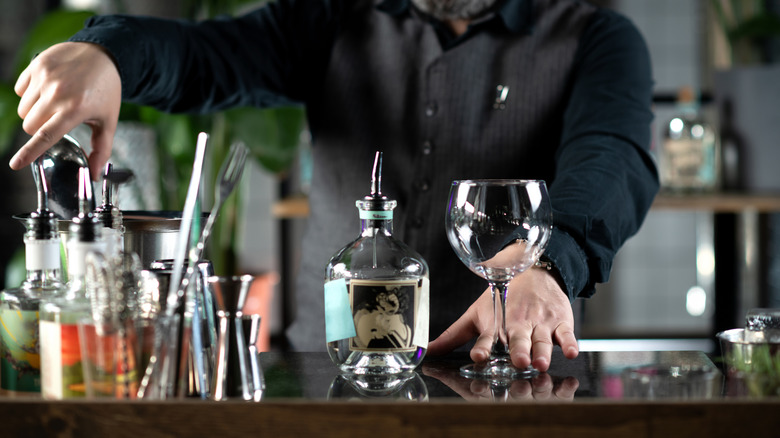
"Craft doesn't always mean higher quality," says Erin Bell. "So I implore people to learn how to read bottle labels," she says. Her advice comes down to a specific distinction most shoppers never think to check. "If a bottle label says 'distilled by,' that means that those people actually made it. Where if it just says 'bottled by,' they probably bought it from somewhere else. That doesn't always mean that there's something wrong with it, but it is important to know." A brand can have a compelling story, appealing packaging, and a genuinely craft-forward image, while still sourcing its actual spirit from a large third-party producer rather than distilling it in-house.
Bell has pretty practical advice for cutting through the marketing jargon. You need to try the "craft" cocktail you're planning to make in the bar before buying the specific "craft" bottle. By doing so, you know whether you actually like the drink rather than relying on a label's story to make that decision for you. Between checking whether a spirit was actually distilled in-house and tasting before committing to a full bottle, you are a better judge of quality rather than simply trusting the word "craft" printed somewhere on the bottle front.
10. Cocktail garnishes are there to look pretty
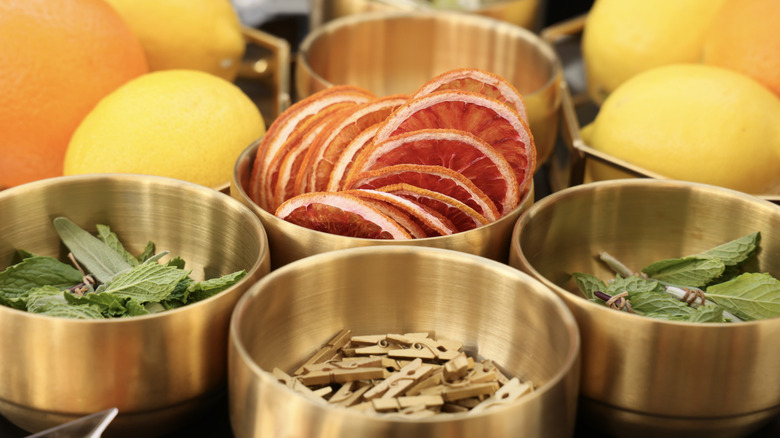
A garnish is often the last flourish added to a cocktail but it is also the first thing photographed, which might explain why so many home bartenders treat it as an extra rather than something that actually affects the drink. "If you aren't expecting to taste it in your drink, it shouldn't be in there, and that goes for garnishes," she Gaby Varela. "I think people underestimate that a swath of orange has a lot of oil in it, or the lime in your vodka soda provides lime juice."
Luke Barr agrees that garnishes should support the drink's flavor rather than distract from it, and points to a specific way that goes wrong. "Garnishes paint a picture that gives you a hint at a cocktail's flavor profile, and can enhance their flavor through aromatics," he says. "But over-the-top garnishes, like when there's a whole meal skewered on top of a Bloody Mary, have the opposite effect. They're sending overwhelming mixed signals that steer you away from the actual flavor profile."
Aidan Contreras takes a more relaxed stance on the whole debate, pointing out that a purely decorative garnish isn't inherently wrong either. "There's nothing wrong with a cutesy garnish that doesn't add any flavor if that is the aesthetic you are going for, but does it really need it? Sometimes simplicity is the most elegant route for presentation," he says, and we have to agree!