

9 Hacks For 10x Fluffier Boxed Cornbread
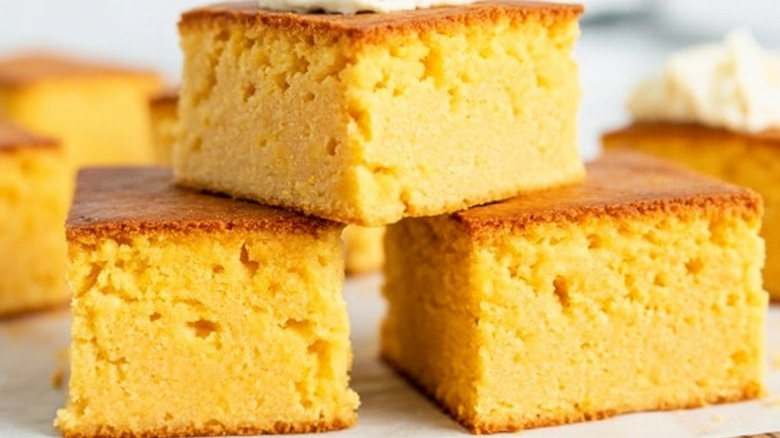
Everyone loves a tray of cornbread at the table. Whether as an accompaniment to a juicy barbecue or with a warm bowl of soup, having a box of cornbread mix promises a speedy and delicious side. But while cornbread can be called many things, it rarely delivers on the fluffy front. Most versions bake up flat, dense, and a little heavy. The high, airy cornbread slice you had dreamt of could not be further away from what's on your plate. The good news is that turning a basic box into something genuinely light and airy doesn't require starting from scratch or hunting down specialty ingredients. It comes down to understanding what actually makes a batter rise, and adjusting a few small things along the way.
None of these tricks require replacing your box mix with a grocery list of new ingredients nor does it demand you turn a 15 minute recipe into an hour long project. Most require nothing more than a spoonful of this or a few extra minutes of that — it's more about small adjustments layered together rather than one single fix. Put a handful of these nine hacks to work in the same batch, and the difference between a flat, forgettable pan of cornbread and a genuinely fluffy one becomes obvious with your very first bite.
1. Swap the milk for buttermilk
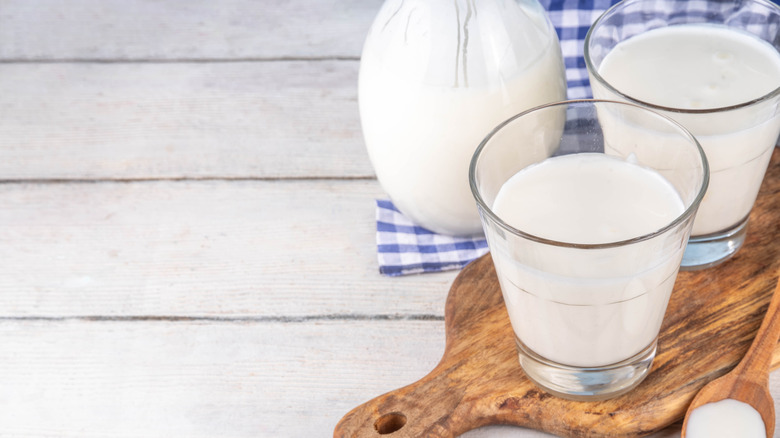
Swapping the milk in the recipe (be it from scratch or a boxed mix) with buttermilk instead makes a significant difference to the texture and lightness of your cornbread. Let us explain: Buttermilk is naturally more acidic than regular milk. Most cornbread recipes call for baking soda as the leavening agent. For baking soda to react it needs an acid to produce carbon dioxide gas, and it is this gas that creates the airy crumb in a batter. Regular milk can only do so much on the lightness front. When you add buttermilk, the baking soda already in the boxed mix gets to do more of its job.
The swap itself is as simple as replacing the milk with an equal quantity of buttermilk. For a standard Jiffy-style mix, which usually calls for around ⅓ of a cup of milk, that just means measuring out the same amount of buttermilk instead. You could go ever so slightly closer to ⅔ of a cup, for an even richer result, but keep an eye out on the batter's consistency so it doesn't turn watery. And finally, don't stress if you do not have any buttermilk on hand. Simply stir a tablespoon of lemon juice or vinegar into a cup of regular milk and let it sit for about five to 10 minutes before using. The curdled mix will be as close to buttermilk as you can get.
2. Add an extra egg
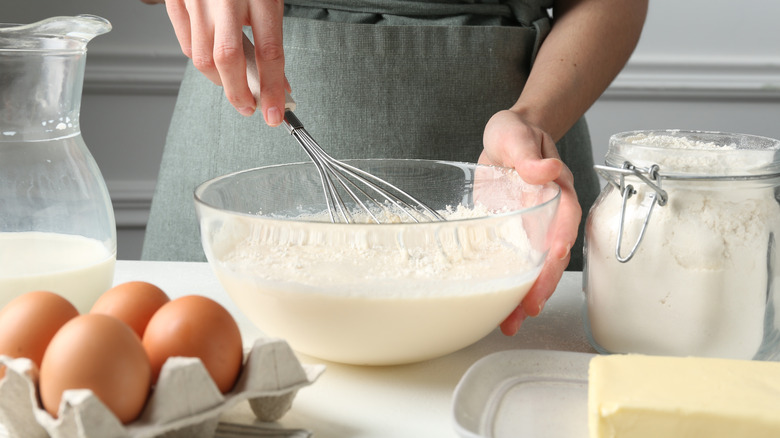
Most cornbread recipes or boxed mixes call for 1 egg to be added. A simple addition of an extra egg however can make all the difference in how much lift the batter actually gets. Eggs work as a natural leavening agent in baked goods (this is in addition to baking powder or baking soda in the recipe). When you beat eggs into any batter, air gets trapped inside the egg proteins. This trapped air expands once the heat of the oven acts on it and the batter rises with a lighter, fluffier crumb. Adding a second egg simply means more trapped air in the batter as compared to a single egg.
Just remember to mix gently and carefully in order to protect the extra lift. A heavy hand can reduce the effects of this easy hack faster than you think. An extra egg is a simple, no-scrambling-around-for-more-ingredients way to build in more lift than the box recipe promises on its own.
3. Let the batter rest before baking
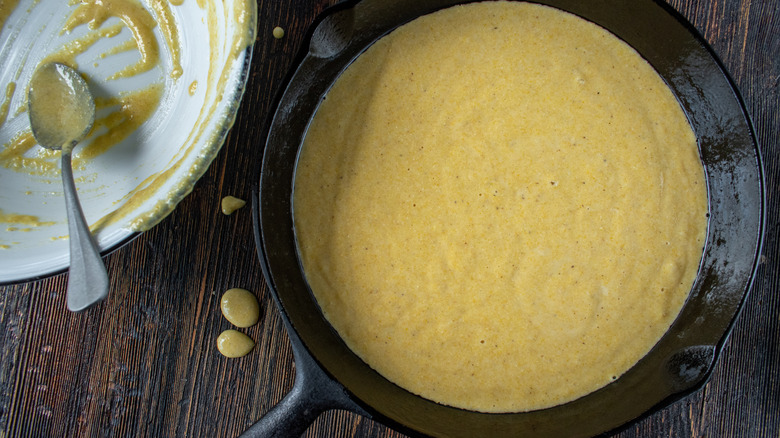
So, you've whisked up the batter and are keen to get it into the oven right away. However, giving it even a short pause can go a long way toward a fluffier finish. A cornbread recipe contains leavening agents (most often a combination of baking powder and baking soda). When liquid hits the dry ingredients, carbon dioxide is released in the form of tiny bubbles. While this can be visible almost immediately, the reaction needs a few minutes to properly build momentum. Popping the batter into a heated oven as soon as it is mixed can leave the finished cornbread flatter than it should be.
A word of caution here though. There is a sweet spot regarding the timing of this pause. More isn't always better. The same reaction that benefits from the waiting period will eventually peak and the reverse reaction will start if the batter sits too long before baking. For example, a rest period that runs past 20 minutes or so can actually work against the final rise. This will allow some of that carbon dioxide to escape even before the batter reaches the oven's heat, resulting in a flat, dense texture. The ideal resting window is around 10 minutes, long enough for the leavening reaction to get underway, short enough that nothing fades before baking even starts. It's also a convenient stretch of time to preheat the oven, so the rest period isn't wasted either way.
4. Add butter
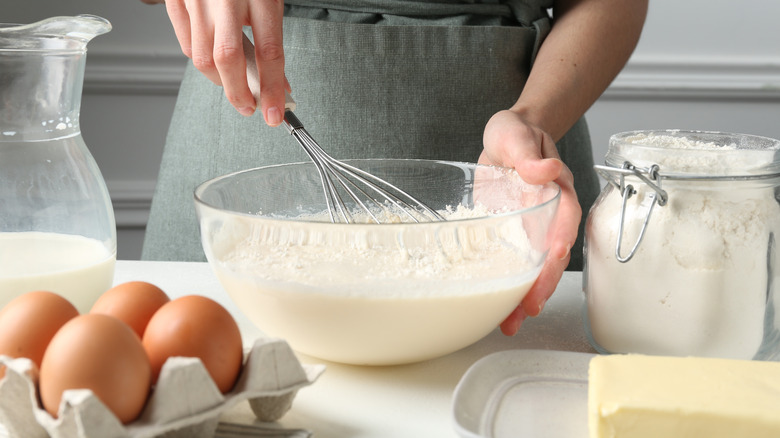
In classic baking techniques, softened butter must be creamed with sugar to create air pockets in the batter. These air pockets expand with steam once the batter meets the oven's heat. Leavening agents work in tandem with this chemical reaction to help the final bake rise higher. Now a typical cornbread boxed mix skips the entire creaming process. Standard Jiffy directions call for just an egg and a splash of milk. Another way to add rise to your cornbread (and a whole lot more flavor) is by adding melted butter to the mix. Working melted butter thoroughly into the wet ingredients before combining with the dry mix still incorporates some of that same aeration.
Salted butter ideally should first be melted and then stirred into the other wet ingredients. You then carefully mix the wet ingredients into the dry mix. Melted butter blends in far more evenly than cold butter would, and this in turn distributes the aeration throughout the batter rather than leaving pockets of unmelted fat behind. Paired with other lift-focused techniques like an extra egg or a short rest before baking, adding melted butter works toward the same goal of a taller, fluffier, lighter cornbread.
5. Don't overmix
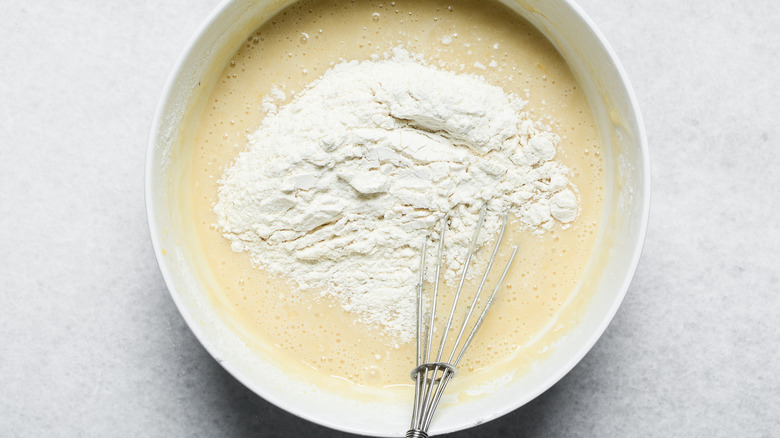
Of all the tips on this list, this one costs nothing and asks for no extra ingredients. All you need is a lighter hand and to trust in the process. Simply stir just until you see the dry ingredients disappear into the wet ones. Mix gently and stop as soon as there are no streaks of flour or cornmeal sitting on top. If there are a few small lumps left in the batter, these aren't a problem, so don't try to smooth them all out. This is usually what leads to overmixing in the first place. Remember, the batter doesn't need to look silky to rise well.
This matters whether you are mixing with a spatula, a whisk, or an electric mixer. In fact, a stand or hand-held mixer can do more damage to your batter than you think as it can overmix in no time at all. Folding gently, checking for dry pockets, and stopping the moment the batter looks combined applies no matter what tool is doing the stirring. Keep in mind that overworked gluten forms a tighter, more elastic structure that resists expansion, and the result is a cornbread that rises less and comes out flatter and denser.
6. Whip the egg whites separately, then fold them in
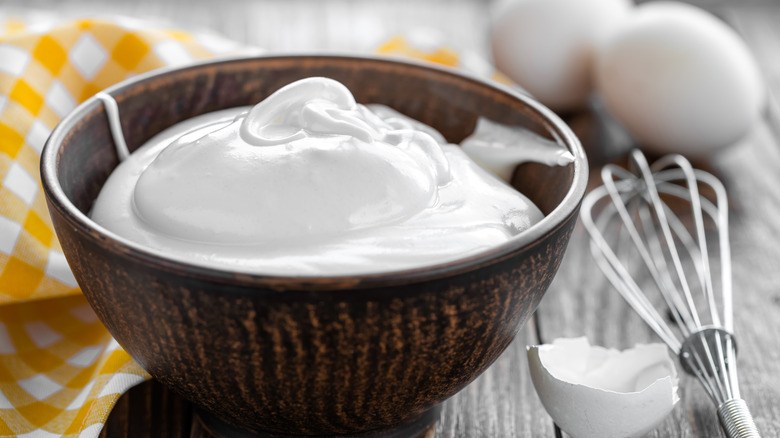
Now this hack might require an extra step and an extra bowl, but bear with us. All it asks is that you separate the egg yolk and white into two different bowls (a copper one does an even better job), and the white gets whipped on its own before being folded back into the batter. When you whip egg white, tiny bubbles are built into the protein structure that hold their shape once they're stiff. Mix this fluffy egg white mix carefully into the finished batter and bake for a welcome extra lift to your cornbread. You will also notice a lighter texture as compared to if you simply stir in an egg at the start.
For this hack to work well, the order of mixing matters. The dry mix, the milk, the melted butter all get combined first into a normal batter. Only once that base is mixed — again not too much — does the whipped egg white get folded in. Always gently, and always with a spatula. Now is not the time for an electric mixer. Stirring it in the way the rest of the ingredients were mixed would knock all that trapped air right back out, undoing the whole point of whipping it in the first place. This technique doesn't change how the cornbread tastes but it does changes how it feels, producing a softer, airier crumb whether it's served warm or cooled down later.
7. Add a spoonful of cornstarch
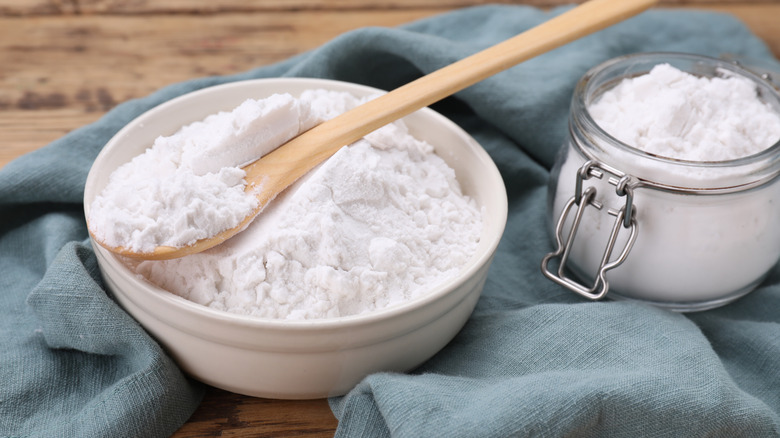
This is one of the least obvious tricks on this list, and it works differently than most of the others. Instead of adding new elements of moisture or fat, a small amount of cornstarch is stirred into the dry mix. This changes the structure of the batter itself. Cornstarch (not to be confused with cornmeal) is pure starch. It contains none of the protein that builds gluten in flour or coarser cornmeal. This is important because gluten is what forms the tight, elastic structure making it harder for the batter to rise. Cornstarch, in fact, works in the opposite way. Thanks to its fine texture, it disperses evenly through the batter, and helps create a looser structure that traps air more easily, making it all the more easier to produce a lighter, fluffier crumb on your cornbread rather than a dreaded denser slab.
A spoonful of cornstarch is genuinely all that's needed too. Even 1 or 2 tablespoons stirred into the dry mix before adding any liquid can noticeably shift how much the batter rises. Beware of adding too much, though, as you are then working against the goal. Too much cornstarch alters the structure of the batter entirely, making it heavy and unable to hold the air it's trying to trap, causing it to collapse rather than lift.
8. Fold in a spoonful of sour cream
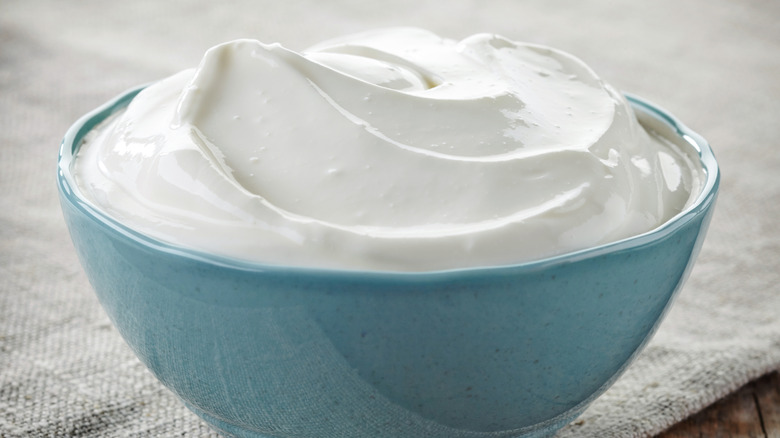
By now you know that the leavening agents in a cornbread mix need acid to react to produce carbon dioxide — the gas responsible for lift in a batter. You also know that buttermilk is a better trigger for this reaction than regular milk. Sour cream fits that same role. With its natural tang, even a couple of tablespoons into the batter gives the baking soda already in the mix more to react with, helping push more air into the crumb as it bakes. Again, here's an easy trick to make sour cream at home.
Sour cream being thicker and more concentrated needs only a small amount folded into the wet ingredients before combining with the dry mix. Adding too much can change the batter's consistency instead of making it fluffier, so proceed with caution. Once more, the principle of gently folding and a short rest time will go a long way to get the batter ready for an even, fluffy rise when it hits the oven.
9. Add a spoonful of instant vanilla pudding mix
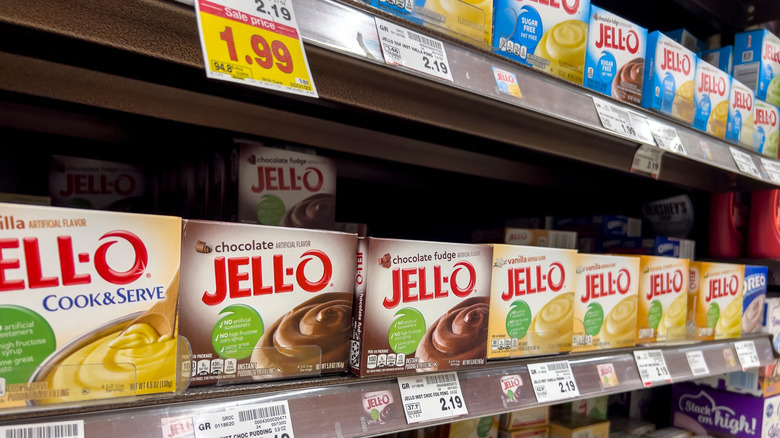
Adding instant pudding mix to your cake mix is an age-old hack for a tastier, fluffier sponge. Will the same logic hold for a cornbread mix? Well, according to Reddit threads and Facebook chat groups, many home cooks swear by it! Using it couldn't be simpler. Add the dry instant pudding powder into the dry cornbread mix. Stir well before any wet ingredients are added. At no point are you preparing the actual pudding as that would introduce far too much liquid and throw off the batter's structure entirely, turning it dense and gummy rather than light. A packet of dry pudding mix can be whisked straight into batter and still do its job once it hits the oven. The sugar in the mix also helps retain moisture, while the cornstarch contributes to rise, giving baked goods a taller, fluffier result.
Vanilla is the natural choice for cornbread specifically, since its flavor blends into the background rather than competing with the corn itself. By using this easy hack, you would simply be joining the bakers and pastry chefs who have long since leaned on the same instant pudding shortcut across various baked goods for exactly this reason, moisture and structure in one convenient, shelf-stable ingredient. And if you wanted to take your cornbread one step further into dessert territory, well, you are almost half-way there anyway.