

Consumer Reports' Highest-Rated Non-Dairy Milk Is Almost As Nutritious As Cow's Milk
We may receive a commission on purchases made from links.
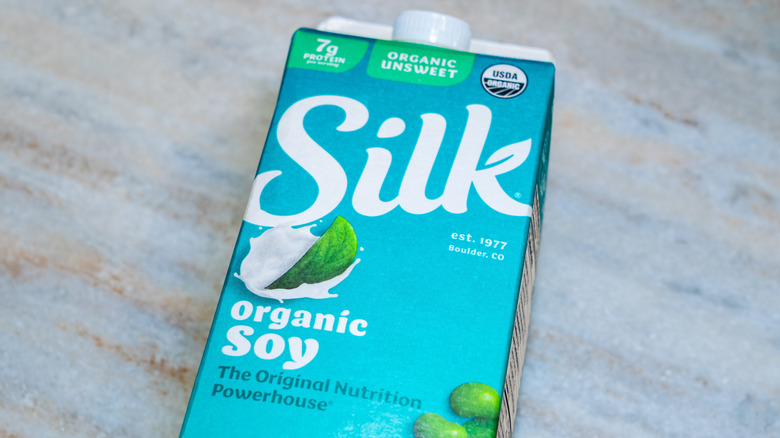
The plant-based milk aisle has rapidly expanded in recent years, which can make choosing a dairy-free milk feel a bit overwhelming. Luckily, when Consumer Reports reviewed over 30 dairy milk alternatives, the clear winner was a simple classic: Silk Unsweet Organic Soymilk. Consumer Reports rated the non-dairy milks based on overall nutrition, flavor and texture, and how the vitamin and mineral composition compared to the nutrients found in cow's milk. Silk Unsweet Organic Soymilk was the top-ranked with an overall score of 80 out of 100. The soy milk truly shone for its nutritional value. It earned a perfect score in the vitamins and minerals category, and a four out of five in overall nutrition.
If you're seeking out an all-purpose, plant-based milk that's nutritionally comparable to dairy, Silk is where it's at. It contains 7 grams of protein and 23% of your Daily Value of calcium per 1-cup serving, that's compared to 8 grams of protein and 29% of your Daily Value of calcium for the same amount of 2% milk. Plus, in a refreshing contrast to many plant-based milks, it has no added sugar and a relatively simple ingredient list. Silk Unsweet Organic Soymilk took first place, but soy milk in general swept the Consumer Reports' review — the top six dairy milk alternatives were all soy milk.
Why soy milk tends to be the most nutritious non-dairy milk option
Consumer Reports has reviewed almond, coconut, soy, and oat-based milk alternatives, but according to the organization, soy milk easily crushes the competition. The six soy milks that have been reviewed by CR scored between 68 and 80 out of 100, while the highest rated non-soy milk, Planet Oat original, clocked in at just 64 (here's our ranking of oat milk brands). Soy milk's dominance makes a whole lot of sense – cow's milk is considered the most nutritionally complete milk option thanks to its balance of macronutrients and vitamins, and soy milk is widely established as the plant-based alternative that's nutritionally closest to dairy milk.
Unlike other non-dairy options, soy milk contains a hearty dose of complete protein (typically 7 to 12 grams per cup). Additionally, the ancient plant milk packs a powerful punch of vitamins and minerals, including calcium, potassium, vitamins A and E, and magnesium. In fact, fortified soy beverages are the only plant-based alternative close enough to milk to be included in the dairy category of the U.S. government's nutritional guidelines. If you're looking for more non-dairy milk tips, here's every plant-based milk and the best way to use them.