

Why You Won't Catch Professional Chefs Cooking With Non-Stick Pans
We may receive a commission on purchases made from links.
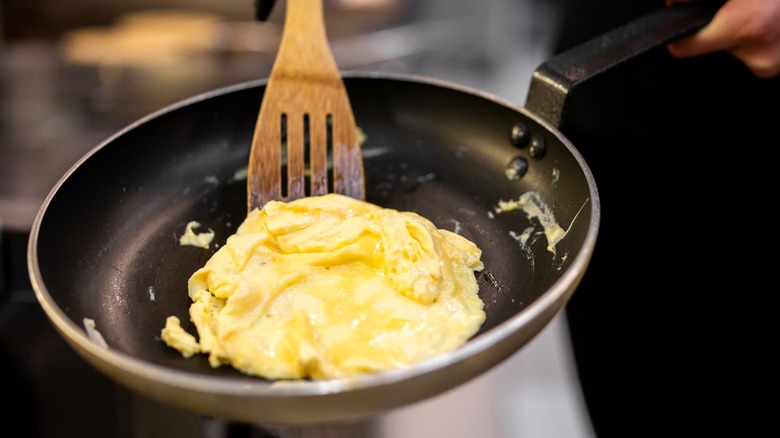
Using the appropriate tool for the job is essential for any task worth doing right, including kitchen work. Non-stick pans aren't a great choice for browning ground beef, but they are generally considered a necessity for foods like fried eggs and pancakes — to home cooks, anyway. According to Michelle Doll-Olson, the senior culinary development manager at Hello Fresh, the pros aren't on the same page as the rest of us.
"When I'm working, we don't tend to use non-stick pans; we'll use stainless steel or cast iron instead," says Doll-Olson. "These pans last a lot longer and can withstand higher temperatures, which makes them much more efficient when we're using them all day, every day." Home cooks might break out their trusty non-stick pan once a day at most. Yet given the sheer volume chefs have to contend with on a daily basis and the high cost of replacing dinged-up cookware, durability is a must for industry professionals.
So what type of pans do expert culinary masterminds prefer? Doll-Olson says, "I'd say the best multi-purpose pan for cooking in a professional kitchen would have to be a carbon steel pan, as it has a natural non-stick quality while also being able to withstand high temperatures and remaining a durable option." But Doll-Olson isn't recommending that home cooks rush to their cupboards to toss out their cherished non-stick pans. They function as a convenient option for some dishes, partly because they're easier to clean (ever try removing eggs stuck to a stainless steel pan?) and more affordable than their counterparts.
The pros and cons of non-stick pans
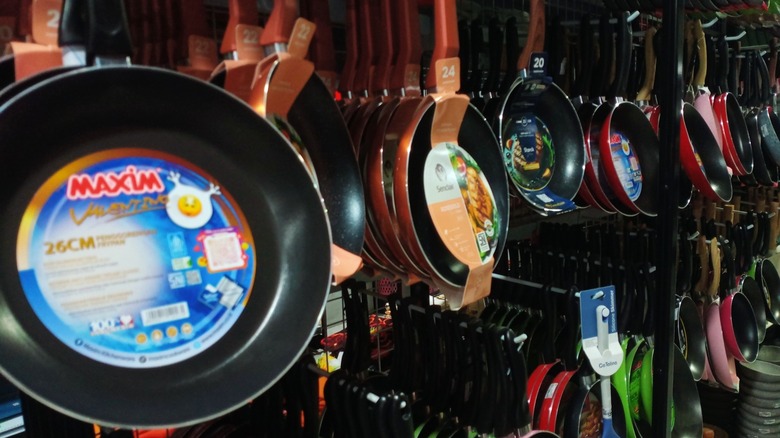
While Michelle Doll-Olson doesn't prefer non-stick pans in a professional setting, they understand why they are so appealing to many home cooks. "I think non-stick pans are the most common choice for most households, as they tend to be affordable and easy to use," notes Doll-Olson. "Stainless steel pans are more expensive, and if you don't understand how to use them, they can be difficult."
There is a learning curve to using stainless steel pans, but they also offer folks multiple advantages over non-stick. For one, you shouldn't set most non-stick pans under a broiler to impart a crusty finish on dishes because the intense heat ruins the protective coating. And while they tend to be pricier than their counterparts, a stainless steel pan will last indefinitely if it is adequately cared for. Non-stick pans, regardless of how well they're treated, should be replaced every three to five years because the coating will deteriorate. Once you figure out the nuances of the cookware, like how hot to get a stainless steel pan to make it non-stick, it's a superior option in the kitchen.
Still, the high cost is a hindrance for many people, and the easy cleaning aspect of non-stick pans is incredibly appealing on busy weeknights when you just want a hot meal on the fly. Doll-Olson understands why many folks gravitate towards them as a go-to and recommended their favorite to use at home. "My favorite is Scanpan; it's the most durable and non-toxic in my opinion," they share. "If you overheat your pan, it can polymerize your oils, making it sticky, so I don't take mine above medium-high."