

13 Pricey Name-Brand Groceries That Aren't Worth Buying In 2026
The U.S. has long been a beacon of capitalism, and the iconic brands we all know and love are beacons of that beacon. Whether it's McDonald's, Goodyear, Tylenol, Apple, Windex, or any of the other household-name entities, they each have a firm place, not only in our homes, but in our psyches.
Well, that bond has been eroding across recent times — especially in the grocery store. Economic challenges for the average spender, along with the rise of less expensive generic and store-brand products, has seen consumers turn to alternatives in lieu of name-brands.
The shopping landscape of 2026, especially in the face of rising inflation, has put the high retail cost of legacy labels in stark relief — and people aren't liking what they're seeing. Here are 13 of those pricey flagship items that just aren't worth the money as of August 2026, made all the more irrelevant by the availability of dupes that still deliver the quality while helping customers save dollars. See which ones you remain loyal to, have already abandoned, or are still on the fence about leaving behind.
Crown Royal
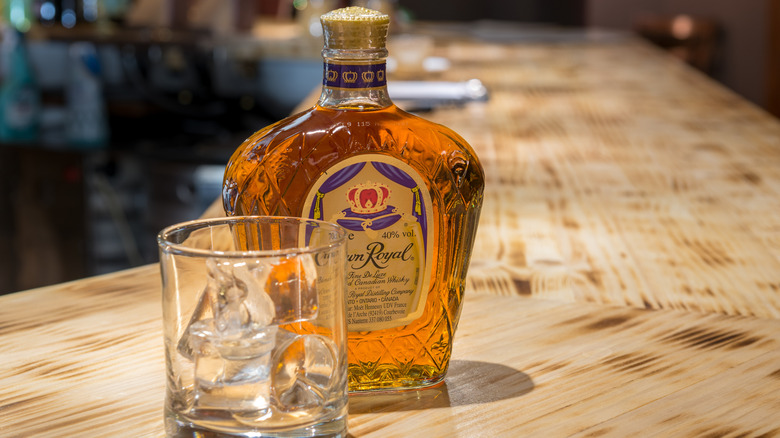
This may not have anything to do with the recent uproar over Crown Royal moving its manufacturing out of Canada, prompting Ontario Premier, Doug Ford, to publicly dump out a bottle of the heretofore national pride onto the cold ground. But, it doesn't help improve the label's optics either. To many, Kirkland's Canadian whiskey tastes every bit as good (even according to connoisseurs), sells for half the price, and, at this point, may even be more Canadian than Crown Royal. Ouch.
The similarity in caliber being what it is, and the cost difference to the consumer being as considerable as it is, has some folks even calling Crown Royal something of a scam. That's probably going a bit far for such a reputable spirit. However, shoppers are opting more and more for Kirkland's sweet, smooth, oaky whiskey and being vocal about it to boot. When you're talking $20 versus $40, it's easy to see why. Hey, at least Crown Royal sells some of the best whiskey lemonade around.
Tropicana orange juice
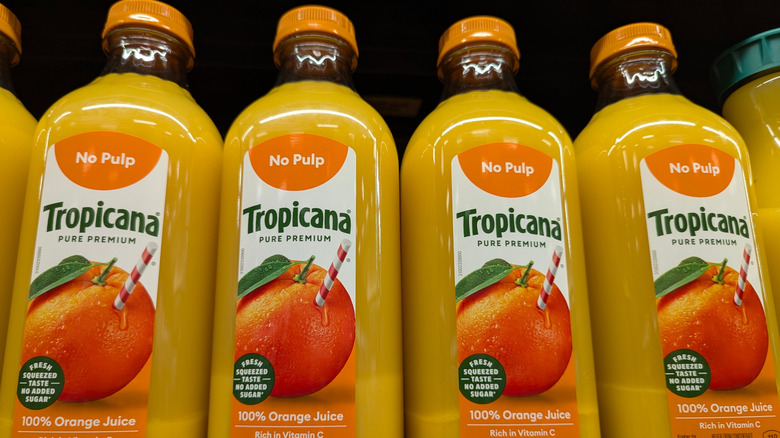
Many of us have grown up with Tropicana being the orange juice of choice in our fridge, something carried over from previous generations. A few of us even remember the glass bottles that absolutely made the orange juice taste better, and it's not in our heads. Even science says liquid out of a glass bottle is superior to plastic.
Regardless of all that, Tropicana has been slowly losing dominance in the OJ market, and price point is a big reason. A modest, 46-ounce container of Tropicana can run you as much as $5, while the larger offering, double in size, can go for around $9. Both are far from a throwaway amount for what you're getting.
Take Aldi's brand, Nature's Nectar. A 52-ounce bottle of that orange juice is around $4. Aldi shoppers have even declared the Nature's Nectar orange juice to be, not just as good, but better than Tropicana. Not a good look for the grand old brand — almost as bad as that orange juice-in-cereal madness Tropicana tried to thrust upon the world.
Hidden Valley ranch dressing
As many people on social media (RanchTok?) are more than happy to tell you, whether you ask them or not, you can easily make your own ranch dressing at home. This is not untrue, obviously. And, maybe some of us have more luxury with time than others (no begrudging there).
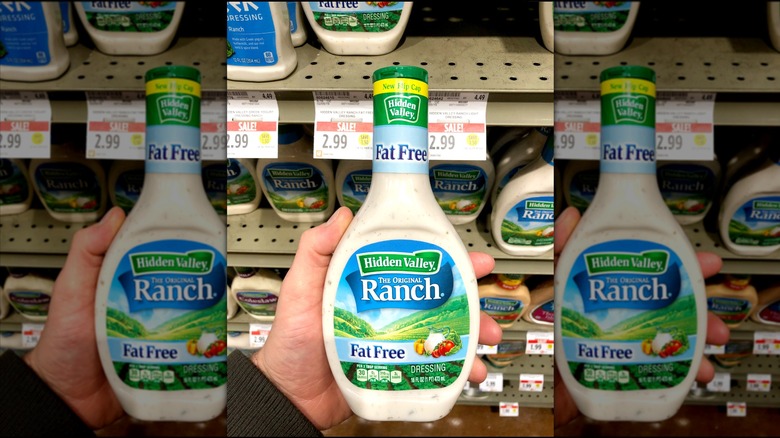
For those that do not, and just want to grab a bottle of it off the store shelf and call it a day, there's little point these days in making sure that bottle is of a Hidden Valley make. Yes, you can get yourself an 8-ounce bottle of the Valley at Walmart for $2.39. Doesn't seem like much, right? People drop more on a candy bar. But, when you consider that the same Walmart will be peddling its Great Value brand of ranch at $2.32 for double the size, Hidden Valley suddenly doesn't seem like such a wise investment.
Folks on the opinion-sphere have already realized this, noting that, name-brand ranch is not only a waste of money for the ingredients involved, it's also one of the easier condiments to replicate in their own kitchen, saving even more on your bottom line. Hidden Valley might just have to stay hidden ... from people's shopping lists.
Hellmann's mayonnaise
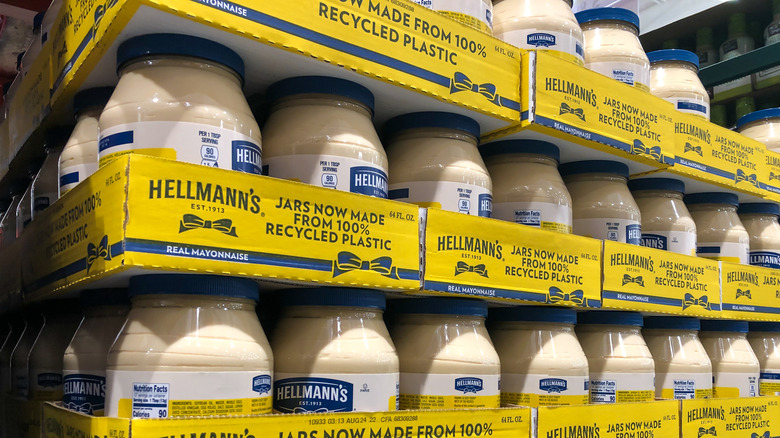
Another classic that pains us to mention here, especially since mayonnaise is one of those condiments where the caliber really does matter, is Hellmann's. Hellmann's is pretty much the GOAT when it comes to mainstream American mayo, but, times are what they are, and when you look at the chasm of difference in price these days with lower-profile brands, that Hall of Fame resumé suddenly means a lot less. Hellmann's, even at Aldi, sets you back almost $7 for a standard, 30-ounce jar. We mention Aldi, because it has its own mayo dupe on offer, hilariously called Burman's, as if it was a parody of Hellmann's. Burman's, we're almost sorry to say, only costs around $3 for the same 30-ounce jar.
And, Burman's — not just with its price but its comparable quality — has gone on to convert even the staunchest Hellmann's devotees. A house brand like that may even topple other heavy hitters, like Duke's and Heinz. Is this what rooting for the underdog looks like?
Gatorade
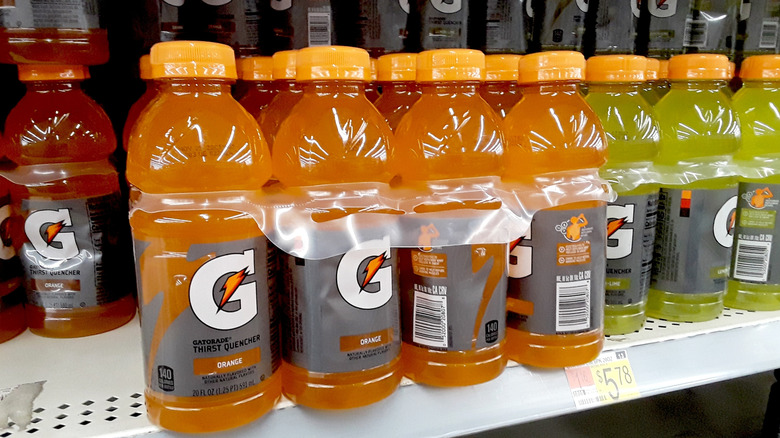
Whether you just ran a marathon or are extremely hungover, there's no sight for sore eyes like a bottle of Gatorade and its vibrant, Peter Max-like color hit. You don't want to just drink it, you want to I-V it. However, as much of an innovation as Gatorade was when first invented at the University of Florida all those decades ago, drink manufacturers have more than caught up. You can get the same, sugary, electrolyte infusion, with a range of flavors, from several other brands — and at a fraction of the cost.
A place like CVS is where you see Gatorade priced high, with a single, 28-ounce bottle costing over $3; especially when you consider Walmart sells an eight-pack of 20-ounce Gatorades for just about double that, at $7. Walmart is also rocking its cleverly named Great Value Sports Hydration Beverage (not even trying to avoid genericism there) for the same $7 — but that's for an 18-pack of 12-ounce bottles.
For those who don't want to do the math, that's 216 fluid ounces compared to just 160 for the same price — and you are still very much getting the hydrating ingredients you're looking for. Aside from that, people feel that there is no difference in taste, and, in fact, the Great Value brand may taste better. Even when taking the whims of subjectivity into consideration, the fact that the house-brand is anywhere close for so much cheaper kind of sells the point.
Froot Loops
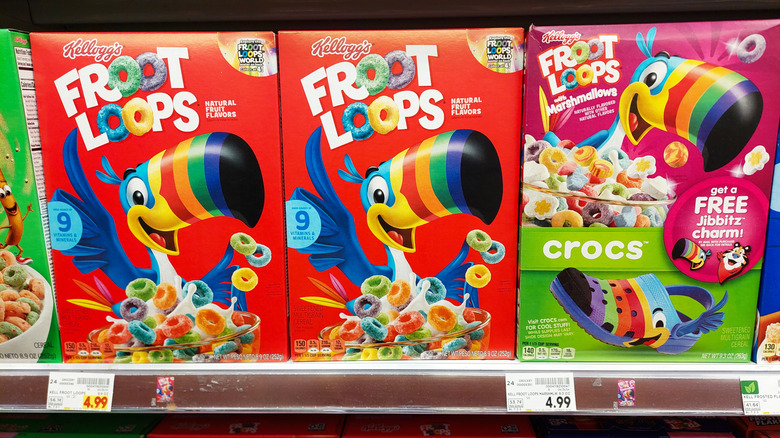
Cereal has long been an arena for dupes and copycats. Hell, a lot of them even use the exact same names. Unfortunately, it's no secret that the retail price of cereals from the major brands (General Mills, Kellogg's, Post) can be eye-watering depending on where you shop. Some cereals are imitated better than others, however, and the one repped by Toucan Sam is one of them — making its purchase harder and harder to justify.
Sure, you can get lucky and grab a Kellogg's Froot Loops on sale, with a large family-size at Walmart going for as low as $4.48. Aldi reflects the more standard price for that size, which is $5.49 at time of writing. Back at Walmart, however, the Great Value version — called Fruit Spins, complete with a mascot that looks like either a hoofed-rabbit creature or a shorn alpaca, maybe a lamb? — only costs a bit over $3 for its larger family size: 21.7 ounces. In addition, the Millville Fruit Rounds from Aldi (Mascot: Parrot) retails at only $2 for a regular-sized box (and apparently slaps, at least according to one TikTok taste-tester).
And, these are far from the only Froot Loops copycats out there. According to a NetCredit report, Froot Loops-style cereal was second only to sports hydration drinks (i.e. Gatorade) when it came to the largest average price difference between name-brand and store-brand. Maybe this is the comeuppance for Froot Loops trying to trick us into thinking it contains a variety of flavors when it only has one.
Heinz ketchup
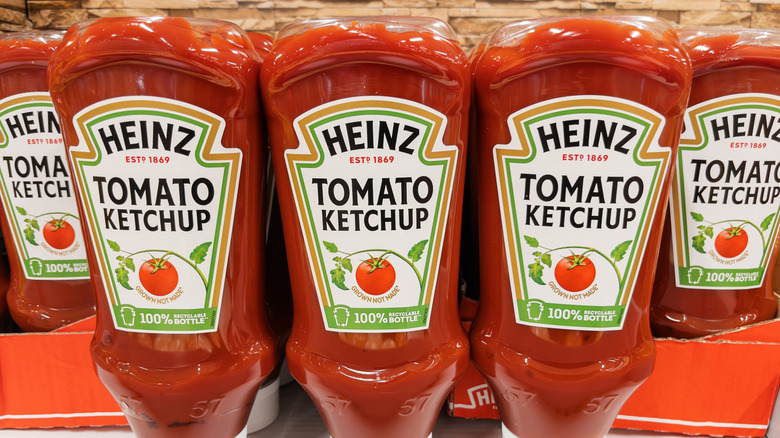
We're not trying to be iconoclasts here, we swear. Yes, we might be taking aim at some of the most recognizable names in American culture. And, to say Heinz is synonymous with ketchup is like saying Belgium is synonymous with Belgians. Heinz is ketchup. It's hold on some consumers is such that Hunt's is practically a four letter word for brand loyalists. Hey, we never said this was going to be easy.
The hard truth about Heinz is the rising cost at the grocery store has become, unlike ketchup itself, difficult to swallow. And, dupes like Aldi's Simply Nature organic ketchup — at just $2 and change for a 24-ounce bottle — have done well flavor-wise to, pardon the expression, catch up. Even so-called Heinz snobs say it's the only generic one they'll buy. Hard to lay off Great Value's regular ketchup as well, which goes for around $3 for a big-ass 64-ounce bottle.
How do these compare to Heinz's retail cost at time of writing? How about the similar $3.28 price for only 14 ounces. That's almost a 500% difference in quantity for the same amount of money, which is extraordinary, especially for a name brand that some feel is not even America's best ketchup.
Kellogg's Corn Flakes
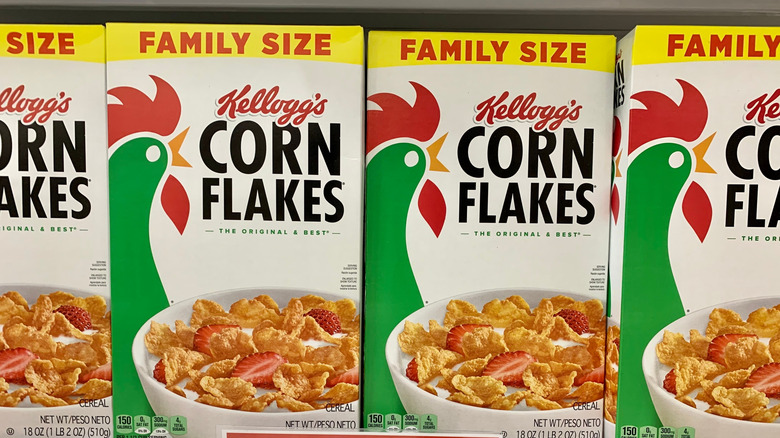
We're back in the breakfast aisle, with one of the cereals you can reasonably say started it all. The epic tale of Corn Flakes' origin has long become part of American food mythology. And, the story does have it all: Warring brothers, competing ingenuity, abstinence cults. What came out of it is an unquestioned cereal masterpiece. Yet, even the Mona Lisa can be copied, and that's much more difficult to recreate than Corn Flakes are, for sure.
Take Millville Corn Flakes. For the low price of $2.45 (for an 18-ounce box), you're getting, what some have called, the best Corn Flakes they've ever eaten. Great Value Corn Flakes at Walmart is even cheaper than Millville (and was on sale at time of writing for only $1.97). It has been called a prime choice for both taste and budgeting.
How do these stack up price-wise with the O.G. Kellogg's version? Well, a 9.6-ounce box at Walmart (half the size of the items mentioned above) costs almost $4 at Walmart. What almost makes the price all the more unpalatable, ironically, is that Kellogg's slaps "4 Simple Ingredients" on the front of the box, as a boast. If it's four simple ingredients, why is it breaking the average consumer's bank?
Tostitos
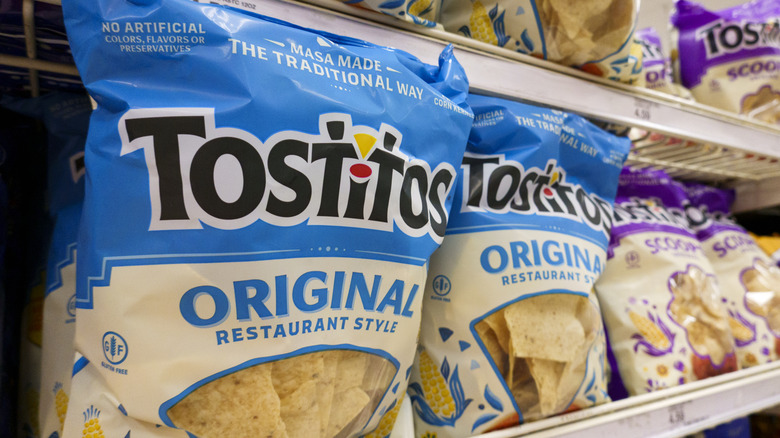
There was a time when Tostitos was the only tortilla chip around — the first one to properly sit alongside Fritos, Cheetos, Lay's, and all the other snack heavyweights on mainstream grocery store shelves. That hegemony is well in the past, however, as the number of tortilla chip options for the consumer has become fathoms deep. The funny thing is, it's not as if Tostitos even has specific dupes, like Doritos does. Tostitos is almost a generic version of tortilla chips on its own.
Making any reason to pay more for the brand in 2026 feel flimsy. After all, a 12-ounce bag of Tostitos at Target sets you back around $5; whereas a 13-ounce bag of Great Value tortilla chips is only around $2. Clancy's Tortilla Chips at Aldi — called "low-key the best tortilla chips on the market" by an adulating Facebooker — are also about $2 for a 13-ounce bag. As that same Facebooker witheringly put it: "Tostitos who?"
It doesn't help that, in general, brand-name tortilla chips, like Tostitos, had the fifth largest price difference from store-brands, according to a NetCredit report. The next time you're grabbing some Tostitos off the snack aisle for a get-together, ask yourself, "Why?"
Kraft Easy Cheese
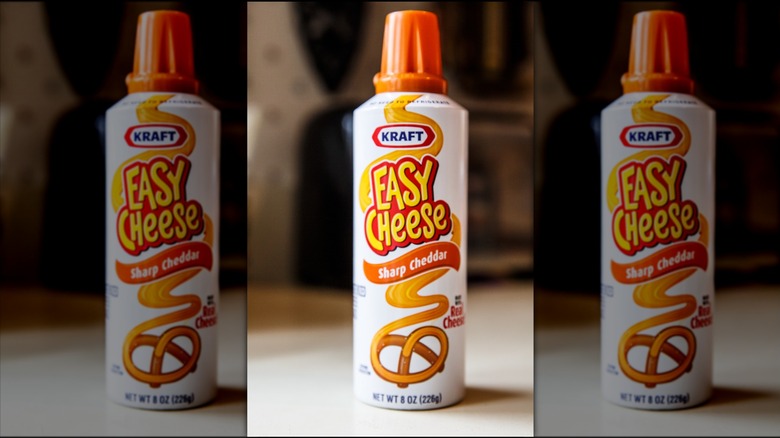
Something only America can birth into the world: Spray can cheese. If the U.S. did nothing else to offend the sensibilities of Europeans, this alone would be enough to do that forever. Regardless of that, who here hasn't, at least once, indulged in the giddy, sinful pleasure of spraying Easy Cheese directly into their gullet? It's why the Founding Fathers wrote the Declaration of Independence in the first place!
Jokes aside, Kraft Easy Cheese really is nothing special. Replacing that with a generic or a dupe is not exactly replacing Beaufort with Babybel. Especially when it's one of the grocery items with the biggest name-brand price spike. Take the Great Value Wow! Spray Cheese. An 8-ounce canister is, at time of writing, only $2.67. Kraft Easy Cheese is selling, at Walmart, for more than double that: $5.57.
Even Aldi's version — Clancy's Say Cheese — which sells for around the same price point as Great Value (if you can find it in stock) has been called a name-brand alternative that does the job perfectly well and hits all the right nostalgia buttons that Easy Cheese does. If you're not beating them in the nostalgia market, are you even winning?
Kerrygold butter
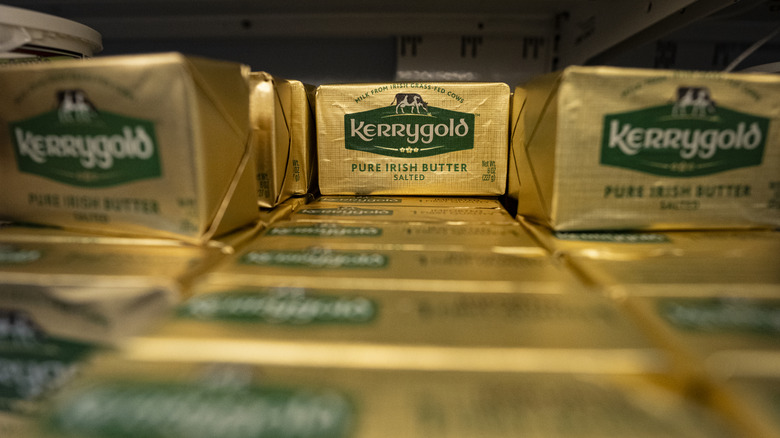
Anything that evokes pastoral Ireland is hard to resist. It just calls to you like a ballad sung on a hillside. Kerrygold is a brand that has always been tough to lay off buying, even for those few extra bucks — be it the addicting cheddar or, yes, the pure Irish butter. Unfortunately, another entity, one that's far less Emerald-y and Isle-y has gotten the better of Kerrygold. It's called Costco.
Even at Costco, the price gap is there for all to see. A four-pack of eight-ounce Kerrygold sells for $18.15. The Kirkland grass-fed butter (from New Zealand, but set up as an alternative to Kerrygold) is only $13.61 for the same quantity, at time of writing. To add insult to injury, the Kirkland brand seems every bit as comparable in taste as the Kerrygold.
Score one for the Kiwis. Or rather, more than one, since people seem to be in agreement with that assessment. One Redditor said, "Honestly, I consider it equal to Kerrygold. Can't tell a difference at all which is why I've continued buying it at a lower price point than the former." Next time Ireland plays New Zealand in rugby, this might be one for some bantz in the scrum.
Coca-Cola
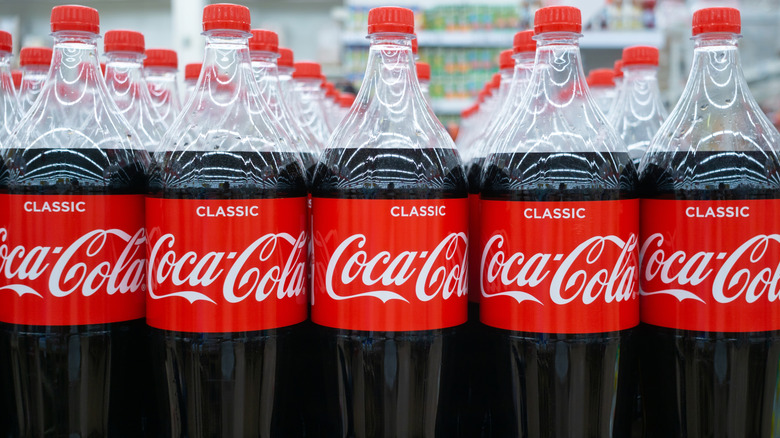
This is the last true Goliath we attempt to topple on this list. And, we'll admit, for many, it does not matter what argument we make here. We can say that buying an imitation Coca-Cola instead of the real thing will literally put an extra $500K in your IRA every year. Won't matter. They will still buy Coke and only Coke and that's the end of it. Again, this is understood.
But, it still has to be pointed out: A two-liter bottle of Coca-Cola, from Walmart, at time of writing, was selling for nearly $5. Signature Select Cola, a dupe, was selling for, on Instacart no less, $1.79.
Don't want to go for that? How about a two-liter of Aldi's Summit Cola — which people find does the job nicely — for only $1.09? Sam's Cola two-liter at Walmart for only $1 flat? And, folks love it. Maybe nothing will convince you to eschew your beloved Coca-Cola Classic. And, that's fine, it's your money. Just don't math those potential savings out for the entire year. It might shake you to your core.
Horizon organic milk
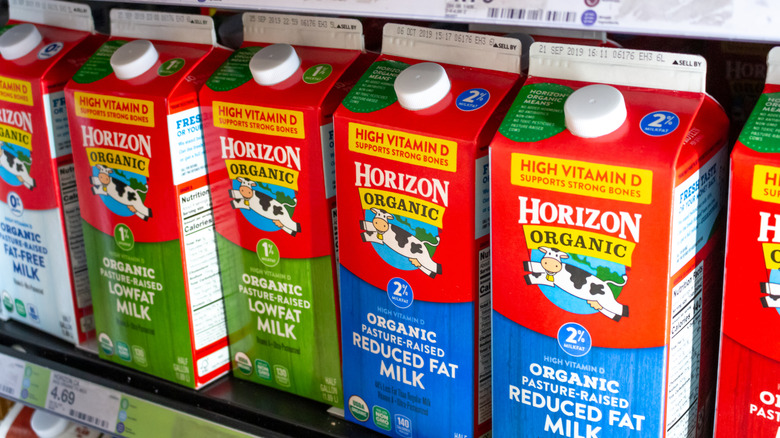
The extended shelf life of organic milk has been an awesome addition to the dairy section in recent decades. Gone are the days where one had to chug a gallon of milk on the expiration date just to feel like money wasn't wasted. Horizon has been one of the talismanic brands for organic milk. Yet, the landscape has shifted, and plenty of other organic milks have risen up — without their prices in relation to Horizon doing the same.
Granted, you can get, at time of writing, a half-gallon of Horizon whole milk for about $6 at Walmart — but that's on the lower end. Simply Nature organic whole milk at Aldi is only around $4. If you want to stock up, Kirkland Signature organic milk at Costco is a great bargain by comparison: Only $13.50 for a pack of three half-gallons. And, shoppers think it's very good milk indeed.
Even those that rank Horizon as some of the best shelf-stable milk around, admit it's rather steep in price. That money you can potential save from a cheaper organic milk brand can certainly be spent better elsewhere, can't it?
Methodology
I used a combination of data sets and information that measure the price gap between name brands and generic options — with special props given to NetCredit for doing the hard yards and providing a comprehensive, aggregated list across many popular retailers that showed which types of grocery products had the biggest cost differences in this regard.
This was combined with a look into popular opinion around which non-brand name products people preferred to spend their money on — often utilizing opinion-leviathan Reddit, among other social media, to get a sense of folks' choices. There was also a little personal subjectivity thrown in on my part since, hey, I'm a consumer too.