

The Very First Candy Haribo Ever Made Dates Back To The 1920s
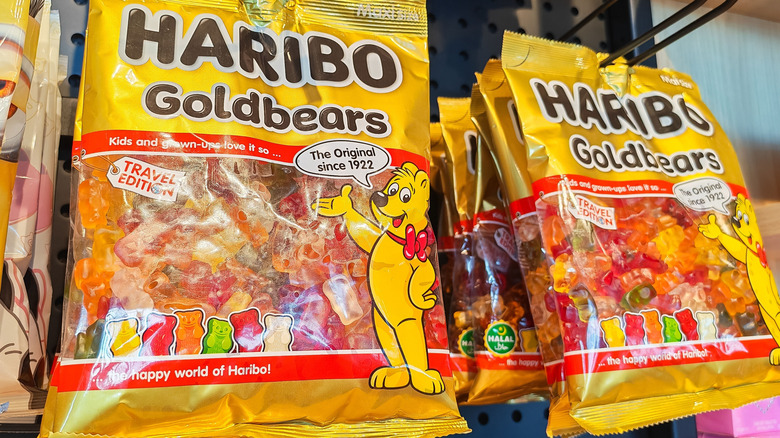
Haribo has become synonymous with gummy candy. If it's chewy, stretchy, gelatinous, cute, and brightly colored, there's a good chance that it's probably made by Haribo. But the company's history hasn't only been about gummy bears and gummy peaches and Sour Stretchers.
In 1920, candymaker Hans Riegel Sr. started a new candy company out of his home kitchen in Bonn, Germany. He named it Haribo (H-a for Hans, r-i for Riegel, b-o for Bonn) and initially began making hard candies. But he found those faceless blobs of hardened sugar impersonal and generic, and wanted to give children a candy that they could relate to and make them happy. By 1922, he was working on something better: gummy candies in the shape of dancing bears, which were a common form of entertainment in Europe in those days.
This cuddle-worthy candy quickly caught on — not only for its sticky texture, but also due to the cuteness of those beloved bears. The bear shape was modified over the years from the original dancing variety to a more plump and less athletic form until the company settled on a more teddy bear-like candy, which was officially renamed "Goldbears" in 1960 (and is still used today). Haribo candies would make their debut in the United States in 1982.
From Germany to the gym: Haribo gummies then and now
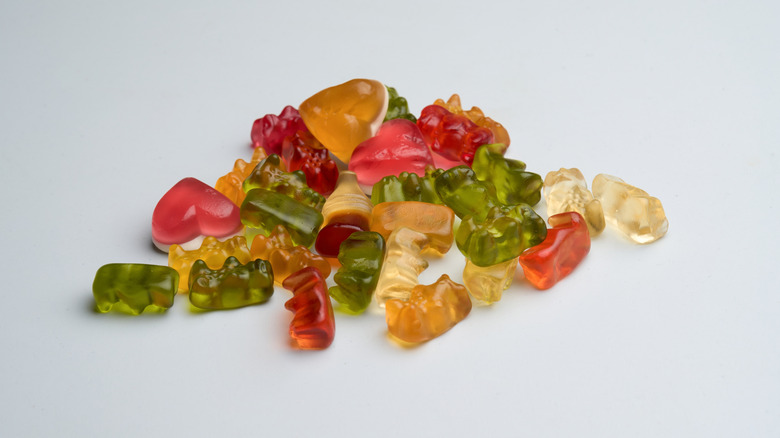
Haribo has come a long way since its earliest days in the kitchen in Rigel's house with a single employee (his wife). Today, the company has 16 production facilities in 11 different countries with some 8,500 staffers. In fact, the company now makes more than 1,000 different products (and we've ranked some of our favorites) sold in almost 200 countries around the globe. Of all those products, Haribo cranks out approximately 160 million gummy bears each day.
The candymaking process has also greatly improved since the days when Riegel was cooking up hard candies on his stove at home. Now, Haribo produces its candy using an intricate high-tech method. Every new candy shape that the company wants to put into production must first be drawn by hand. A 3D drawing is made from that original sketch, and then a machine makes a plaster prototype. Once any kinks are worked out and the new shape is good to go, Haribo produces a few hundred stamps that it will use to make candies in that particular shape.
The next step in the process is known as mold casting, and involves using a tray with multiple openings that are filled with corn starch. The stamps that were previously fashioned are pressed into the corn starch to introduce that shape, and then each opening is filled with liquid gummy candy so that it takes on the new form. The candies are left to solidify and dry before being polished up to look shiny. That's how we get gummy candies that kids love, adults crave, and gym buffs use to try to bulk up.