

In-N-Out's Secret To Staying Cheaper Than Your Other Favorite Burger Chains
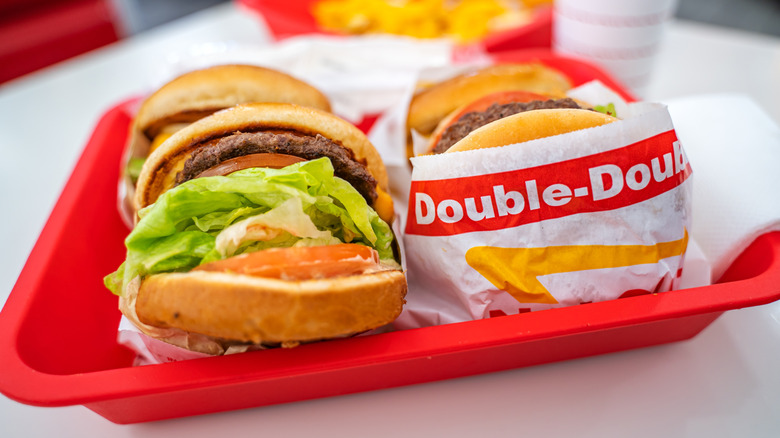
In comparison with other fast food chains, In-N-Out has managed to weather economic turbulence pretty well, especially post-pandemic. Granted, the price of a Double-Double has itself nearly doubled in the last 10 years, but McDonald's prices have tripled in that same timeframe.
This fun little factoid about In-N-Out's relative affordability becomes even more curious when you consider the fact it was paying its employees $20 an hour or more before California's $20 minimum wage law went into effect. (In-N-Out has reportedly increased employee wages to around $23 an hour in the wake of that law's passing despite campaigning against it and raised menu prices in response). Glassdoor has ranked In-N-Out as the second best place to work in the entire country (behind Crew Carwash but before Nvidia), and one of the biggest perks is the relatively high pay. Reasonable minds may differ on which fast food chain is the best to work at, but it's hard to argue with a living wage.
A business as big and as profitable as In-N-Out gets complicated once you look under the hood, but the primary reason In-N-Out has managed to keep its prices low is because it's a privately owned restaurant chain that does not operate as a franchise. In other words, there's no middleman. The In-N-Out company owns, operates, and otherwise makes decisions for each and every location. At a franchised fast food location, the franchisee is usually the one who sets the prices, though the corporate office does have some say in the matter.
Not all fast food chains operate like In-N-Out
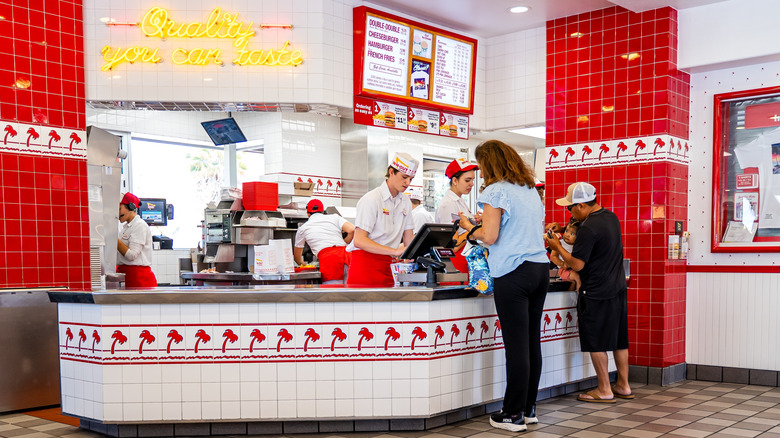
There's a famous legend around a conversation between former McDonald's CEO Harry Sonneborn and fast food pioneer Ray Kroc. As it's portrayed in the film "The Founder," Sonneborn says, "You don't seem to realize what business you're in. You're not in the burger business. You're in the real estate business" (via Inc.).
The McDonald's franchise business model has certainly helped it to grow into the second-largest fast food chain in the world behind China's Mixue in terms of number of locations, but it could also partially explain the price jumps the restaurant has been dealing with. In-N-Out doesn't have to deal with constantly negotiating with new wholesalers and vendors. Because there aren't as many middlemen looking for their fair cut of the profits along the way, the restaurant keeps an edge in an increasingly competitive industry.
In-N-Out also isn't as desperate to expand its reach the way other chains seem to be. The new In-N-Out in Tennessee was so packed someone made an app for wait times, so you might think the burger chain could benefit from a little more gusto. However, the president of In-N-Out, Lynsi Snyder, has expressed a desire to take expansion slow. If the company were public, that approach may not fly with shareholders looking to increase their profits, but because she inherited the company from her family and has no shareholders to answer to, she can helm the ship as she pleases. Maybe those shareholders should take note: The strategy seems to be working.