

5 Hands-Down Best Cuts Of Meat For Pan-Frying
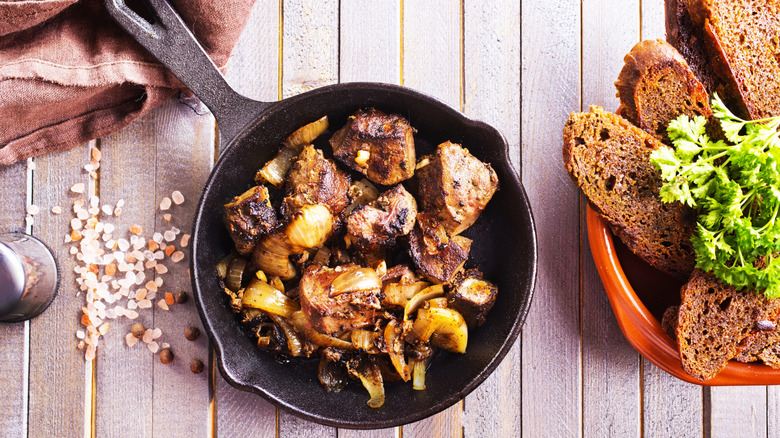
Pan-frying can make meat juicier while giving it a great crust when it's done right. It's a little easier than grilling in many ways, and it's a fast method to get dinner on the table. But it pays to be selective about the cuts of meat you're throwing into the pan. You need meat cuts with plenty of marbling – the webs of fat strands you see spread throughout raw chicken, pork, and beef. The cut should also be thin enough to cook quickly, according to Jenk McBrain, the owner of JD Meats & Seafood.
In an interview with The Takeout, McBrain emphasized the importance of marbling in meat meant for the stovetop and listed a few favorites for pan-frying. Meat with even, abundant marbling stays juicier as it cooks, plus it creates an extra layer of flavor. "Marbling leaves a great taste, especially when pan-frying," he says. "Filet mignon, ribeye, and Australian wagyu are all great options for pan-frying. The fat content on these cuts is great. It blends into the meat and is delicious."
Australian wagyu is a type of beef known for over-the-top marbling. "Wagyu fat melts at lower temperatures and fries the steak in its own juices," explains McBrain. "It's quicker to cook and delicious." You can buy all kinds of Australian wagyu beef cuts, but in general McBrain likes ribeye, filet mignon, and flat iron steaks for pan-frying. We've also found a couple of other cuts that are perfect for the pan.
Filet mignon
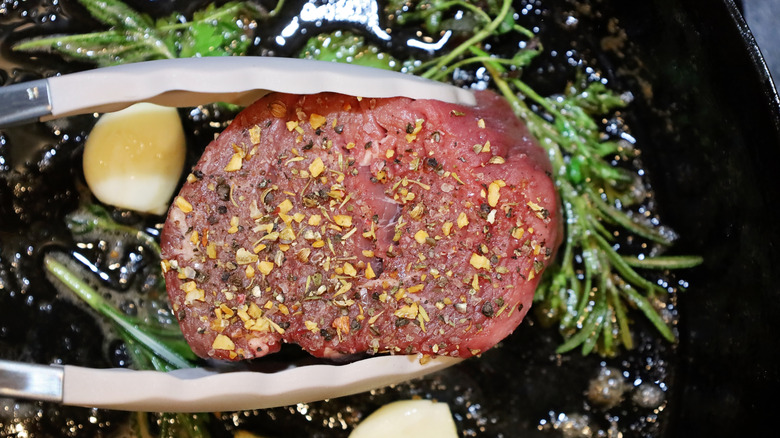
Filet mignon is an extra-nice cut of beef which is often on the menu at high-end restaurants and upscale steakhouses. It's a tender cut that comes from the beef tenderloin (that's one of the steak cuts which were Anthony Bourdain's favorites). It can be cooked many ways, but McBrain explains filet mignon is perfect when pan fried. "It's a soft meat that cooks quickly without sacrificing flavor," he notes. As a bonus, most filet mignon are usually 1½ to 2½ inches thick and weight 6 to 8 ounces — that means they're small enough that you can sear more than one at a time.
Most home chefs pan sear and oven finish filet mignon for a fork tender steak with an umami-rich crust. Use a cast iron pan for even heat distribution and add the steaks after the pan is heated through. Let them sit 1 to 3 minutes on each side to get a nice crust, then pop the filet mignon steaks into the oven for 2 to 8 minutes to finish cooking.
Ribeye
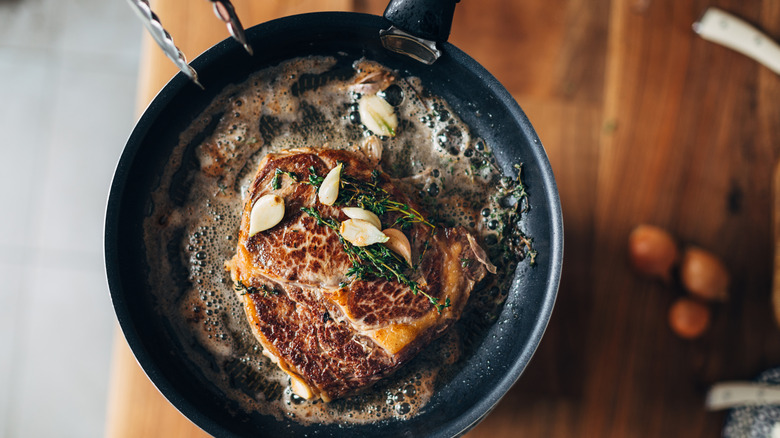
Ribeye is hands-down the best steak cut for beginners. It has the perfect ratio of meat and marbling to create naturally awesome results even if you're not well-versed in pan-frying meat. Really, it's that one quality that makes them great for searing on the stovetop. "Ribeyes are the best because of their marbling," explains McBrain. "The marbling melts as you pan fry, making the steak incredibly flavorful."
Garlic and herb-infused butter is a secret weapon for pan-frying the perfect ribeye. Use butter flavored with herbs like rosemary and thyme as a nonstick barrier on the pan alongside oil. Melt some of the same compound butter for basting as your ribeye cooks, but save basting for the last step of pan-frying a ribeye. Sear the steak on both sides to get a great crust first, then add the herb- or garlic-flavored butter as a final touch. Let it rest 5 to 10 minutes before cutting into the steak. This allows the juices to redistribute throughout the meat and leads to a more flavor-filled, tender ribeye steak.
Flat iron steaks
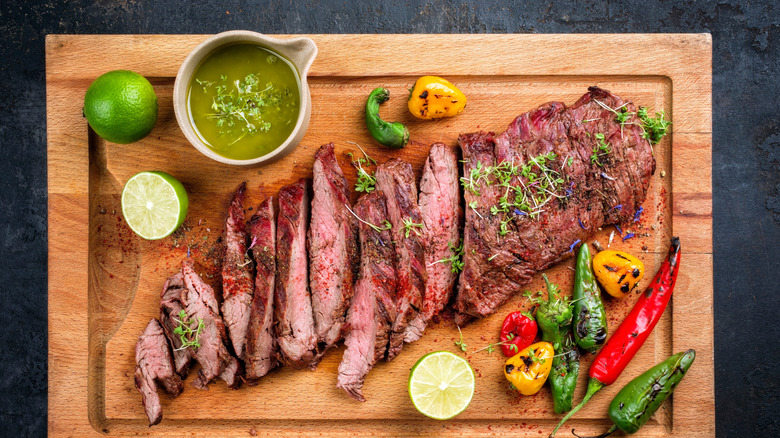
Flat iron steaks are sometimes called the poor man's filet mignon. They're just as tender, marbled, and easy to pan fry. They're also half the cost of filet mignon and can be twice the size. They're typically 4- to 12-ounce rectangular steaks cut from the beef shoulder. Their shape is due to butchering techniques that slice off the tougher parts of the chuck roast, leaving only the tender part. "Flat iron steaks are great for pan-frying because of their thickness," says McBrain. "They have a flat, rectangular shape that cooks evenly."
Marinades and flat iron steaks are a match made in heaven. This cut can take on all kinds of flavors, but common marinades include a combo of olive oil, Worcestershire sauce, balsamic vinegar (or red wine vinegar), Dijon mustard, rosemary, and thyme. Minced garlic and grated ginger are also popular additions to a flat iron steak marinade. Some home chefs let the steak marinate for 2 to 3 hours before pan-frying. You can also do a quick, 30-minute marinade and still get an extra boost of flavor.
Chicken tenderloins
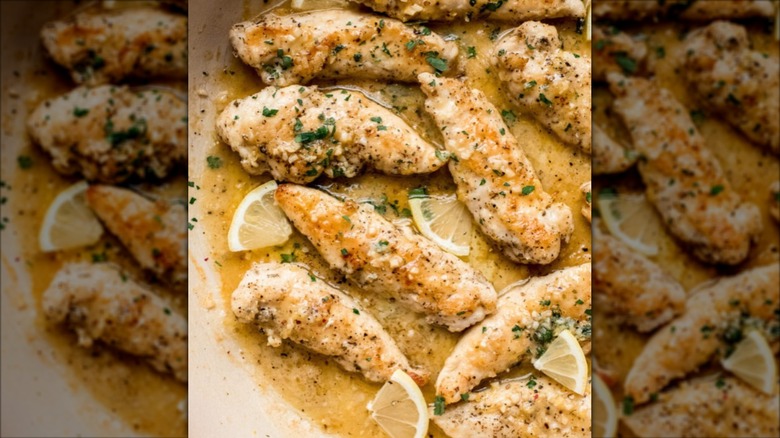
McBrain gave us three great ideas, but these next two are our own addition to the list. Chicken tenderloins are a bit more expensive than other chicken cuts, as they cost anywhere from $5 to $10 per pound (depending on the brand), but they're a great size for pan-frying. These pieces of chicken are long, thin strips of what looks like breast meat which you can usually find at the grocery store. They're cut from the area just below the breast and are tender, juicy, and full of flavor. You can fit quite a few of them in a large pan on the stovetop and they take as little as 10 minutes to cook. Chicken tenderloins also take on marinades well, and they appeal to all ages. If you have kids in the house, chicken tenderloins are a great way to introduce them to new foods without stepping away from the path too far — they're basically long chicken nuggets that take on breading easily.
Pan-fried chicken tenderloins also make for a great finger food at parties. Dust them in garlic and parmesan or wrap them in prosciutto or bacon for a beautiful appetizer. You can use pan-fried chicken tenderloins and flour tortillas as a foundation for all kinds of wraps or as a quick protein to top salads.
Bone-in pork chops
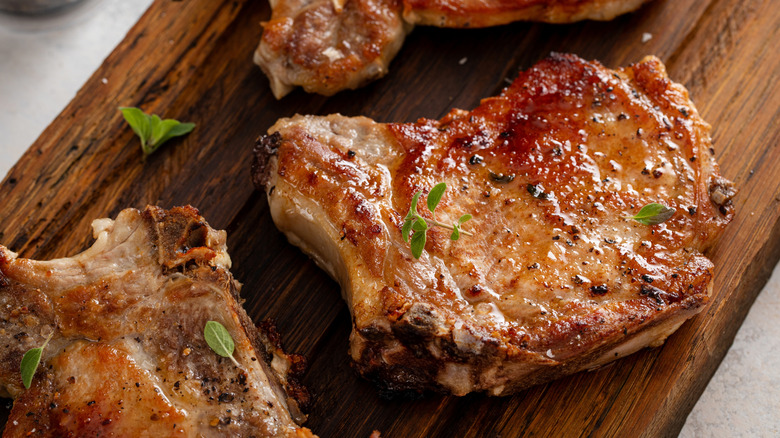
Not all pork chops are the same, and bone-in rib chops are perfect for pan-frying. They come from the rib part of the pig so each chop has a curved bone and plenty of fat which keeps the meat juicy and infuses flavor as it cooks. Many home chefs pan-fry them in butter and herbs but you can also make breaded versions with a golden brown crust. Either way, bone-in pork chops are thick enough to be a satisfying cut of meat and thin enough to pan-fry in about 10 minutes.
Bone-in pork chops take a traditional flour and egg breading very well when they're pan fried. Flour and parmesan cheese is another popular combination which uses egg as a binder. Bone-in, pan fried pork chops also are delicious when they're coated in panko breading mixed with various seasonings. Panko creates a crispy, golden crust that adds a pleasant texture which is a little chunkier than flour breading. If you're looking for more creative ideas for a crusted bone-in pork chop, try using crushed pork rinds, Gardetto's snack mix, or instant mashed potatoes.