

15 Classic Candies From The '70s That Give Us The Ultimate Nostalgia
The 1970s were a groovy decade, where everyone let loose. It was also quite the decade for food innovations and introductions. This was especially true in the candy aisle, where the latest and greatest fads offered revolutionary tastes and textures. Some of these candies are still rocking it with snackers of newer generations.
The Takeout hopped into the old time machine to pay tribute to 15 candies and gums that got their start in the '70s and remind us of those excessively flavorful good times so many decades later. Along our travels we'll be reintroduced to three iconic and rival brands of soft bubble gum, get reacquainted with food that you were totally allowed to play with, relive the magic of the treats that were inspired by the likes of Willy Wonka and a New York Yankees legend, and even re-examine some nasty rumors that still persist to this day.
Alexander The Grape/Grapeheads
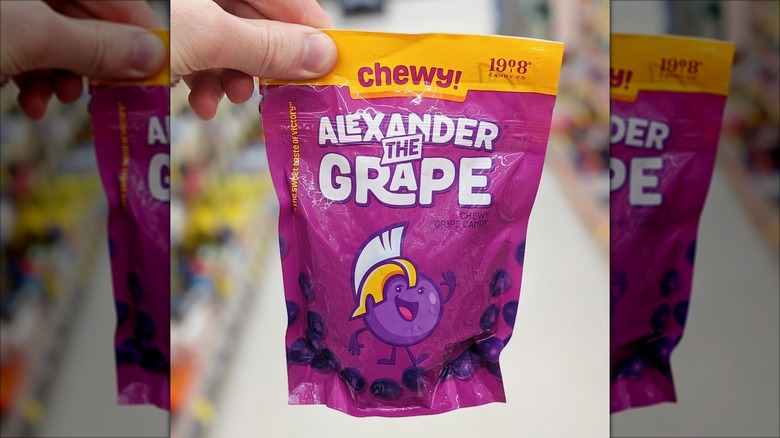
Candy maker Ferrara Pan proved good things come in small boxes, for example early hits like Red Hots and Lemonheads. More fruity flavors followed, with Johnny Apple Treats, Mr. Melon, and Cherry Clan. Perhaps the best of them all was none other than Alexander The Grape, which debuted in the summer of 1975. The candy played on the name of the ancient king Alexader The Great, and was punctuated with an awesome mascot sporting a Macedonian-like helmet. In the 1990s, Lemonheads still had drawing power, and Ferrara Pan decided to change the names of all the other fruit flavors to end in "head." Alexander's reign came to an end, and in 1995, the company filed a trademark application to rechristen the purple orbs as Grapeheads.
In 2012, Ferrara Pan merged with Farley and Sathers to form Ferrara Candy, and all the "head" candies (besides Lemonheads) were discontinued. When Ferrero acquired Ferrara Candy in 2017, Lou Pagano II left the company to start his own — 1908 Candy. He also took the classic name trademarks, like Alexander The Grape, with him. By 2019, Alexander and his old buddies were briefly back on store shelves.
Bottle Caps
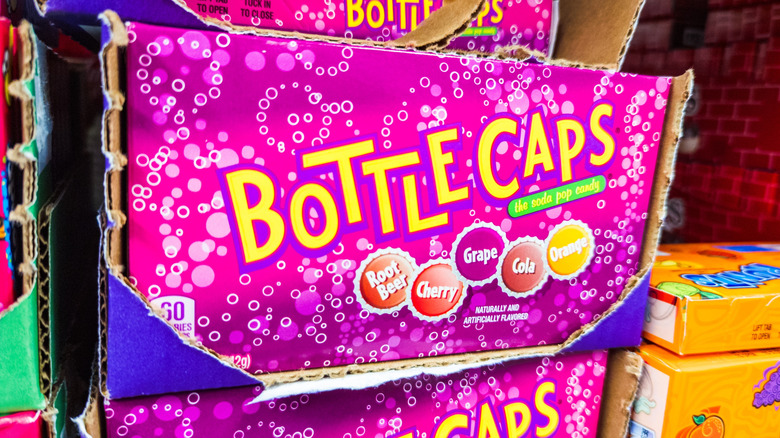
A trip to the movies is made even better with a soda and candy in hand. The folks over at Breaker Confections did something novel by combining the two to form the candy Bottle Caps, which landed in stores in 1972. The treats took the form of its namesake, and were color-coded by their initial flavor — cola, lemon-lime, orange, and root beer. New York Daily News food columnist Christine Blanck was impressed, writing in 1976, "Root Beer Bottle Caps ... taste so much like real root beer that it's frightening. Root Beer Barrels were never that close to reality."
Bottle Caps have a chalky texture, sweet taste, and almost fizzy-like aftertaste. Additional flavors, like grape and cherry, joined the team, while lemon-lime fell out of favor. While the candy was once under the Willy Wonka brand name, today, its carbonated traditions are carried on by Ferrara Candy Company and its parent company, the Ferrero Group, who remind eaters with the slogan that there's "no need to sip."
Bubble Yum
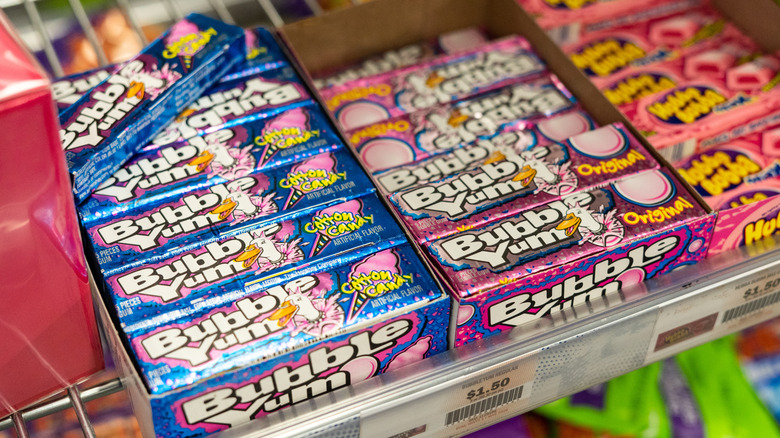
Bubble Yum upended the bubble gum industry with its soft chunks that blew big bubbles. The Life Savers' "soft 'n juicy" gum first made the rounds in test markets in 1973, and when it became a hit with children and their moms, it was deemed ready for the national spotlight. Kids began to ditch Bazooka and Double Bubble for Bubble Yum, and demand became so high that a black market formed on playgrounds, with kids selling a piece at 15 times its value.
Despite pesky early rumors that Bubble Yum contained spider eggs, nothing could stop people from buying and chewing it up. By 1983, it was still a bestseller, capturing 20% of the burgeoning market. A young Leonardo DiCaprio popped up in a late 80s ad for the brand, and it's good name has been dropped in songs by Rasheeda and Flo Rida. It has even been uttered by the casts of "Friends and"South Park," and has served as a description for Madonna's private parts in "Reservoir Dogs." In 2000, Hershey acquired Bubble Yum from Nabisco, and in 2026 made its own version of Blow-Pops with the brand.
Bubblicious
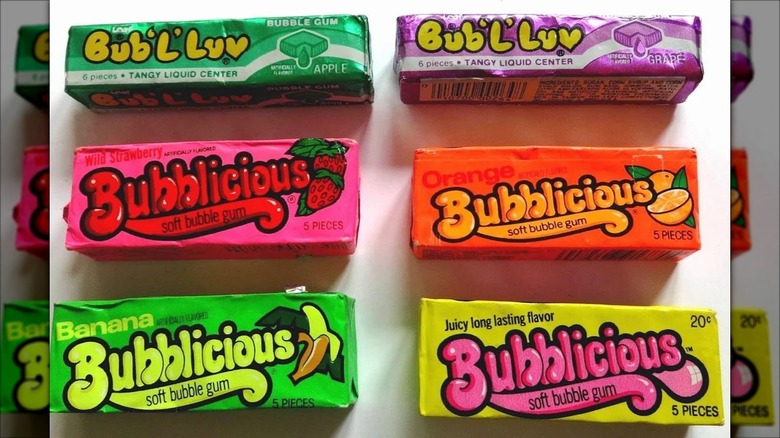
After stocking shelves with packs of Chiclets, Dentyne, and Trident, the American Chicle Company got into the burgeoning soft gum wad game by launching Bubbicious in 1977. Its name was chosen, as told to the New York Times, to invoke "flavor and bubbling action to the bubbling customer." Lots of fun and unique flavors followed, including Cherry Cola, Twisted Tornado, and Paradise Punch, which pop culture enthusiast Dinosaur Dracula noted was "unquestionably one of the greatest bubble gum flavors EVER."
LeBron James liked to chew gum during games, and during his 2004 rookie season in the NBA, was happy to sign on as Bubbicious' first pro-athlete endorser. The Washington Wizards also used to keep it on hand for its players to enjoy. Other pop culture nods include mentions in songs by Iggy Azalea and Saweetie, a shout out in the film "Bad Boys" and becoming a necklace on "The Gilmore Girls." Perfetti Van Melle acquired the brand in 2023. They have since expanded it into the realm of canned beverages.
Fun Dip
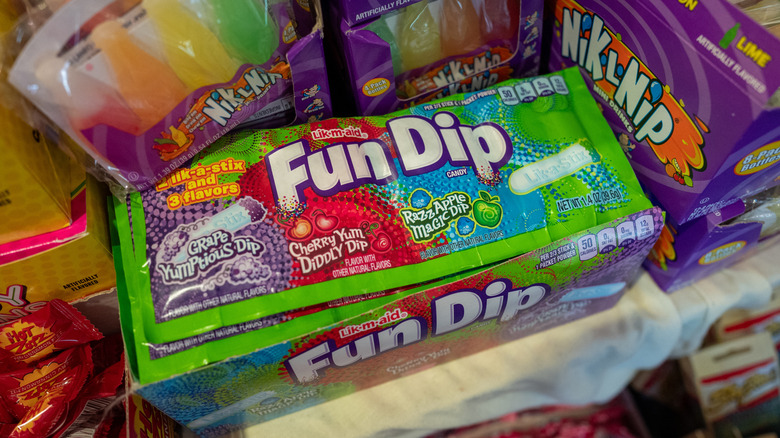
By 1940, a fruity and tart powdered drink packet called Fruzola was making the rounds. As penny candies started disappearing from stores, kids bought up Fruzola just for the powder alone. In 1942, this confection was given its own standalone product — Lik-M-Aid, and led to other like-minded sugary treats, like Pixy Stix, SweeTarts, Sprees, and Nerds, all of which were manufactured by Sunmark Corp.
Things got even easier for fans of the candy beginning in 1972, when a smooth, sugary, white Lik-A-Stix was included to help shovel the powder to one's mouth. The combination of the two formed Fun Dip. The packaging was not only very utilitarian, but visually memorable, with the cartoony image of a boy licking his lips while digging his "stix" into his own powder packets. The fun with Fun Dip has never seemed to end, and today's version, owned by Ferrero Group's Ferrara Candy Company, still carries the name Lik-M-Aid on its packaging.
Everlasting Gobstopper
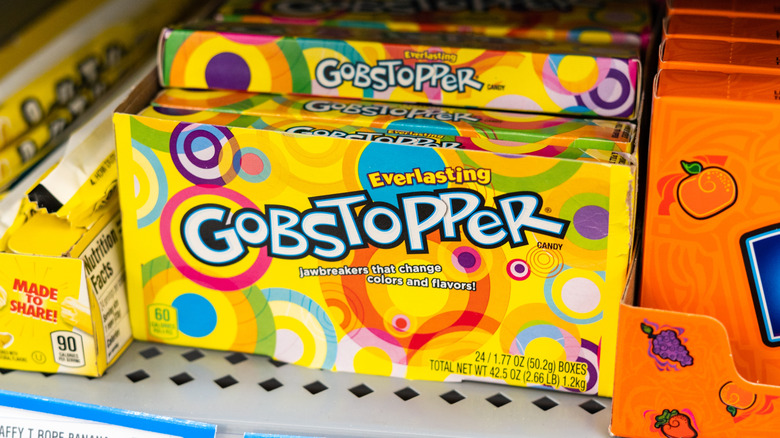
Roald Dahl had quite the vivid and sweet imagination, especially when he dreamed up his 1964 book "Charlie and the Chocolate Factory." There were many treats introduced in the pages, including the Everlasting Gobstopper, which, as the text describes, "they change color once a week! And they never get any smaller! They never disappear! NEVER!" The Gobstopper got even more attention in the 1971 film, "Willy Wonka & the Chocolate Factory."
By May of 1975, the fictional candy became a reality under a Willy Wonka line, produced by the people who made Jawbreakers — Breaker Confections, which was a part of the larger Sunmark Corp. Over time, there were variants, like the Valentine-friendly Heart Breakers, the Easter-themed Egg Breakers, and even a spiced-up "Hot," which apparently got hotter as you got towards the center of it. While other Wonka-branded products have bit the dust, like Oompas and DinaSour Eggs, the Gobstopper truly appears to be everlasting, and are still produced today by the Ferrara Candy Company.
Hubba Bubba
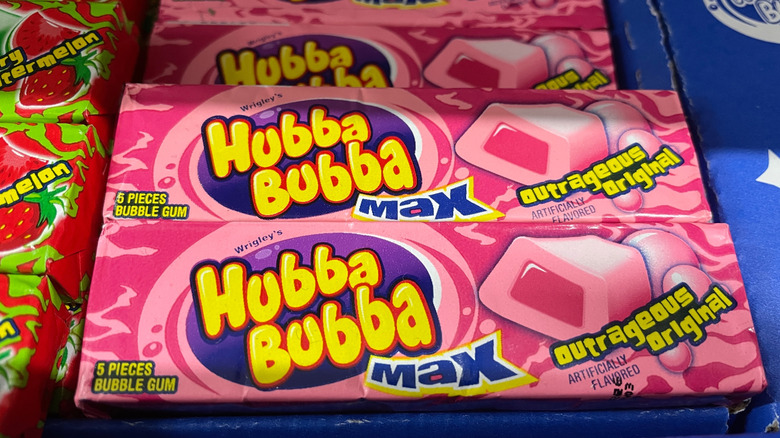
"Hubba-hubba" began as a cry on the battlefield or baseball field, before being adapted as a whistle call for women. It's variant, Hubba Bubba, gained in popularity in the 1940s, and in 1979, the term was adapted for a novel new bubblegum to try and cut into Bubble Yum and Bubblicious' market share. Wrigley's Hubba Bubba was developed over a two year period and even had a test run overseas before making its American debut. The chunk pieces were not only designed to blow big bubbles, but were also engineered with a new technology to prevent a big problem — having the popped bubble stick to a face.
Hubba Bubba made its mark on pop culture with the launch of its "Gumfighter" campaign. Kids could save wrappers to send away for a kit that included a shirt iron-on, tie clip, and gum holster, and there were a string of memorable TV ads featuring old western street showdowns starring the Gumfighter himself. The initial flavors were limited to just regular and mint, but the line-up expanded into fruitier and fun territories in the decades to come. The brand expanded into the popular "tape" format in 1988, and even made an attempt at a drinkable soda.
Laffy Taffy/Tangy Taffy
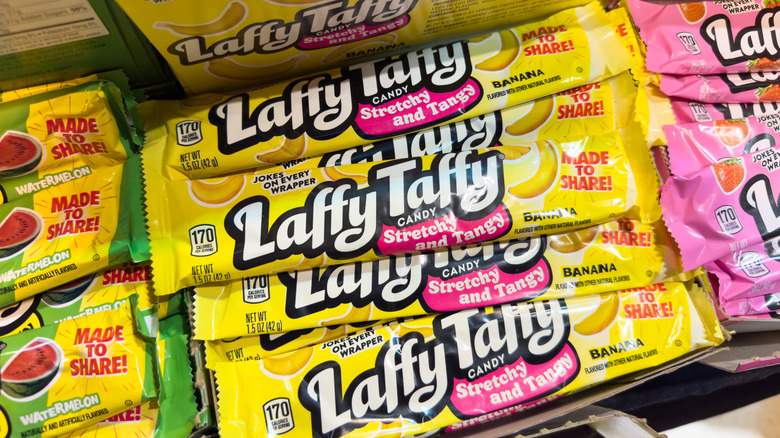
By at least the 1950s, Beich's (pronounced "Bikes") was producing a square, chewy product called Banana Taffy Caramels and other fruity "caramels," which eventually became known as Laffy Taffy. The hilarity ensured later when the candies had wrappers where eaters could read the jokes imprinted within. Taffy got fantastically fruity and fun to stretch and pull when Sunmark introduced the rectangular Tangy Taffy in 1970, and even licensed the likes of Archie comics to help sell it. What made Tangy Taffy stand out from all others was that Sunmark borrowed the flavor profiles of its other products, like Pixy Stix, to truly make them live up to their "tangy" name.
Nestlé acquired Beich's in 1984 and Sunline through its purchase Rowntree and Mackintosh in 1988, and according to brand anthropologist and historian Jason Liebig of Collecting Candy, essentially applied the Laffy Taffy name to the Tangy Taffy product. In 2018, The Ferrero Group acquired Nestlé's U.S. confectionary business, bringing candies such as Laffy Taffy, SweetTarts, and Nerds under its stewardship. Today, the laughter and yum of the 70s lives on in stretchy long pieces, mini ones, and even ropes.
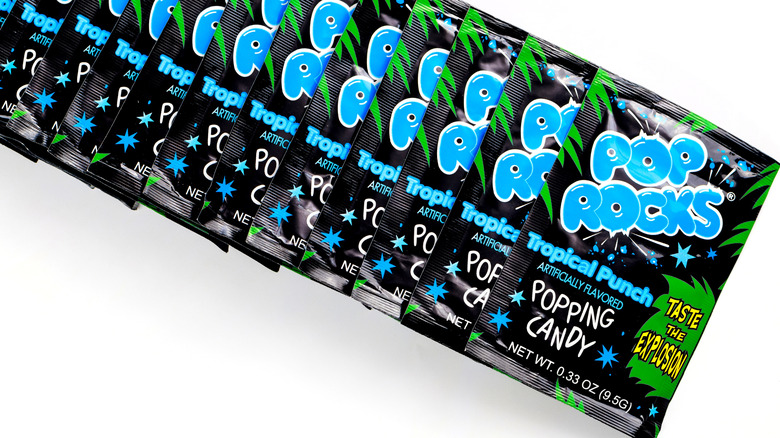
Pop Rocks
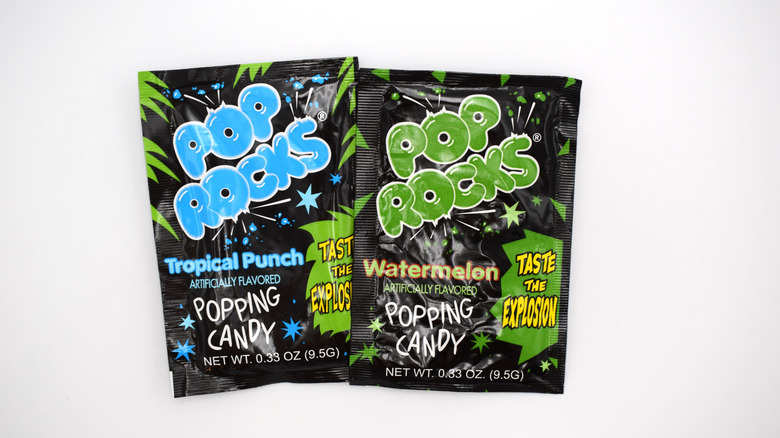
General Foods Corporation scientists Leon Kremzner and William A. Mitchell stumbled upon a way to make a "gasified confection" in 1956. Mitchell occasionally served the granular, mouth popping treat to guests and at children's parties before General Foods finally test-marketed it as a candy in 1974. Five years later, Pop Rocks had gone nationwide.
The candy was a hit with kids and even college students, but sparked safety concerns, especially after kids ate multiple packets at once. There was one persistent rumor that proved impossible to shake and called for the product's ban — that the kid who played Mikey in the Life Cereal commercials died by mixing Pop Rocks and soda. General Foods, the FDA, and even a retired William A. Mitchell came forward to defend its safety, with Mitchell taking a full page ad in newspapers to quell public fears. Years later, the MythBusters debunked the rumor.
Sales slumped and General Foods removed the candy from shelves in 1980. However, the candy began snapping, crackling, and popping once again in 1986 when Carbonated Candy Ventures obtained the license and brought it back to market. Today, one of the all-time best American candies is still finding mouths ready to experiment with it thanks to the Spanish company Zeta Espacial S.A.
Reggie! Bars
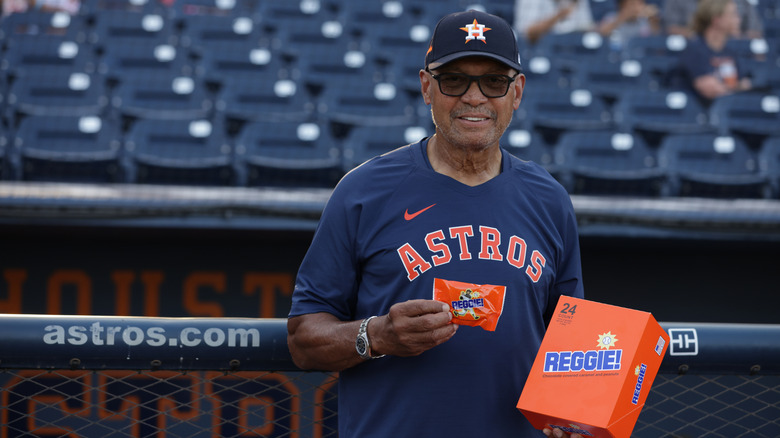
When slugger Reggie Jackson was traded from the Oakland Athletics to the Baltimore Orioles in 1976, he famously said "If I played in New York, they would name a candy bar after me" (via Detroit Free Press). A year later, all of Jackson's dreams came true as he joined the Bronx Bombers and partnered with Standard Brands Confectionary to come out with a candy bar. The working name was Hey Reggie, before the chocolate cluster bar with caramel and peanuts was dubbed the Reggie!.
In the 1977 World Series, Jackson did the impossible and homered three times in the deciding game versus the Dodgers, earning himself the nickname Mr. October. For the first game of the 1978 season, 72,000 Reggie! bars were handed out to fans. Jackson literally picked up where he left off, hitting a home run in his first at bat, and the fans showered him with the free bars.
By 1981, Jackson was playing for the California Angels, and his bar was discontinued. It had a brief encore in 1993 by the D.L. Clark Co. when he was inducted into the Baseball Hall of Fame, before disappearing again. Canadians Crystal and Bert Westergard found success resurrecting dead candy brands, and, in 2023, with Reggie Jackson's blessing, input, and a cut of the sales, the bar went back on store shelves.
Ring Pop
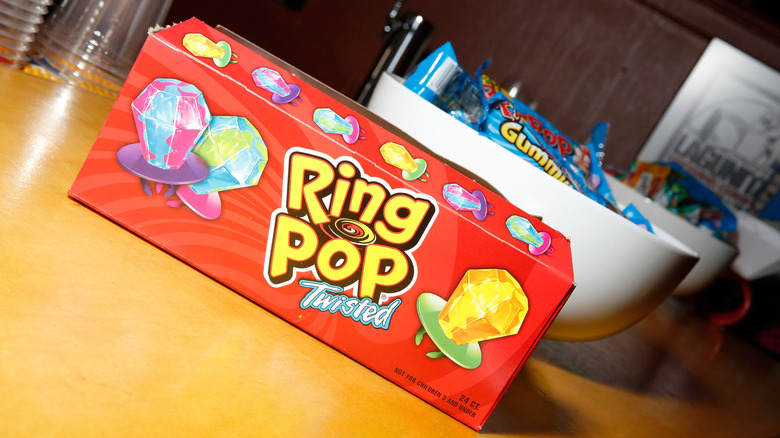
Lollipops turned into a fashion item when it ditched the stick and came in the form of jewel-like Ring Pops, which first hit shelves in 1975. The first two flavors that rolled out of the Scranton, Pennsylvania plant were strawberry and grape. The brand has seen many innovations over the ensuing years, including gummies, frozen ones, and even lending its shape to chalk and bubble wands. The candy has also doubled as a fun and thrifty way to offer up a marriage proposal. Although in some cases, like at a 2022 Toronto Blue Jays game, the cheap offering backfired, resulting in a slap to the face of the proposer.
Today, its new Scranton plant is kept mighty busy, producing 512 Ring Pops a minute, with billions being shipped around the world annually. The brand is always ready to help people accessorize for a big occasion, including America's 250th birthday, when it sold patriotic pops dubbed Red, White, and Bling.
Snickers Munch Bar
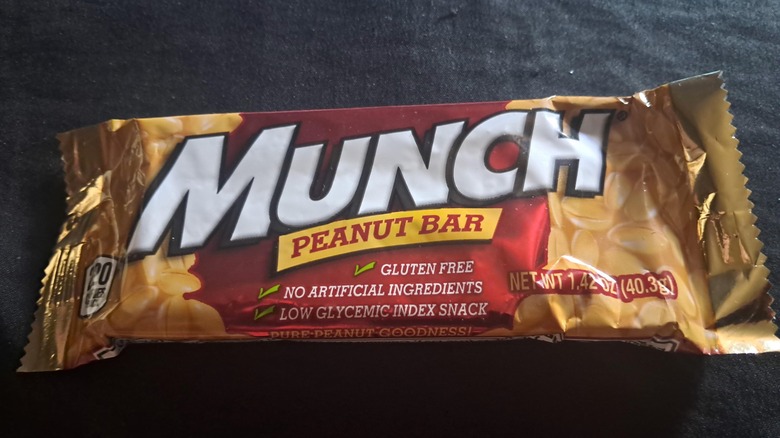
The vein-y pleasures of a Snickers bar, which apparently was named after a horse, has been satisfying snackers since 1930. In 1970, its good name was used for a new 10 cent treat called Snickers Peanut Munch, which the Grand Forks Herald noted was "so good, you need two dimes." Munch is akin to peanut brittle, and the gluten-free bar is made up of only seven ingredients — peanuts, sugar, butter, corn syrup, salt, and soy lecithin. One early TV ad saw Rex Everhart (he voiced Maurice in Disney's "Beauty and the Beast") as a candy man hawking them anachronistically to a group of ancient and hungry boat rowers.
In its first couple of decades it seemed like M&Ms/Mars had an identity crisis with this product, changing its branding and packaging design many times over. Eventually, the Snickers name was dropped altogether and it became simply known as a Munch Bar. Today, its reach isn't as widespread as it once was, but Mars still offers it for sale.
Toffifay/Toffifee
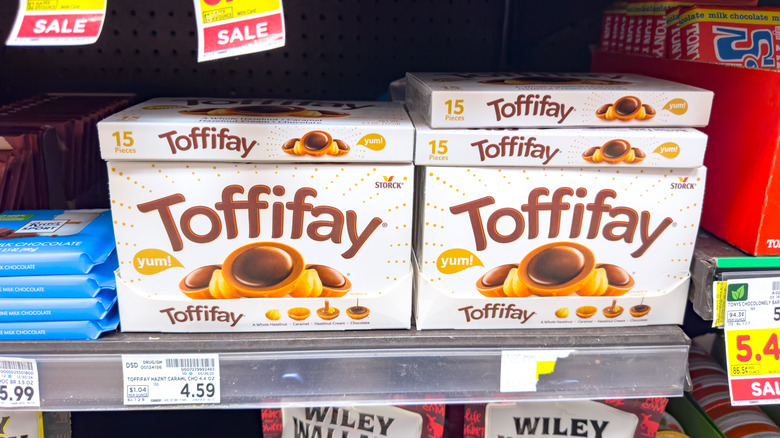
In 1973, the Storck company united the talents of a whole hazelnut, caramel, chocolate hazelnut cream, and chocolate to form one flavor packed treat called Toffifee. The name is a mash-up of the German words for toffee ("Toffi") and fairy ("fee,"), who the candy states on its website today, brings luck and "makes the wish for a treat made from only the best ingredients come true and grants you a moment of pleasure." The candy cup with a button housed in a tray, grew in popularity across Europe, and made its American debut in 1976. Storck sold it with a revised name — Toffifay — and advertised with the slogan "all the candies you like — in one!"
Toffifay/Toffifee is now sold in over 100 countries, and, in 2017, Storck aimed to reintroduce the product to Americans with a brand refresh. In 2018, Toffifay won the U.S. Product of the Year in the Consumer Survey of Product Innovation, following in the footsteps of Stock's other popular product, Werther's Original Soft Caramels, which won those honors a year before.
Whatchamacallit
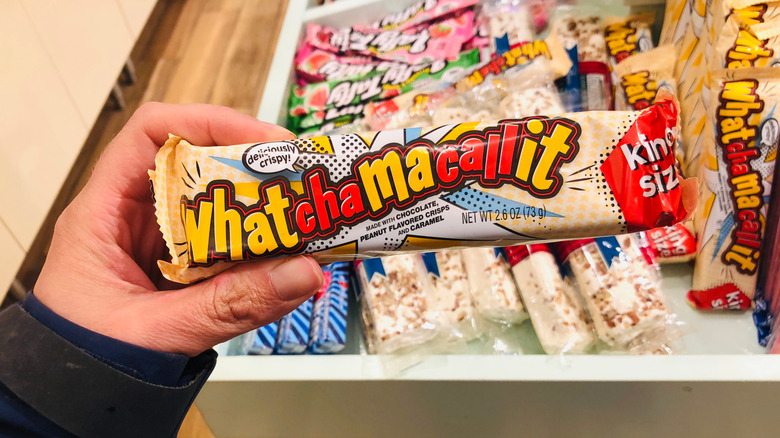
Hershey knows a thing or three about chocolate bars, and in 1978 introduced a super-loaded one. While there were 100 names on the table to choose from, the one that stuck turned out to be purposely unforgettable and forgettable at the same time — Whatchamacallit. The crunchy bar featured a peanut butter crisp, coated in milk chocolate. In 1987, the formula was tweaked to include caramel and a peanut-flavored crisp, all coated in chocolate. Pop culture enthusiast Dinosaur Dracula summed up its greatness so succinctly by saying, "I'd describe it as a four-star restaurant's attempt to create a gourmet Kit Kat. Picture a giant-sized Kudos granola bar, but replace anything remotely healthy with more sugar and fat."
The TV ads were always very memorable, with usually one person trying to tell another about the candy bar, but the name kept causing confusion. There was another one that began running in the late 80s, which had a pop art aesthetic and jingle so catchy that the ad kept being aired well into the 1990s. While the national advertising may have tapered off, Whatchamacallit retains a presence on shelves. It even once spawned spinoffs with almost as fun names, like 2009's limited-edition Thingamajig and 2021's Whozeewhatzit candy bar.
Whistle Pops/Melody Pops
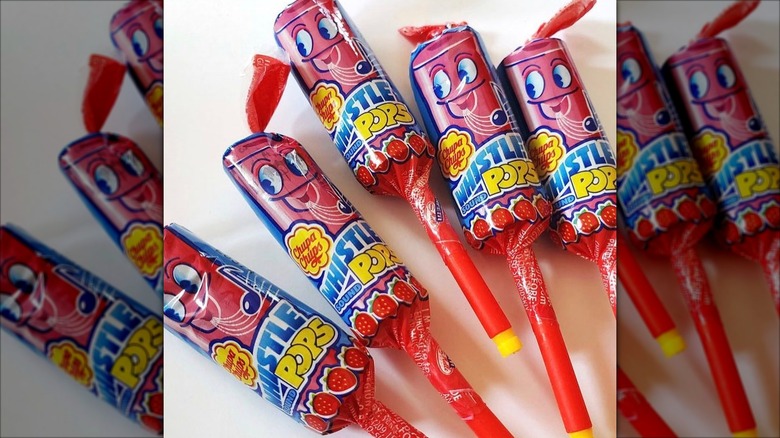
Most people like the sound of sweet music AND playing with their food, and the Spanish confectioners at Chupa Chups combined the two eatertainments with a lollipop that doubled as a whistle. It had been a solid seller in Europe, and in 1975 Mounds and Almond Joy maker Peter Paul became importers of the candy stateside. The whistle on a stick initially sold for 10 cents, and came in strawberry, lemon, and orange flavors.
In the early 80s, Keebler became the distributor of Whistle Pop and also added another tune to the arsenal — Melody Pops. These new ones had a moveable slide stick, like a mini trombone, that in turn created more music than the one note Whistle Pop could. In a savvy promotional move, a band composed of kids called The East Coast Melody Pop Kids made public appearances, playing songs like "Row, Row, Row Your Boat" and "Pop Goes the Weasel."
Over time, the Whistle Pop faded into obscurity, with one of its last popular stands as a branded Air Heads item in 2007. In 2023, Chupa Chups' Melody Pops made a comeback thanks to Perfetti Van Melle USA, Inc., who brought the sweet sounds of yesterday back to the America market.