

'Costco Folks In Shambles!': Consumer Reports Just Crowned This Rotisserie Chicken As King
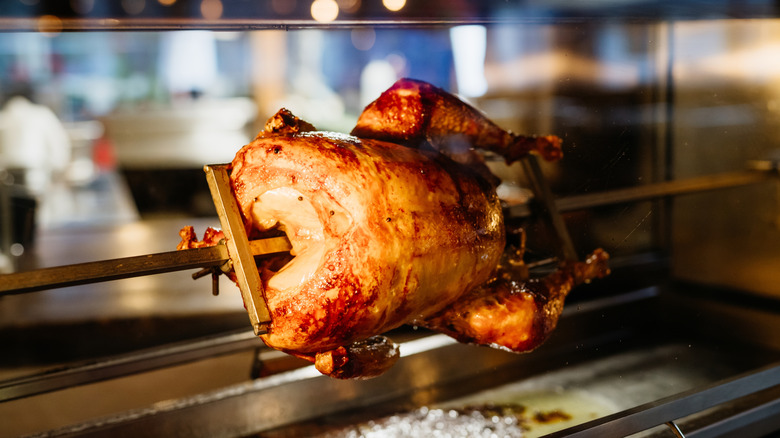
Consumer Reports has named the best rotisserie chicken, and no, it's not Costco's cult-favorite bird. In a new report, the nonprofit watchdog analyzed chickens from 10 grocery chains for flavor and nutrition. The winner? Costco's arch-rival, Sam's Club.
When it came to the blind taste tests, Sam's Club's chicken was an easy win. Testers found that the chicken "was very moist and juicy, with a deep roasted flavor and hints of onion and garlic" and commended its paprika rub.
On the Sam's Club subreddit, fans gloated over the win. "Costco folks in shambles!" wrote one Redditor. "Sam's chicken has been better for years; they just don't have the cult following," claimed another. Not everyone loves Sam's Club's chicken, though. Some shoppers repurpose rotisserie chicken for easy weeknight meals — it's part of the cheap chicken's appeal. If that's you, you might want to buy another brand. " ... I like using the chicken for a variety of recipes, and Sam's seasoning is too strong for some recipes," one Redditor explained. "Costco's just tastes like salt."
But it wasn't just flavor that Consumer Reports looked at — experts ran lab tests to measure sodium levels and check chickens for plastic compounds. Most rotisserie chickens are pumped full of salty brine, and potentially harmful plastic compounds can leach into the meat from packaging.
Your favorite rotisserie chicken's sodium levels and plastic presence
The report found that sodium levels varied significantly, even among chickens from the same store. Often, they were lower than the nutrition facts claimed. That's not a bad thing: High-sodium rotisserie chicken is a health concern. The sodium levels in the Sam's Club chicken samples were higher than Costco's, but both were significantly lower than the listed amounts. Whole Foods was the only store that didn't inject its chicken with salty brine.
The tests didn't find per- and polyfluoroalkyl substances, a.k.a. PFAS, in any of the chickens, but they did find bisphenols, like BPA, BPF, and BPS, in packaging from Hannaford, Stop & Shop, The Fresh Market, Whole Foods, and Wegmans — even though all but the latter claimed that their packaging was BPA-free. The report found phthalates in all of the chickens except for ShopRite's.
However, chicken from Costco and Walmart had the highest levels of phthalate DEHP, a plastic compound related to cancer and birth defects. They were the only brands with concerningly high levels. In January, customers sued Costco over claims that the chain's rotisserie chicken was "preservative free." While Sam's Club's chicken contains sodium phosphate, one of the additives named in the suit, it is carrageenan-free. So, customers claiming that Costco's chicken has a chemical taste might have merit.