

The Types Of Candy That People Ate In The Colonial Era
It's often been said that certain modern foods, like Doritos or Mountain Dew, could kill a medieval peasant if a nefarious time traveler let them try it. This is, obviously, an exaggeration (the life of a medieval peasant is a lot more likely to kill you than the other way around), but there's no denying the snacks we eat have gotten a lot stranger in the past couple of centuries. Just compare the candy of today (Sour Patch Kids, Joyride, things of that nature) to the simpler confections of colonial America in the 18th century, which largely consisted of boiled sugar and molasses in various forms.
Since supermarket checkout aisles are stocked with dozens of varieties of tempting treats today, it's easy to forget that candy was considered a luxury item back in those days. Sugar was not cheap, and while it certainly made life a lot more pleasant, it wasn't exactly a necessity. Maybe that's why many colonial candies (which were often invented many centuries earlier) had utilitarian purposes, as well. Some candies (like lozenges and pastilles) originated from recipes that made medicinal ingredients more palatable, while others (such as candied fruit) started out as a way to preserve food. The most common sweeteners were molasses and honey, with certain herbs and spices added in (not the same herbs and spices added to KFC, of course).
Making candy at home was the norm in colonial America
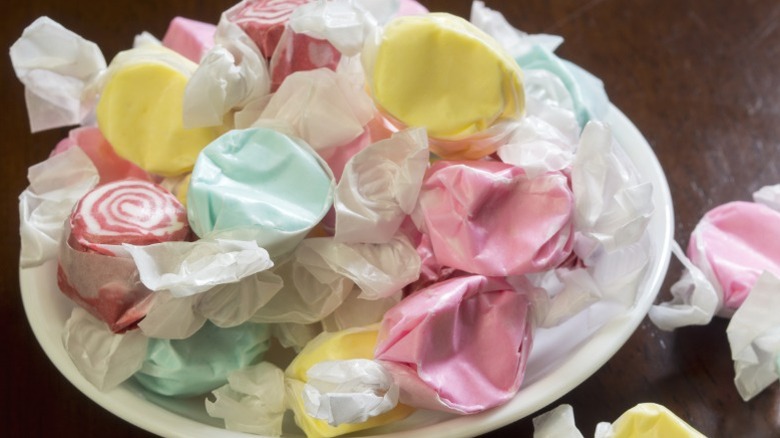
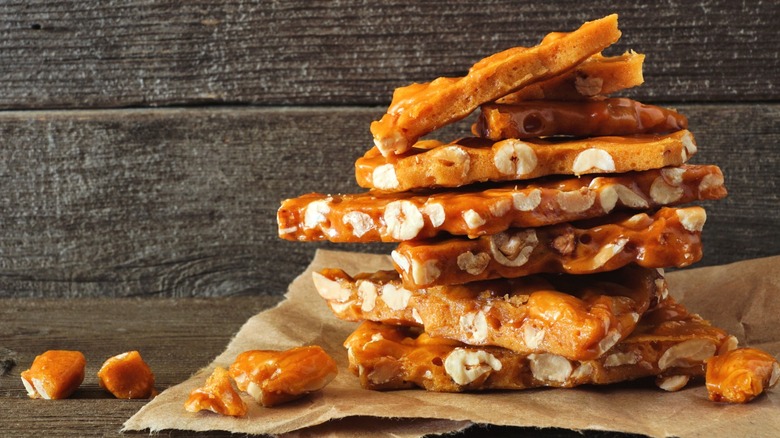
Through the colonial era, the most popular candies were stuff like taffy, rock candy, brittles, and sugar pastilles; all of which were easy enough to make at home. These days, the idea of making your own sponge candy at home (or any candy, for that matter) is unusual to say the least. There's nothing you can make at home that you can't buy or order from a specialty store, and you'll significantly reduce your risk of having boiling sugar splash on your forearms. Back in the colonial era, making candy was often a family affair. It was a long, involved process involving plenty of stirring over a hot stove, so it was saved for special occasions; encouraging bonding time over a sweet treat.
It wasn't until 1806 (well after America won its independence) that the first commercially sold candy, Gibraltar, debuted in America. A tart hard candy flavored with vanilla, lemon, or peppermint; it was first sold by the Spencer family in Salem, Massachusetts. (It's certainly a sweeter calling card for the town of Salem than the other bit of unpleasantness it's known for.) From there, the history of American confection developed until we one day got to enjoy the stinging pain of sour candy.