

10 After-School Snacks Boomers Remember All Too Well
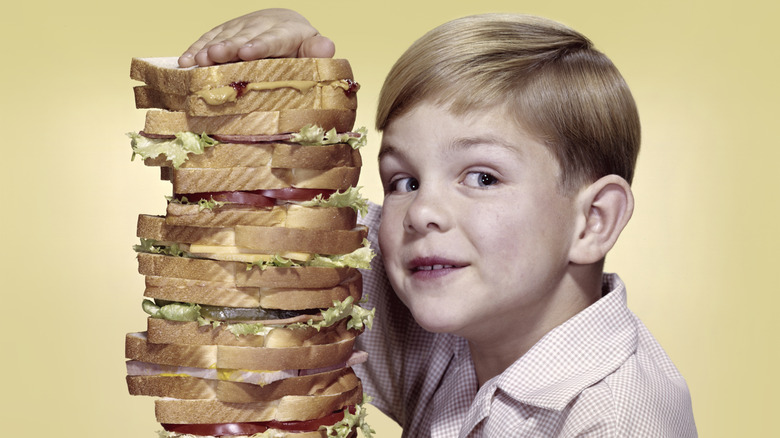
Baby boomers were born between 1946 and 1964, which means they grew up in the '50s and '60s eating things like beef stroganoff, chicken à la king, and Salisbury steak; maybe some liver and onions or creamed chipped beef on toast if they were lucky. There would have been angel food cake, ambrosia salad, or Baked Alaska for dessert. Yes, those were the days when Spam was found in a square can in the pantry rather than in your inbox.
School lunches were another story. Between cursive writing classes, home economics, grammar class, and dodgeball in P.E., children ate bologna sandwiches from a lunchbox brought from home or stuffed themselves with macaroni casserole or meatloaf from the school cafeteria.
And then there were the snacks. The best part of the day came after school. With the pencils, books, and teachers' dirty looks comfortably behind them for the time being, kids in that era could finally take a seat atop their papasan chair or avocado-green sofa with a little post-school treat. So, after boomers worked up a hunger walking uphill in the snow in both directions to get to and from school, what was their go-to after-school snack? From buttered crackers to Cracker Jacks, here are 10 after-school snacks that every boomer knows well.
Canned fruit cocktail
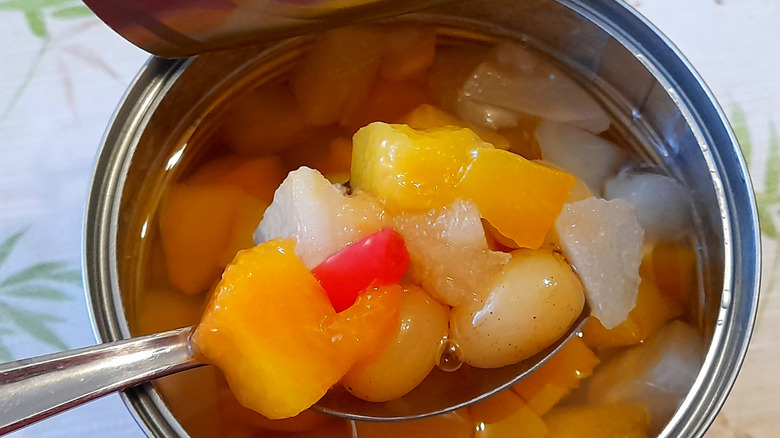
Eating canned fruit cocktail is a little like stepping back into an episode of "The Andy Griffith Show." The colors are more muted and less vibrant, and the fruit is less fruity. This syrupy, retro treat gives off the feeling that it's faded over time or perhaps was made with sepia-toned peaches and pears masquerading as fresh ones — and not for nothing. It's still going strong today, mind you, but canned fruit cocktail is an icon of America's mid-century menu.
After commercial canning came around in the early 20th century, fruit cocktail quickly became a culinary staple, with people eating it on its own or as part of various recipes (fruit cocktail chicken salad sandwich, anyone?). The government began to regulate just which fruits can go into canned fruit cocktail and in what ratio, with cherries being the all-but-overlooked, jilted stepchild of the fruit blend (only 2% to 6% cherry content is permitted).
A fruit cocktail made for a practical snack after a long day of school. Mom could simply open a can, hand over a couple spoons, and go back to her washing; leaving the kids to fight over who got the cherries.
Saltine crackers with butter
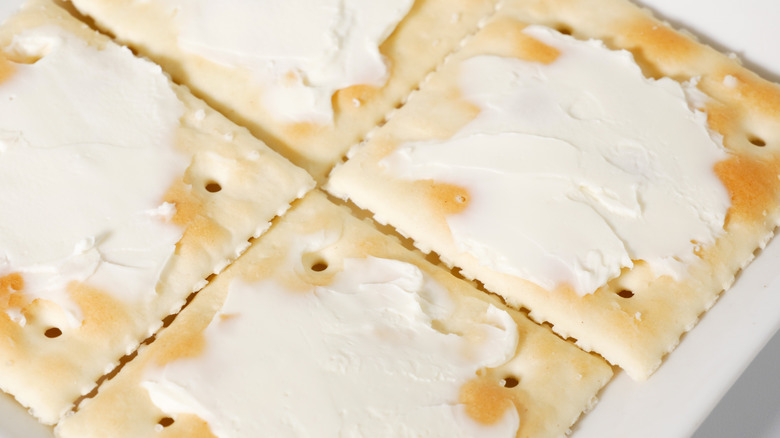
Saltine crackers are the blue jeans of the food world. They're versatile, go with everything, and they're both comforting and comfortable; whether you're eating them to settle your stomach or relying on them as a go-to snack. Saltines are always there when you need them, and they look good no matter what you pair them with.
These crackers came about in 1876 after someone thought to add baking soda (aka baking salt, for which saltines were named) to a mixture of water and flour as a leavening agent. Boomers will likely remember the practice of adding butter to saltines and eating them like that as an after-school snack; a choice based on both ease and flavor. Butter makes it better no matter what decade you live in, and simplifying your snacks is always a good move. Although they could have upgraded their snacking by putting something fancier on top, basic butter was a common and casual choice at the time. Sometimes you just want to stick to blue jeans.
Cookies
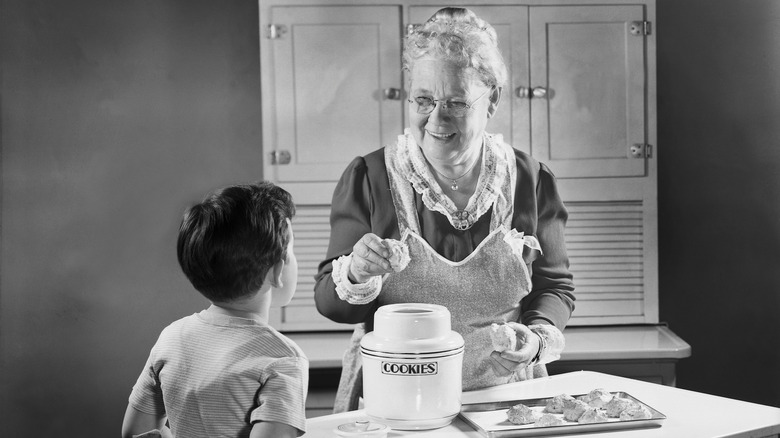
In the "Leave It To Beaver" decades, many children were welcomed home from school with platters of fresh-baked cookies (often chocolate chip), which their apron-sporting, hardworking mothers would have spent their afternoons preparing from scratch. For those too busy to bake, store bought cookies were always an option. Back then, common after-school dunkables for milk included Nabisco's Lorna Doone cookies, which were created in 1912 and (probably) named after the fair maiden protagonist of a Scottish novel which shared the same name. Pecan Sandies were another common sight, and were popular enough to earn their own National Day on June 23. Other favorites included Fig Newtons along with Oreos.
The Oreo was born out of brotherly spite. Jacob and Joseph Loose first ran a bakery together, but later wound up running two competing bakeries. Jacob and his bakery created the Hydrox cookie in 1908, marking the original chocolate biscuits with a cream filling formula. Joseph, who ran the National Biscuit Company (aka Nabisco), brought in the Oreo in 1912 as a competitor product. Oreo would go on to become the hottest-selling cookie in the world, though it's now owned by Mondelez (which owns more brands than you'd think).
Processed cheese
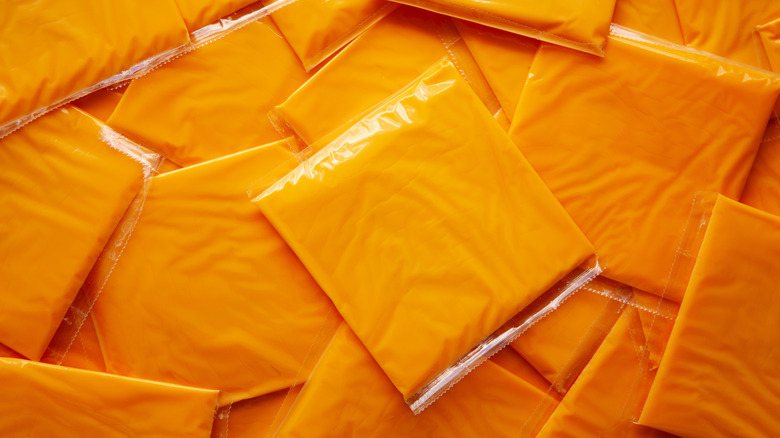
The post-WWII world was an era of ready-made, quick-and-easy products. The microwave oven, for example, was invented in 1945; just in time to help boomer kids everywhere warm up their Cheez Wiz. This runny-orange-puddle-in-a-jar was created in Britain in 1952 to help speed up the preparation of Welsh rarebit, but it quickly oozed its way over to the United States in 1953. This is all thanks to James Kraft himself (of Kraft Foods fame), who had begun patenting various forms of processed cheese as early as 1916.
As it turns out, the entire Kraft family was crafty, at least where cheese was concerned. It was James' younger brother, Norman, who came up with the idea of "pouring hot liquid cheese onto a cold stainless-steel table and cutting it" (as the Kraft Foods website puts it). And so it was that good, ol' fashioned American cheese slices were born. Both Cheez Wiz and Kraft Singles were the perfect almost-cheese after-school snacks for children back then, who ate them on everything from Triscuits to toast.
Popcorn with real butter
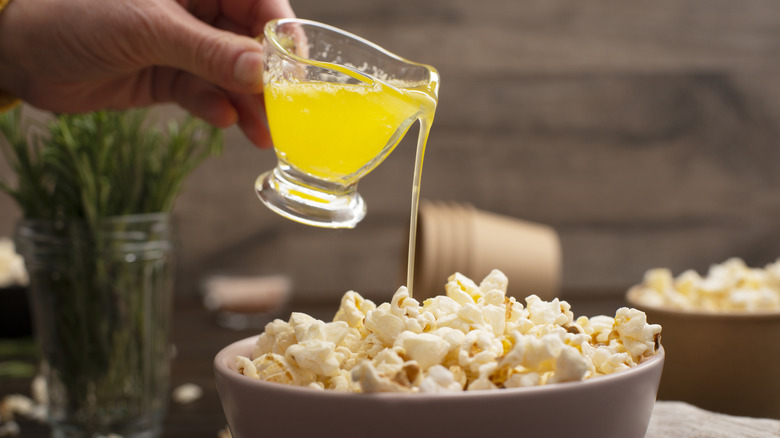
Sure, microwave popcorn is good and quick, but there's just something about real, freshly popped kernels with genuine melted butter (heck, even the fake butter is delicious). It's enough to get most anyone to sit through "Old Yeller" at the cinema, if only for the popcorn alone.
When boomers were young, microwave popcorn may have already been a twinkle in Orville Redenbacher's eye, but the product wouldn't hit supermarket shelves until 1981. That means that after-school snackers in the '50s and '60s were treated to homemade popcorn, which popped right on the stove in a massive pot, foil pan, or one of those funky wire contraptions (think old-school Jiffy Pop). The popcorn was then topped with freshly melted, creamy butter, which had probably been delivered by the milkman that very morning.
Cracker Jack
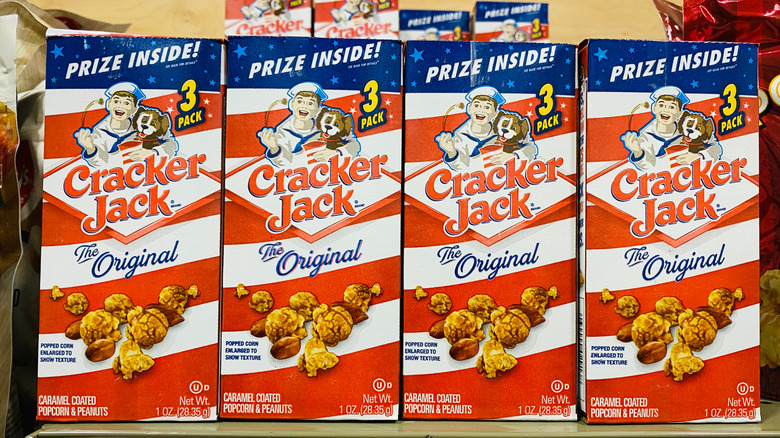
This peanut-and-popcorn classic first appeared at the Chicago World's Fair in 1893, and was officially dubbed Cracker Jack in 1896 — so-called because, allegedly, a salesman named John Berg tasted them and thought they were a crackerjack of a snack (that's 19th-century speak for "pretty darn awesome"). However, Cracker Jack didn't earn its place in mainstream Americana (and baseball concession stands everywhere) until the song "Take Me Out to the Ballgame" came out in 1908.
The sweet and salty snack worked its way into childhood fandom once prizes were introduced into Cracker Jack boxes in 1912. By the time boomers were after-school snacking, these caramel-coated popcorn and peanuts were satisfying a post-scholastic craving, yes; but most kids were really just in it for the mini comic book or plastic snap-together monkey toy inside.
Sugar sandwiches
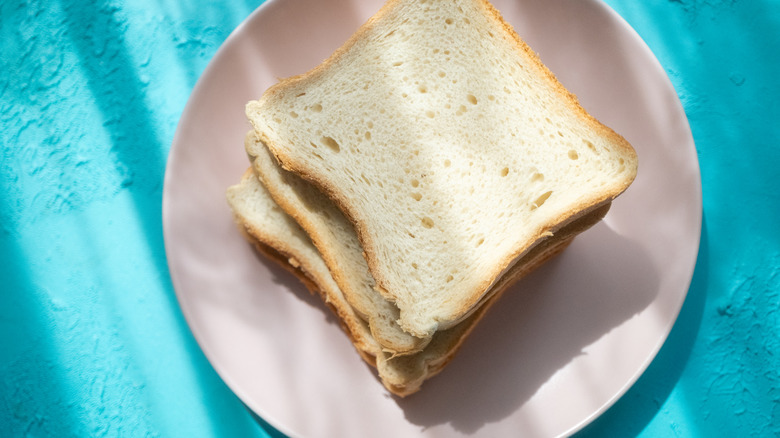
Arguably the poster child for what's wrong with the American diet, sugar sandwiches had the flavor of candy with the nutritional value of a bowl full of air. They were made up of nothing more than two slices of white Wonder bread buttered and sprinkled with sugar. They were easy for kids to prepare on their own after school, and they tasted good. Sugar sandwiches weren't going to impress pediatricians or dentists or the lunch lady at school, but most boomers thought they were the best thing since sliced bread.
Ruffles potato chips
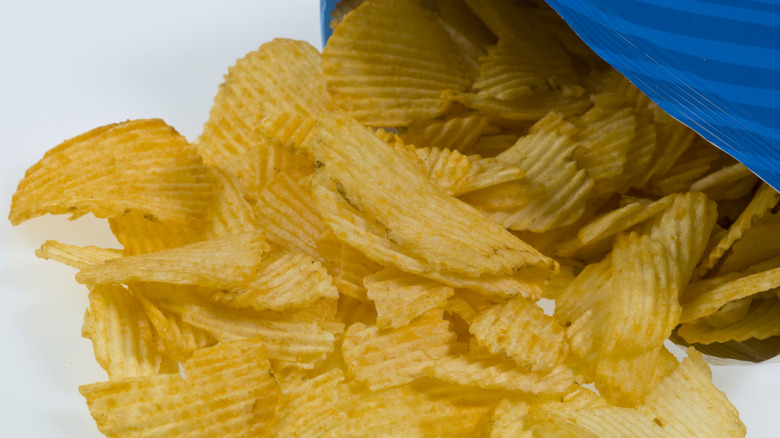
Even back in the '50s and '60s, Ruffles had ridges. In fact, that's what put them on grocery store racks and boomers' snack plates across America. It was all about the crinkles. Bernhardt Stahmer is the man behind Ruffles. In 1948 he came up with a way to crinkle-cut potatoes so they ended up resembling corrugated cardboard — except, fortunately, with significantly more flavor.
Ruffles now maintains a dozen or so different flavors at any point, but it has experimented with hundreds of flavor varieties over the years. The flavor in the early boomer years was, essentially, basic potato; not that any boomer objected, because they were good. Besides, it's cool for a kid when his potato chip looks just like the corduroy pants he's wearing.
Snack cakes
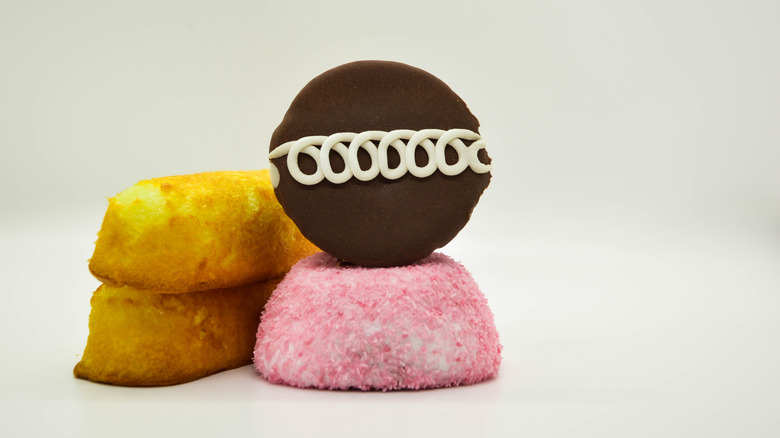
As the era of packaged convenience foods was being ushered in, snack cakes took center stage. Twinkies originated in Illinois in 1930 with the goal of putting oval-shaped shortbread pans to use, though they were originally banana-flavored. Meanwhile, Little Debbie Snack Cakes came out of Tennessee during the Great Depression. O.D. and Ruth McKee sold these cakes from the back of their car for $0.05 and named their business after their granddaughter, Debbie. Snack cakes were ideal as an afternoon snack. They were individually wrapped, spoil-proof, and grab-and-go for any after-school activity.
Jell-O
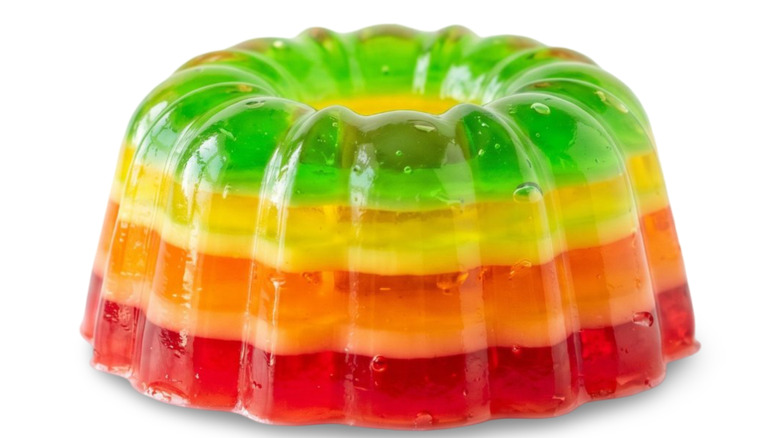
The 1950s and '60s were especially jiggly years. Jell-O had been around for more than half a century by then (it was introduced in 1897) and was already very popular, but the dessert was really living its best life in the days when boomers were young. Every American kitchen in that era was well-stocked with Jell-O molds in a plethora of shapes and sizes, and many a mid-century recipe glorified the gelatinous. Nothing was off-limits when creating a Jell-O salad, aspic, or terrine. Everything from meat to olives and cheese to fish was fair game for the viscous abyss of the Jell-O mold.
The sort of Jell-O that constituted an after-school snack for kids back then depended on the mood of the cook as well as good fortune and luck. Kids might come home to a Jell-O salad with fruit, marshmallows, and whipped cream; or jiggly, salted fish bits. Either way, this was one snack that was movin' and shakin'.