

Olive Garden's Salad-Serving Trick Is Something You Should Totally Steal
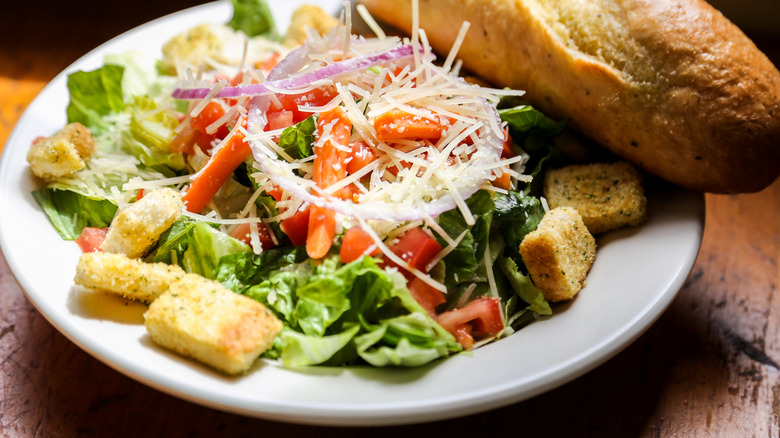
Have you ever wondered why restaurant salads taste so much better than homemade, particularly Olive Garden's famous house salad? It's a fairly easy salad to recreate at home, but even then, it may not taste quite the same. It's not just the way it's prepared — it's also how the salad is served. The not-so-secret trick Olive Garden uses when serving its iconic house salad is chilling the salad plates beforehand. Keeping the dishes cold helps keep the salad crisp and tasting fresh until you've finished eating it.
Many restaurants use this trick for salads or other items served chilled because restaurant kitchen areas run hot and dishes are frequently coming out of the dishwasher hot, both of which can easily wilt a fresh salad. Though having frequently hot dishes isn't typically the case in home kitchens, it's still a good idea to chill even room-temperature dishes from a cabinet before serving salad on them. A room-temperature plate or serving bowl is still warmer than a cold salad, and in this case, physics says warmth wins in temperature transfer, causing lettuce and other delicate raw veggies to become less crisp.
If you're not immediately eating or refrigerating a salad once it's prepared, simply chill the dish that it's prepared in or will be eaten in beforehand. The dishes don't need long to chill — just 10 minutes. But if you're an avid salad eater, you may consider designating a full-time spot in your fridge just for chilled salad dishes.
The other Olive Garden salad trick worth stealing
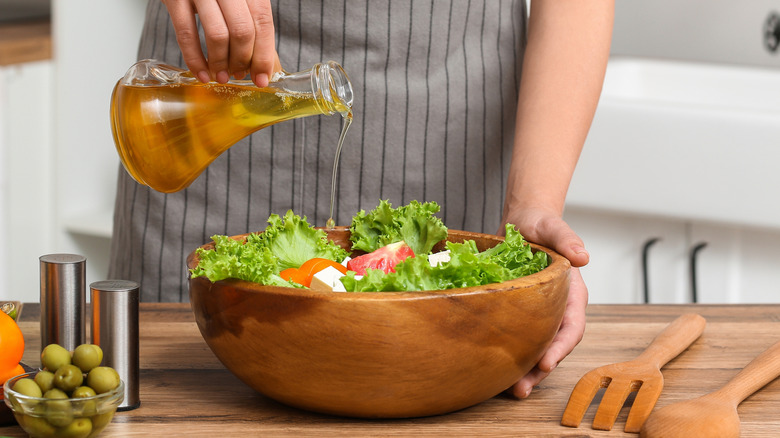
Another small but impactful way Olive Garden serves its salad is by assembling and dressing it right before serving. While this may seem like an obvious thing to do, some restaurants actually throw everything into a bowl, cover it, and store the prepared salad in the fridge until it's ordered. This may also be the convenient strategy used by those who pack a salad for lunch. I can't think of a better way to ruin a salad, though.
The freshest-tasting salad is one that's made to order. If high-water-content vegetables, such as tomatoes and cucumbers, are sliced and added to a salad in advance, even when stored in the fridge, they'll start to excrete moisture. This can cause the veggies to become limp and the salad to become soggy. Additionally, salad dressings usually contain a lot of salt, and salt can also be the culprit for a soggy salad because it draws out moisture. Making a fresh salad within minutes isn't as quick at home or on the go as it is for restaurants, but if you're meal prepping salad — especially a copycat version of Olive Garden's — it's best to have your salad ingredients prepped and separated from one another until you're ready to eat. Then, just toss everything together (preferably with the tool that's better than tongs) to thoroughly combine the ingredients, and don't forget to serve it on a chilled plate.