

11 Fruits That Wouldn't Exist Without Human Intervention
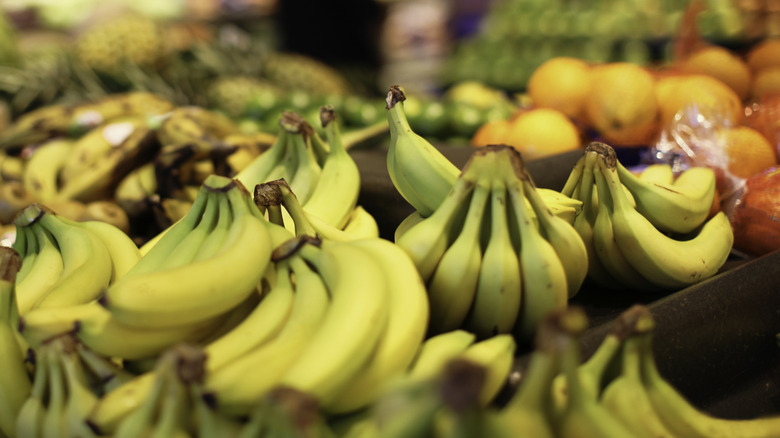
While wandering through the produce aisle, it's normal to think Mother Nature created all these juicy masterpieces we all adore. And this assumption makes a lot of sense, actually, because apples grow on trees, grapes dangle from vines, and strawberries soak up the sun in countryside patches.
But the origin stories of some of our favorite fruits may surprise you, in that many of the fruits we most love today bear only a passing resemblance to their wild ancestors. In fact, over thousands of years, farmers have selectively planted seeds from the sweetest, largest, most juicy and easy to eat specimens. Then, as time passed, those choices gradually transformed tough, seedy, or bitter fruits into the vibrant tasty rainbow of colorful grocery store marvels we now find at modern markets. In some cases, entirely new fruits have emerged through intentional crossbreeding, accidental hybridization, or cloning techniques that have allowed only the most desirable traits to be preserved.
Without that human involvement, many modern fruits simply would not exist in their current form. Some would be filled with oversized seeds, or would offer very little edible flesh. A few varieties would disappear altogether (because they're propagated through cuttings versus seeds, making them reliant on humans for survival and reproduction). We're sure you're wondering which ones, so without further ado, here are 11 fruits that wouldn't exist as we know them without human intervention.
1. Sweet oranges
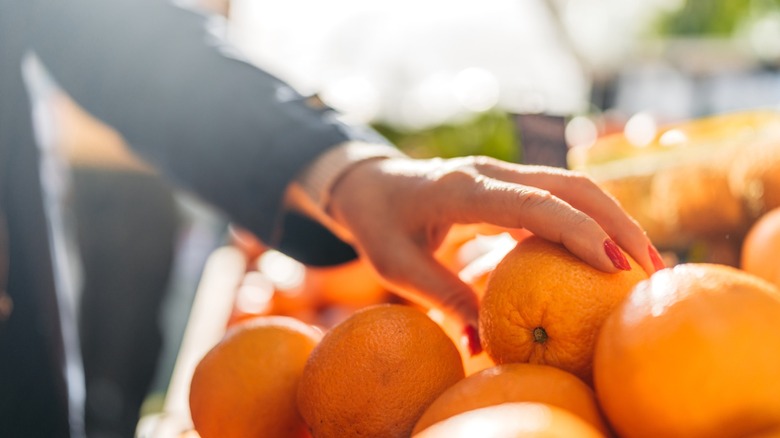
While you may have heard about the fascinating history of the origin of the orange's name, the fact that it never would've come to be in the first place, without human intervention, is an equally intriguing tale. The sweet orange feels so familiar (used on a daily basis for most folks) that many assume it's always existed in nature. The fact is that this commonly consumed citrus fruit is the result of human involvement stretching back thousands of years.
It all started in China, where ancient growers had the genius idea of crossing two very different fruits. These fruits were the pomelo (known for its large size and thick rind), and the much smaller mandarin. The result was what we know as the sweet orange today, a hybrid that has become one of the world's most popular fruits. That origin story is part of a much larger citrus family saga. You see, botanists have determined that many common citrus fruits trace their roots back to just a handful of ancestral species. Sweet oranges are among the best-known examples of these. Unlike truly wild fruits that evolved independently, oranges emerged because people cultivated, transported, and repeatedly selected the most desirable citrus plants over generations.
The fruit's journey did not stop in Asia. Over centuries, citrus varieties traveled along trade routes and spread through different civilizations. Sweet oranges eventually reached Europe during the Renaissance era, introducing a new flavor that quickly gained fans. From there, cultivation expanded even further.
2. Grapefruits
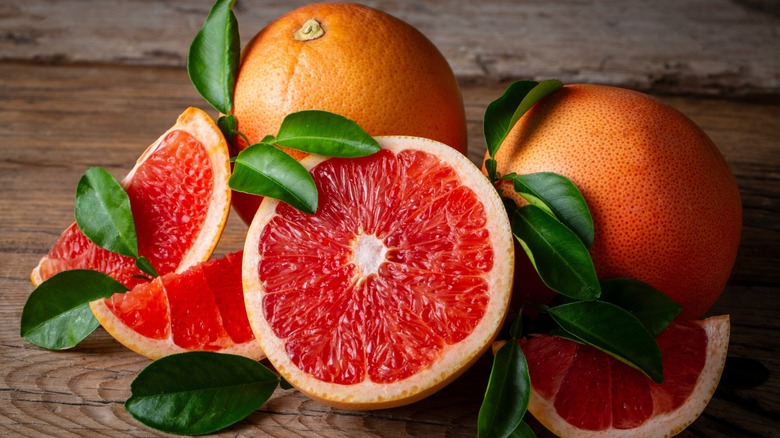
For some reason, among the fruits picked in grocery stores, grapefruits often tend to get overlooked. And while one might wonder why people seemed to stop eating grapefruit, an equally valid question would be, "Where in the world did these citrus orbs originate in the first place?" While grapefruits may seem like a natural member of the citrus family, their actual existence can be linked to a surprise whoopsie, if you will. During the 18th century in Barbados, pomelos imported from Asia ended up growing near sweet orange trees that had already made their way to the Caribbean. The pair crossed naturally, producing a new fruit that never existed before.
Although this hybridization happened organically, people did play a vital hand in it, because citrus trees had been transported across oceans for centuries (from Asia into Europe, Africa, and eventually the Americas). Without that human movement of plants and seeds, the pomelo and sweet orange would never have found themselves in such close quarters (thus, the grapefruit would never have emerged).
And even once it was created, early grapefruits did not immediately earn the ardor of eaters. Chalk it up to the strange mix of bitterness, tartness, and sweetness (definitely an acquired taste). Over time, however, growers began cultivating it more widely, and by the 19th century, grapefruit had reached Florida, where favorable growing conditions helped establish commercial production. As demand increased, farmers selected improved (mostly sweeter) varieties, one of the most influential being the Ruby Red.
3. Lemons
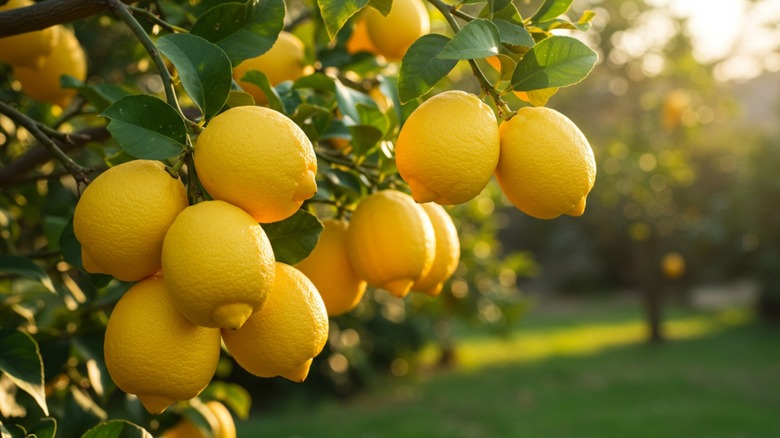
This next one is a surprise that might shock you as much as that first tart sip of lemonade. We're talking about lemons, that zingy vibrant citrus fruit that, believe it or not, wasn't a naturally occurring wild species. Genetic research has proven this, revealing that lemons originated as a hybrid of two older citrus fruits (the citron and the bitter orange). It's believed this combining happened in Asia thousands of years ago. Since then, generations of cultivation has gradually transformed that hybrid into the fruit we purchase in modern markets today.
The citron (among the oldest citrus ancestors), had been cultivated long before lemons ever appeared. At some point, it crossed with the bitter orange and produced offspring with a distinctive combination of acidity, juice, and a pleasantly-scented peel. Human growers saw these desirable qualities and continued selecting plants that displayed them most consistently. As time passed, those efforts resulted in the current lemon's characteristics. As for a timeframe, evidence suggests citrus cultivation was already underway in Asia more than 2,000 years ago. From there, lemons spread through the Middle East and Mediterranean, then reached Europe. By the end of the 15th century, Spanish and Portuguese explorers had introduced lemon trees to Florida.
The lemon's story highlights how many fruits owe their existence to human-guided cultivation. While the citron and bitter orange both existed independently, the lemon required hybridization followed by centuries of selection. Farmers repeatedly favored fruits with the traits they valued most, helping shape today's lemon.
4. Tangelos
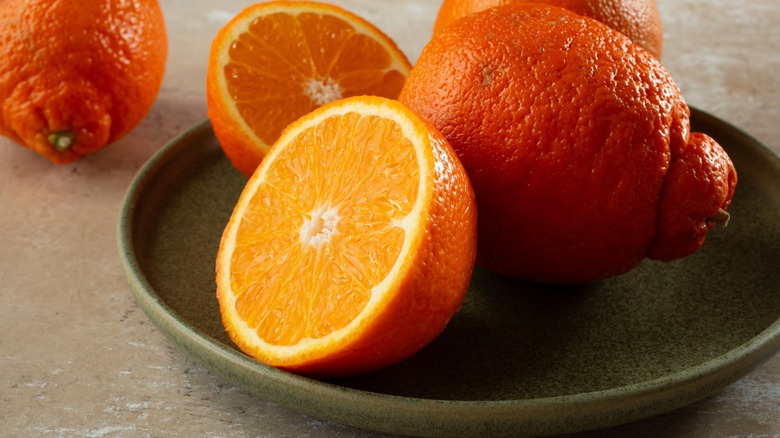
Unlike fruits that are products of chance hybridization, tangelos were created intentionally. Horticultural researchers wanted to pair the easy-peeling qualities of the tangerine with the juice-rich characteristics of pomelos and grapefruit. What you got was a marriage that tastes like it was made in heaven (a citrus fruit that would never have existed without these deliberate breeding endeavors).
Perhaps the most famous tangelo emerged through work associated with the USDA, where researchers crossed a Dancy tangerine with a Duncan grapefruit, a pairing that eventually led to the releasing of the Minneola tangelo in the early 1930s. Other tangelo varieties followed, each created through various combinations of grapefruit, pomelo, and tangerine. Even the fruit's name directly reflects its origin, clearly blending together parts of the words tangerine and pomelo.
Because breeders specifically selected parent fruits with the most desired, advantageous traits, tangelos present characteristics that appeal to many citrus fans. For instance, they tend to be incredibly juicy, which of course makes them popular for both eating and juicing purposes. As for their flavor, that finds the ideal spot capturing the sweetness of a tangerine as well as the more tart bite associated with the grapefruit. A clear example of agricultural innovation, tangelos exist because humans took matters into their own hands. Rather than waiting for nature, researchers actively engineered this mouthwatering orange orb by crossing existing citrus varieties. Every tangelo traces its existence to those intentional breeding choices.
5. Cavendish bananas
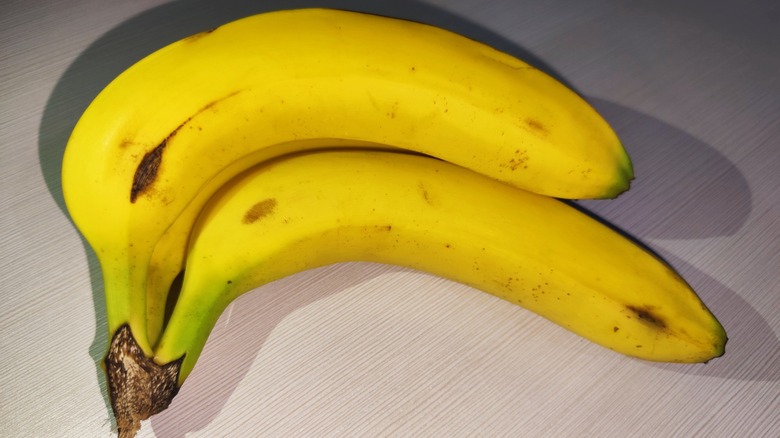
The bananas you usually see at the grocery store are actually banana clones called Cavendish bananas. There is even a pretty funny video delving into the bizarre prehistoric history of bananas, which also explains why these modern day bananas don't have seeds. But we wanted to take it a step further, and really dive into the Cavendish banana origin story. So yeah, those bright bunches of yellow boomerang-shaped fruit beaming at you from the displays at your market today are a far cry from their wild ancestors.
It started with early forms of Musa acuminata, which contained hard, pea-sized seeds that were present throughout most of the fruit. As you'd imagine, those seeds made them very different from the soft, seedless bananas people expect (and certainly prefer) today. The familiar Cavendish version entered the stage only after humans repeatedly selected unusual plants that produced more edible flesh and far fewer seeds. Eventually, growers favored a sterile mutant form that could not reproduce with normal seed production. That decision permanently tied the fruit's survival to people. Cavendish bananas are triploid, which means they carrying three sets of chromosomes. Because of that specific genetic arrangement, they cannot produce viable seeds.
So while shoppers benefit from smooth fruit, the plant itself pays a price. New plants must be created from existing ones, producing genetically identical copies rather than offspring with new combinations of traits. Translation? That simply means that nearly every Cavendish banana is a clone of another Cavendish banana.
6. Modern watermelons

We've shared a casual guide to grocery store melons, but nowhere did we delve into the fascinating history of origins (specifically, how modern watermelons came to be). Much of what we know about the ancestors of modern watermelons stems from historical artwork. In some paintings created during the Renaissance era, including a specific 17th century still life, watermelons in the art are almost unrecognizable when compared with the giant red-filled fruits stacked in grocery stores today. The watermelons from the paintings reveal interiors of pale flesh, plus swirling patterns and far less edible flesh than today's versions.
Those unusual (to us) melons give a rare glimpse into the world of watermelons, specifically what exactly they looked like before centuries of human selection had their way with them. By around 1600, watermelons were growing in Southern Europe, but they had not yet been refined into the sweet, juicy, pink fruit we now gleefully associate with sticky hands at summer picnics. These melons were smaller and contained less lycopene (the compound responsible for a watermelon flesh's pink-red hue).
Just like other fruits, spanning generations, growers selected plants with the most appealing characteristics (think larger in size, more colorful flesh, higher water content, and heightened sweetness). As those traits were favored, watermelons slowly transformed. The pale interiors seen in old paintings gave way to the vibrant melon flesh consumers look for today. Without that human-guided breeding, modern watermelons would look far closer to their pallid Renaissance relatives than the juicy gourds in produce sections today.
7. Cultivated strawberries
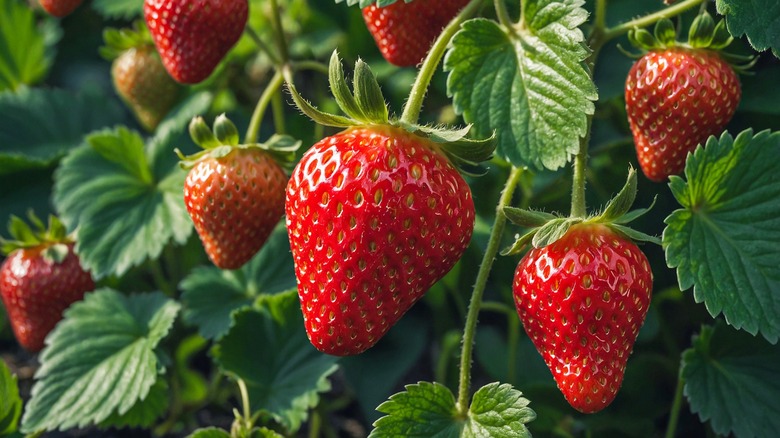
Ready for another shocker? This one has to do with those big, juicy red strawberries that fill your grocery store containers, which may surprise you in how newly created they actually are. While Europeans gathered or cultivated small strawberry species (appreciated more for scent than size) for centuries, the large berries folks see in markets today didn't appear until the 18th century. The story begins when French engineer Amédée-François Frézier traveled to Chile. While documenting plants, he encountered large strawberries (very different from the smaller berries he knew back home). Intrigued, he brought several plants back to France.
Those Chilean strawberries possessed impressive size and durability, but weren't suited to European growing conditions. Nearby, gardeners were cultivating a different North American species (Fragaria virginiana). Although much smaller, this strawberry offered a strong flavor and adapted more easily to climates. At some point, these species cross-pollinated. Whether this happened accidentally or through deliberate cultivation remains unclear, but the result was a new hybrid that took the most desirable qualities from both parents, resulting in a new fruit that was larger, had better flavor, and was far more adaptable.
The hybrid had made its way throughout Europe in the mid-1700s. Gardeners embraced it, farmers began producing it, and breeders continued refining it for greater sweetness, size, color, and shelf life. Without that fortunate cross between a Chilean strawberry and a North American relative, the berries piled into baskets, desserts, and supermarket displays would never have existed.
8. Domesticated peaches
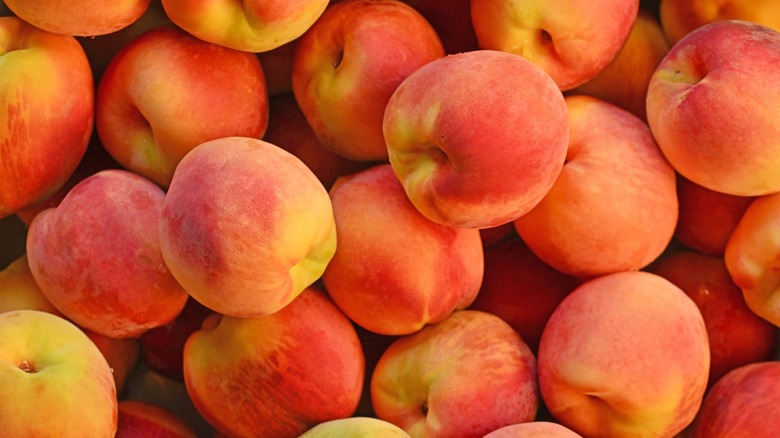
You've surely heard the term "pretty as a peach," and there's a definite explanation for that beauty. It was all by meticulous design. That's because the modern peach found in supermarkets today is the result of thousands of years of human selection. Most shoppers would be surprised by ancient peaches, which were dramatically different.
As for specific origins, archaeological evidence points to China's Yangtze River Valley as one of the earliest points of peach domestication. Researchers studying preserved peach pits discovered that the transformation from wild fruit to today's peach began roughly 7,500 years ago. Far from a quick change, scientists estimate that morphing journey took around 3,000 years of cultivation and selection. As to what early peaches were like? They were much smaller, pale, and far more acidic. Ancient farmers picked trees producing larger fruit with longer growing seasons, then each following generation continued to select the most desirous traits. As time passed, peaches became larger, sweeter, and more juicy and colorful. Their texture also changed, and many varieties developed the blush and fuzz we associate with modern peaches. Later breeders also selected for optimal firmness, ensuring fruit could survive transportation and storage.
From China, peaches spread across Asia, into India, through the Roman world, and eventually to the Americas. Every step of that journey involved further selection. Without thousands of years of human cultivation, the peach would've likely stayed a small, tart stone fruit rather than the cherished summer favorite known today.
9. Honeycrisp apples
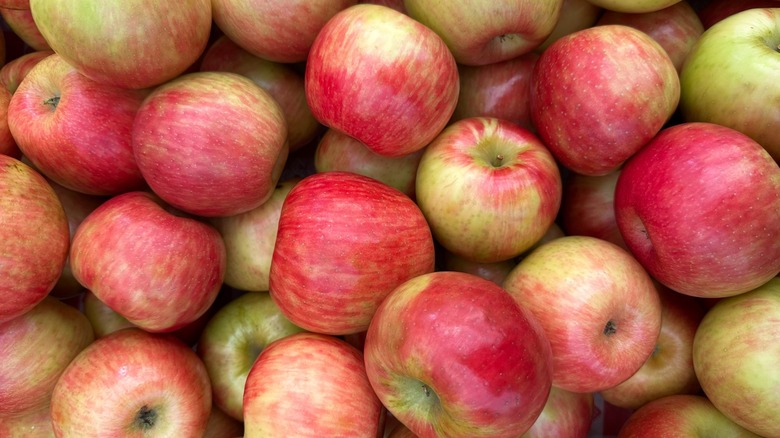
The Honeycrisp apple may seem like a natural grocery store favorite, but it actually only exists because decades of deliberate breeding transformed ordinary apple genes into something entirely new (and delicious). Unlike their tiny wild crab apple counterparts (known for being super tart and far less appealing for eating), Honeycrisp apples were carefully developed by researchers seeking very specific characteristics.
The Honeycrisp story began with the University of Minnesota's apple breeding program, where scientists cross-pollinated apple varieties in 1960. The resulting tree, known only by an experimental identification number, spent years being evaluated. In fact, one promising specimen nearly ended up discarded before horticulturist David Bedford recognized its potential and gave it another opportunity. Apple breeding is famously slow. New varieties can take decades to move from a single cross-pollinated seedling to commercial orchards. Researchers spent years evaluating flavor, texture, appearance, hardiness, and storage qualities before deciding the apple was ready to release. The variety eventually received the name Honeycrisp and reached growers in the early 1990s.
What really made Honeycrisps different was the texture. Consumers were accustomed to apples that were dense and often bred primarily for shipping durability. Its super crisp bite, juiciness, and unique blend of sweet and slight tartness offered eaters an entirely different apple experience. The variety quickly developed a devoted following and became one of the most successful apples ever produced by a university breeding program. Today it ranks among the most popular apples grown in the nation.
10. Modern tomatoes
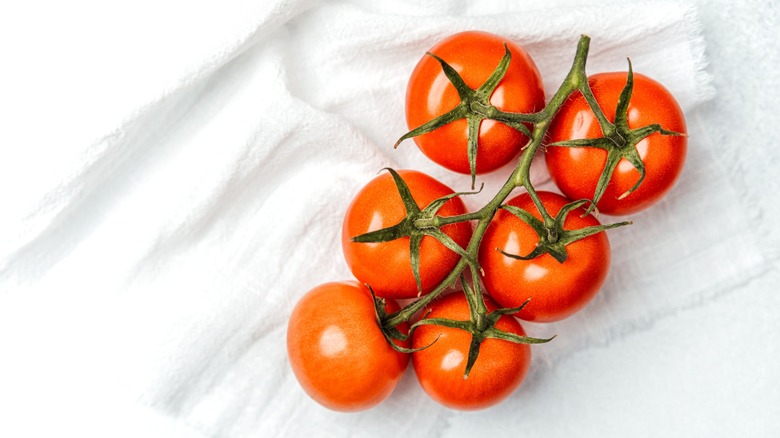
Tomatoes are so commonplace these days that it's easy to forget they got their start as something far less impressive than today's radiant red and shiny baubles. The earliest wild ancestors looked nothing like modern ones. In fact, one such wild ancestor (known as Solanum pimpinellifolium) still grows in parts of Peru and Ecuador. It produces tiny fruits about the size of peas and possesses incredible genetic diversity, as well as remarkable toughness (traits that enable them to survive everything from drought to disease, and even extra-challenging environments without human assistance).
The transformation to the modern tomato began when Indigenous peoples carried tomatoes north through Central America into what is now Mexico. There, farmers started cultivating the plants and saving seeds from specimens that produced larger, tastier fruits. By selecting the most desirable plants and encouraging favorable crosses, they slowly reshaped the species. The results? Tomatoes became larger, sweeter, more colorful, and more useful as food crops. Eventually Spanish explorers carried seeds from Mexico to Europe, where cultivation continued. Over centuries of breeding and hybridization, tomatoes diversified into thousands of forms.
Ironically, while domesticated tomatoes gained flavor and aesthetic appeal, they lost the strong genetic resilience of their wild relatives. Modern breeders later returned to those wild South American populations, borrowing valuable traits that now help tomatoes resist diseases and environmental stresses. Over 10,000 tomato types now exist, but all trace their origins to tiny wild fruits and years of human-guided selection.
11. Domesticated eggplants
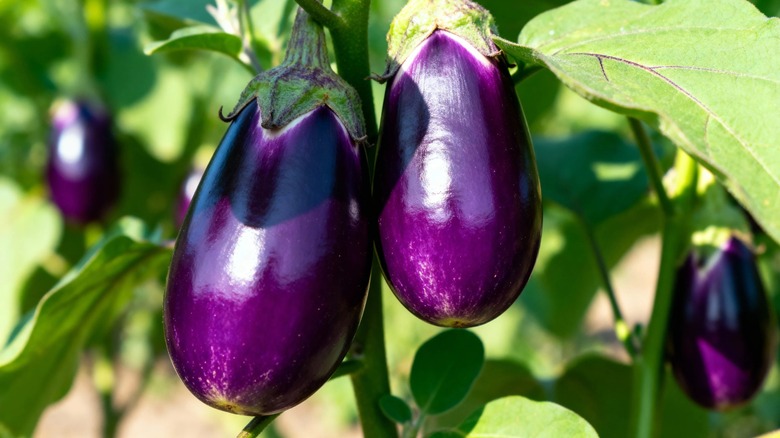
Nowadays, glossy purple eggplants star in some of today's most delectable dishes. But their wild ancestors were far less appealing. The aubergine we know today is actually the result of thousands of years of human selection and cultivation, which transformed a pretty unimpressive wild plant into one of the most important nightshades. Along with tomatoes, peppers, and potatoes, eggplants rank among the world's most significant cultivated crops, but unlike their modern descendants, the earliest forms looked and tasted quite different than today's versions.
Researchers discovered the eggplant's ancestry began in Africa, where relatives of the species evolved around 2 million years ago. Over time, one branch spread into Asia, resulting in a wild species known as Solanum insanum that scientists now recognize as the direct ancestor of the domesticated eggplant. Populations of this wild plant eventually became the foundation for cultivation in parts of India and China.
Evidence suggests people in Asia were growing and using eggplants more than 2,000 years ago. Interestingly, the plant may have been valued first for medicinal purposes. As generations of farmers selected plants with larger fruits, improved texture, and more pleasing flavors, the eggplant gradually changed (the fleshy interior expanded, the bitterness lessened its bite, and a wide range of shapes, colors, and sizes formed). Today's familiar purple varieties represent only one chapter in that long origin story, but every glossy eggplant in today's grocers reminds us that centuries of human cultivation turned a wild botanical berry into something truly divine.