

The Sneaky Way Texas Roadhouse Gets You To Spend More On Drinks
Somehow, Texas Roadhouse keeps steaks cheap while beef prices soar. Across the board, the popular steakhouse chain has managed to beat out its competitors in terms of affordability. Although it's great to see a chain providing value for its customers, we'd be lying if we said we weren't scratching our heads over how it manages to undercut competitors so efficiently. It turns out, one way Texas Roadhouse might be managing to stay in the green despite its low food prices is through a clever design of how it sells alcohol.
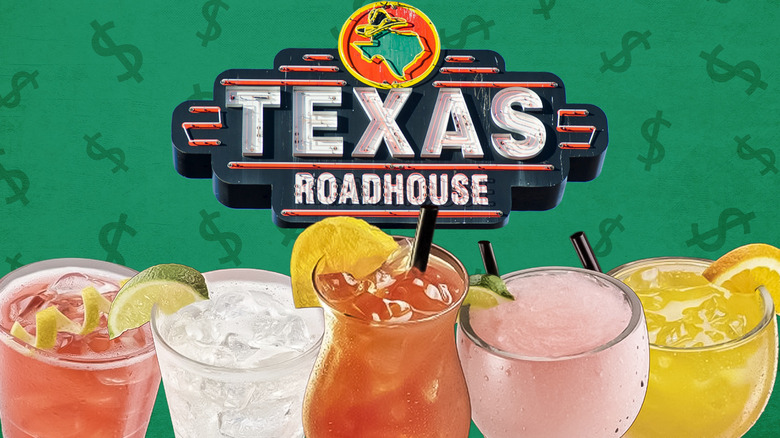
While doing a bit of digging into Texas Roadhouse's bar menu, it dawned on us that the way this chain approaches alcohol sales is quite different from how most other restaurants do it. If you take a look at the drink menu, you'll be confronted with colorful pictures of all kinds of drinks but no clear drink price listed for any of the signature cocktails. If you ask the bartender how much a drink costs, they'll likely inform you that the cocktails are market price (that's been our experience, anyway). Normally, "market price" is a term you'd expect to be associated with expensive seafood, like lobster or oysters — so what's it doing at a chain steakhouse bar?
What Texas Roadhouse is doing is essentially forcing the customer to pick what spirit they want included in their cocktail. While most restaurants will simply use a well liquor in signature cocktails unless the customer requests otherwise, Texas Roadhouse is very likely upselling higher-end alcohol by not giving customers a default spirit when they order a drink.
Texas Roadhouse isn't the only restaurant chain that leans on alcohol sales
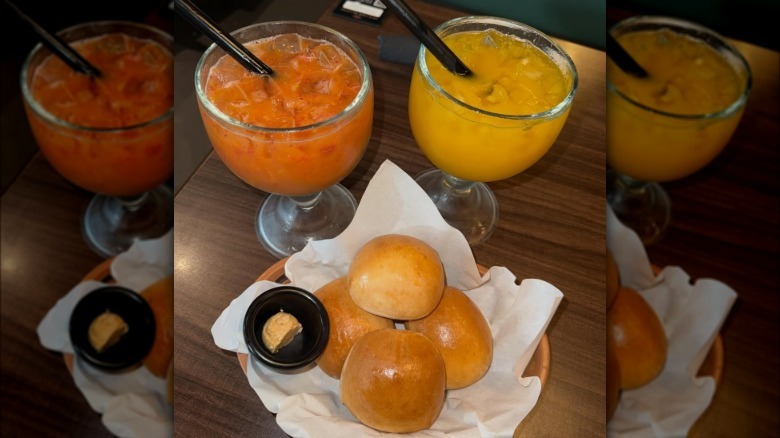
This take is, admittedly, speculative. There's nothing official making the rounds on the internet detailing how Texas Roadhouse has designed its drink menu to influence its customers to order more expensive liquor. In any case, restaurants use menu design to make you spend more, and the drink menu at Texas Roadhouse is no different. What is different is how it seems to be going about it, since most restaurant chains don't appear to be following the same sales technique.
Because Texas Roadhouse is selling food at such a low cost relative to other steakhouses (and crushing the competition in the process), it stands to reason it would try to make money elsewhere, and alcohol is a great place to start. According to the National Restaurant Association, alcohol sales make up about 21% of a restaurant's sales, but the profit margin for alcohol is always, without exception, greater than what a restaurant can earn through food.
Texas Roadhouse isn't magically getting cheaper beef than its competitors. What it's doing is thinning its profit margin down on food sales. Increasing its profit margin on alcohol by pushing customers to choose what alcohol they want in their cocktail may not be the only way it's making up for that lost profit, but it would certainly cover some of it. Apparently it's not enough, though, since Texas Roadhouse's meals are getting more expensive anyway.