

The Grocery Store Chicken Red Flag To Watch Out For
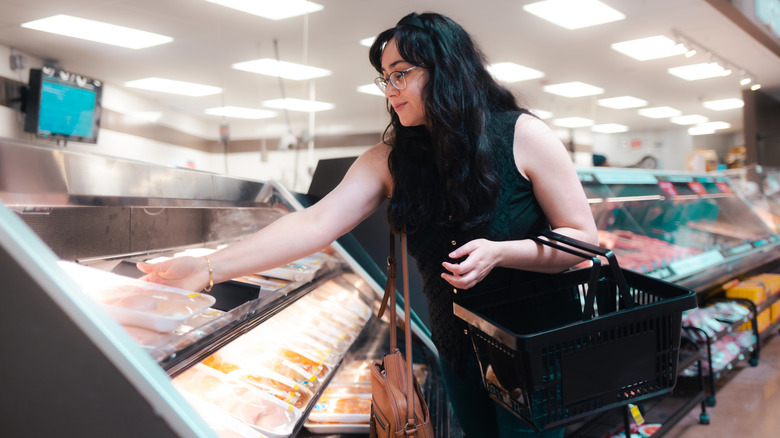
It pays to know the things to check for at the grocery store before arriving at the shop with your to-buy list. If your visit involves buying chicken, be wary of a commonly overlooked warning sign that can put your health at risk. While an overstuffed refrigerator case may seem like a good sign that indicates the grocery store has an abundant supply of poultry meat, the truth is sometimes far from that. For one thing, a fully stocked display could signify problems with how the meat is stored.
Raw chicken is highly perishable. It must be kept cold (at or below 40 degrees Fahrenheit) at all times to retard the growth of bacteria like Salmonella. That's why grocery stores use refrigeration systems that can handle a certain amount of inventory. However, at times, store workers fail to anticipate just how much meat is too much for the refrigerator case. They sometimes pile up chicken products above the fill line, stack them tightly against the vents, or cram everything into a display and leave little room for cold air to circulate properly. Uneven airflow can create warm zones in the fridge, making the meat vulnerable to bacterial growth and contamination. In other words, when a refrigerator case is packed beyond its intended capacity, there's a chance the chicken meat will spoil faster.
What happens when chicken is left in the temperature danger zone for too long
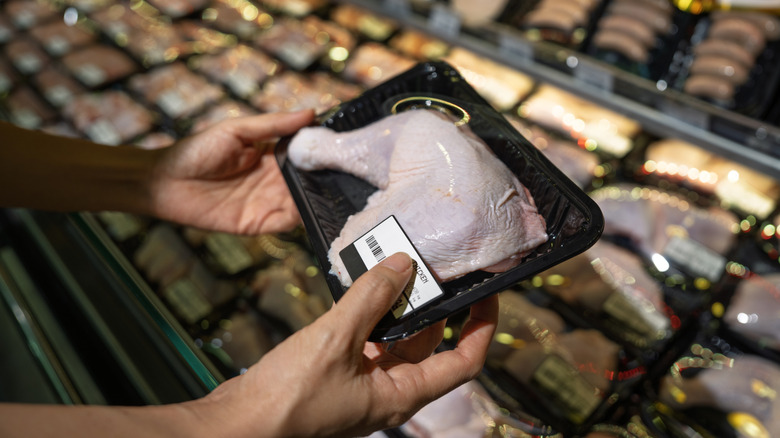
Though it sounds tricky when you're faced with an overfilled refrigerator case, it's still possible to avoid picking out bad chicken at the grocery store. The idea is to select packaged meat at the back or bottom of the display, where temperatures are the coldest and most consistent. Overstuffed fridges tend to experience temperature fluctuations, and chicken meat left in the temperature danger zone (defined as between 40 and 140 degrees) can quickly become a serious food safety risk. That's because this is the temperature range where bacteria thrive and multiply. In this zone, bacteria can double in just 20 minutes, significantly increasing the risk of food-borne illness once consumed.
To stop yourself from making the common mistakes people make with raw chicken, thoroughly examine the packaging and the meat before buying. Check for tears or damaged seals, as these increase contamination risk. See to it that the meat is still its normal light pink color. Any darkening or discoloration could be a sign of spoilage. In terms of smell, fresh chicken meat should not give off a sour or sulfur-like odor. The CDC recommends putting raw chicken in a disposable bag before placing it at the bottom of the cart to prevent it from contaminating other food items while at the store. At home, poultry meat should be stored in a sealed container before stowing it in the refrigerator.