

The Pros And Cons Of Using A Steam Oven. Is One Right For Your Kitchen?

We may receive a commission on purchases made from links.
Making any changes to major kitchen appliances requires an investment of time, money, and effort. But if you did have the ability to design your dream kitchen, what type of range would you choose? Electric ones may carry the lowest price tag (here are some of the best ones), although many chefs prefer cooking with gas (at least on the stovetop). Induction is yet another choice, although it may not offer the best value. But what about steam ovens? Are these just something for professional kitchens? While they may not be common, in-home steam ovens have actually been available for purchase since the 1980s. According to Amy Chernoff, marketing vice president at appliance retailer AJ Madison, "Steam ovens are absolutely becoming more practical and popular for home kitchens, especially as consumers look for healthier cooking methods and more versatile appliances."
As Chernoff explains, "While they were once associated mostly with professional kitchens, today's models are much more user-friendly and designed for everyday cooking, reheating, and meal prep." These ovens may not be practical for every household, and they certainly don't come cheap (even less expensive models may cost several thousand dollars). But Chernoff points out that there is one area in which they excel: "For households that cook frequently, a combi-steam oven can genuinely improve cooking results and reduce food waste by reheating leftovers without drying them out."
How steam ovens work

As Amy Chernoff explains, "A steam oven uses heated water vapor to cook food, either on its own or in combination with dry heat." The steam is generated from water which is either added to an internal reservoir inside the oven or comes from a direct water line. "That steam transfers heat very efficiently and evenly, which helps foods cook gently while preserving texture and moisture," says Chernoff.
There are three different types of ovens that use steam. According to Chernoff, "Pure steam ovens focus on gentle cooking, reheating, and vegetables, while combi-steam ovens combine steam with convection for more versatility, including roasting and baking. Steam-assist models add bursts of steam to a traditional oven, which is especially useful for bread baking and improving moisture retention."
If you'd like to try steam cooking without committing to a full kitchen overhaul, there are also countertop steam ovens. Some of these are the size of a toaster oven, while others may be large enough to steam cook a turkey. Most just cost a few hundred dollars.
There are pros and cons to using them
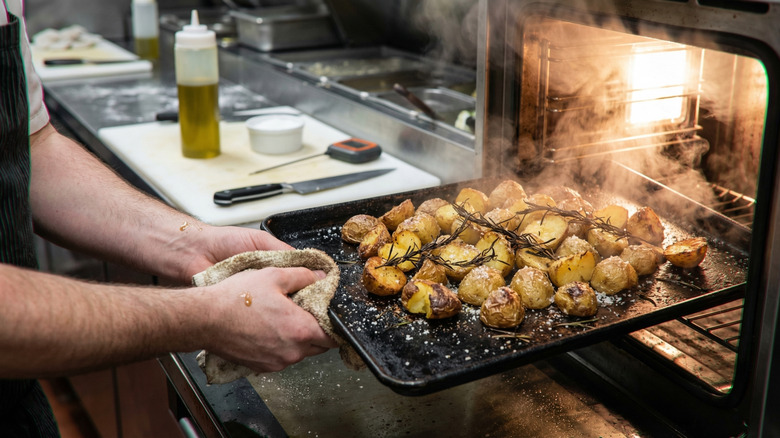
While heating up leftovers may be one of the things a steam oven does best, Amy Chernoff feels it offers some advantages for cooking as well: "Compared to a standard oven, it does a much better job of retaining moisture, which means foods stay tender and don't dry out as easily." The added moisture can really help with cooking low-fat foods, like lean fish or chicken breasts. "Vegetables also benefit because steam helps preserve color, texture, and nutrients better than many traditional cooking methods," adds Chernoff. She also pointed out that combi-steam ovens are good for baking bread, because the steam helps the crust crisp up while the interior stays soft.
However, steam ovens may not be for everyone. Not only are they pricey, but there are also installation costs, like hooking up water lines. Cooking methods and timing are also different, so you may need to figure out how to tweak your recipes to work with the new appliance. And as Chernoff admits, they can be a bit high maintenance: "Some homeowners may also find that water reservoirs and maintenance, like descaling, add an extra step to ownership." Ultimately, it depends on your budget, your patience, and whether or not you find too-dry leftovers to be a major problem. If you're on the fence, though, an inexpensive countertop steam oven may allow you to test the steamy waters without fear of buyer's remorse.