

That Fork And Glass Symbol On The Bottom Of Plastic Containers Actually Has An Important Meaning
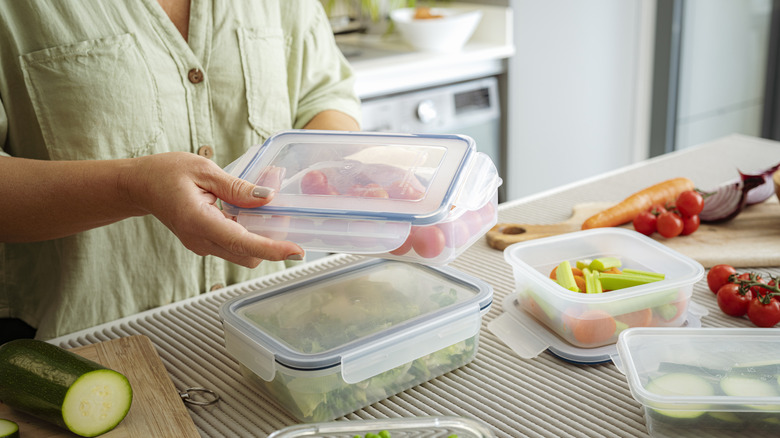
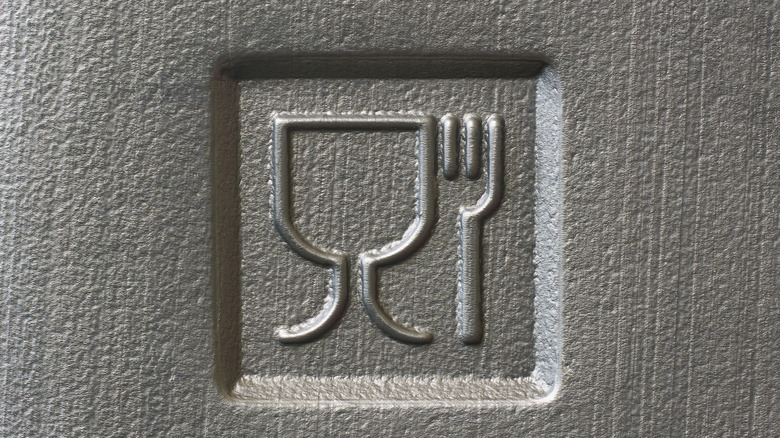
Similar to other manufacturing materials (like wood, glass, and cardboard), plastic often reaches consumers with small symbols on its surface which can help the discerning eye interpret what exactly it's looking at. Some of these symbols indicate if the plastic container is recyclable, while others will tell you if the plastic is microwave safe (though, to be honest, microwave-safe plastic is actually a lie). One common symbol on plastic that people will regularly run into is the glass and fork symbol. If you've never seen or heard of it before, the symbol is unfortunately not as immediately self-explanatory as it could be, but the simple truth is that the symbol tells you that the plastic is food safe.
In other words, every plastic food container you own should have this symbol stamped somewhere on it. If the symbol is absent, the plastic is not considered food safe, and you should not be putting food or drink anywhere near it. Because plastic has become such a ubiquitous part of our food supply chain, once you know this symbol exists, you'll probably start seeing it everywhere. There are some types of food which should never be stored in plastic containers, regardless of whether the food-safe symbol is present or not. But for everything else, it's worth taking a second look to make sure the food in your home is being stored safely.
Food-safe plastic should still be treated with caution
Just because something is deemed safe doesn't necessarily mean you should throw caution to the wind. Asbestos was banned in 1989 (sort of), but that didn't stop it from negatively affecting millions of people before that action was taken. Will future generations look back at us with the same kind of unease due to our rampant use of plastic as we ourselves look at past generations for placing asbestos in their homes or lead in their paint? Only time will tell, but microplastics are becoming increasingly difficult to avoid.
It's unfortunate that paper straws are so much less effective compared to plastic straws, but you don't have to cleanse your home of all plastic to at least minimize the damage it may be doing. Here's one example of a small step you can take: Although food safe plastic is often a fine storage solution, you can decide not to eat the food directly from those plastic containers. When your fork or knife scrapes down to pick up a juicy bit of food, it's often scraping at the plastic in the process. Those shavings may not be big enough to notice a difference, but if you do make a habit of eating from plastic containers, there's a good chance you'll find large scratches on the bottom if you bother to look at what's in your cupboard. But before you do that, make sure the fork and glass symbol is present in the first place.