

4 Signs Your Mayonnaise Has Gone Bad
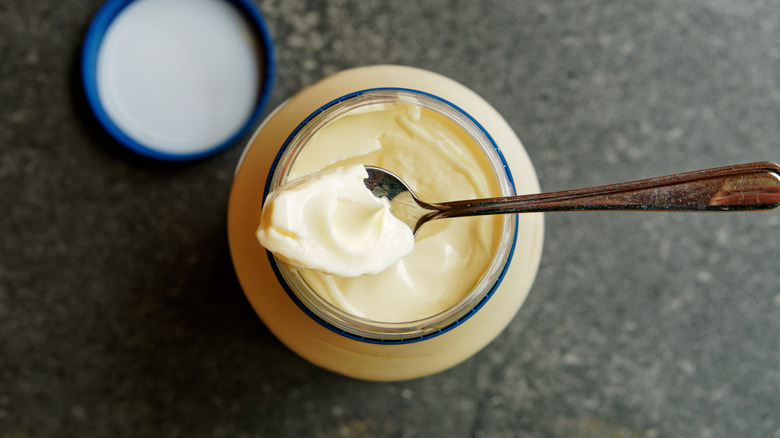
Despite being a polarizing condiment, mayo remains a staple item in many households. This is because there are so many ways to use mayonnaise, including serving it as a creamy dip, incorporating it into salad dressings, or spreading it on a sandwich. Thanks to its natural acidity and preservatives, mass-produced mayonnaise can last a long time, provided it's stored in a cool, dry place. However, this doesn't guarantee that it stays fresh indefinitely. There will come a point when stocked mayo goes bad, especially once the container has been opened and the condiment has been exposed to air and fluctuating temperatures.
Homemade mayo doesn't have it easy either. Since this version contains raw eggs and fewer preservatives, it spoils much faster than commercially made products — it will only stay fresh for up to five days. Its shorter shelf life requires extra attention.
With store-bought mayonnaise, expiration dates only serve as a tentative indicator of their viability. They are not always the best indicator of whether the condiment is still safe to eat. As an emulsion, mayonnaise undergoes both physical and chemical changes over time. As a result, spoiled mayo often gives clear warning indications before it becomes unsafe for consumption, like these four main warning signs.
Unpleasant odor

One of the easiest and most obvious ways to tell whether your jar of mayonnaise is still safe to eat is by smelling it. Freshly opened mayo typically has a mild, slightly tangy smell thanks to some of its ingredients, like vinegar or lemon juice. While its natural scent is noticeable, it should not be overpowering or offensive to the nose. Otherwise, you can already tell that the sauce has gone bad by its strong, unpleasant odor.
Generally speaking, how long a jar of mayo lasts after opening depends on whether it's consistently refrigerated. It should keep for between two and three months, though mayonnaise that has been exposed to air or dirty utensils may spoil faster due to bacterial contamination. The microorganisms can break down its components, and the process can lead to the production of strong odors that differ significantly from the condiment's normal smell. A spoiled jar may emit a sour or putrid odor. If, upon opening, it immediately causes you to recoil from the smell, you should trust your senses right away. Because even if the mayo looks normal, an unpleasant smell is a dead giveaway that it is no longer fresh, so it's best to discard the product immediately.
Change in color
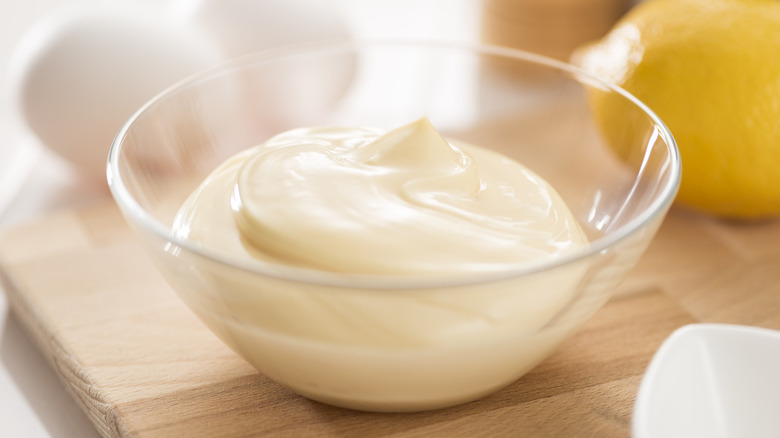
Depending on the ingredients and technique used, homemade mayo ranges in shades of yellow, while store-bought products are generally quite a bit paler in hue. For it to qualify as safe to eat, this color should be consistent throughout the jar. It should not have any noticeable shifts in shade. Any discoloration can mean that the condiment is already old. This is because over time, mayonnaise can develop a yellowish, brownish, or overall darker tint that wasn't present when the product was freshly made or since the jar was first opened. In some cases, patches of discoloration may form on the surface or close to the lid. These color changes occur due to oxidation, mold growth, or other chemical reactions when the jar is mishandled or stored improperly.
It's important that you always treat any peculiar color change as a warning sign. If you spot green, black, or other unexpected hues in your jar of mayo, discard it immediately. Visible mold growth, even in a small area, means the entire contents of the jar should be thrown away, as microscopic contamination might have already spread beyond what the naked eye allows you to see.
Separation of liquids
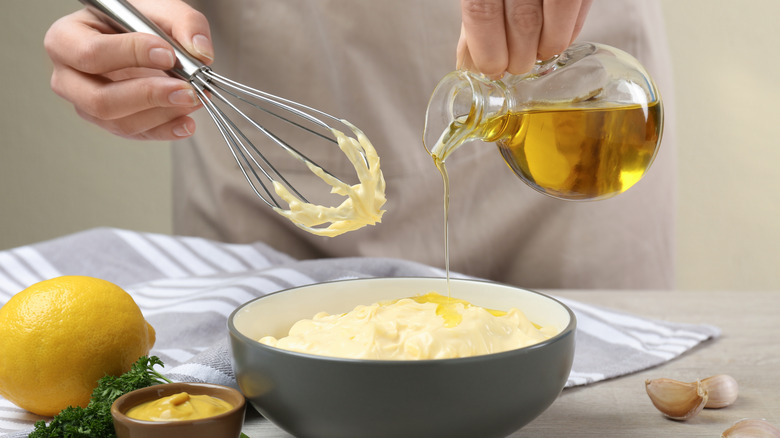
If you know what mayo is made out of, then you already have an idea how an emulsion works. Basically, oil- and water-based ingredients are blended thoroughly with an emulsifier (egg yolks) to form a stable mixture. When fresh, mayo typically has a smooth and creamy consistency that remains relatively uniform throughout the container. However, a small amount of liquid can sometimes show up on the surface if it wasn't emulsified well. While this isn't alarming in itself, seeing a significant separation of liquids is another story.
If you notice large pools collecting on the top of the jar or when the mayo itself appears curdled, grainy, or broken, it's a sign that the emulsion has deteriorated. This also can suggest that the product is already quite old or that it has been exposed to improper storage conditions, causing its components to separate. Although separation alone does not always translate to spoilage, it should prompt a closer inspection of the state of the condiment. In other words, you need to check for other warning signs to be able to decide if it's indeed time to dispose of it.
Odd taste
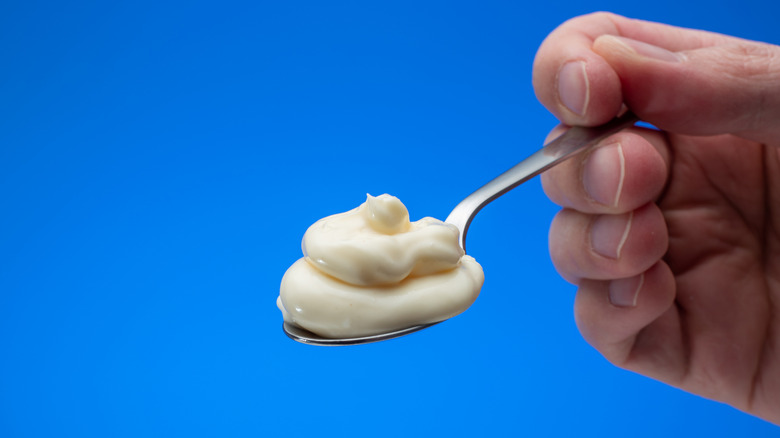
"The proof is in the pudding," as the saying goes. The final clue that mayonnaise has gone bad is its taste, although it should never be the first test you perform to determine its viability. Before sampling your mayo, make sure that it has passed the inspection for smell and appearance first. Freshly prepared or newly opened mayo should have a creamy and slightly tangy flavor with a balanced richness from the eggs and oil. On the other hand, spoiled mayo may taste sour, bitter, and outright off. Even the most subtle change in flavor can indicate that it is no longer at its best. Remember, keeping the condiment for too long is a mayonnaise mistake you need to avoid making.
When testing for taste, make sure your palate is clean and free from any lingering flavors from foods or beverages you've recently consumed. Rinsing your mouth with water beforehand can help you evaluate the mayo's flavor profile better. Take only a very small amount for the taste test and pay close attention to how it compares to the flavor of mayo you are accustomed to. If it tastes off in any way or leaves you with an unpleasant aftertaste, stop eating it and discard the jar right away.