

12 Foods People Wish You Would Stop Eating On A Flight
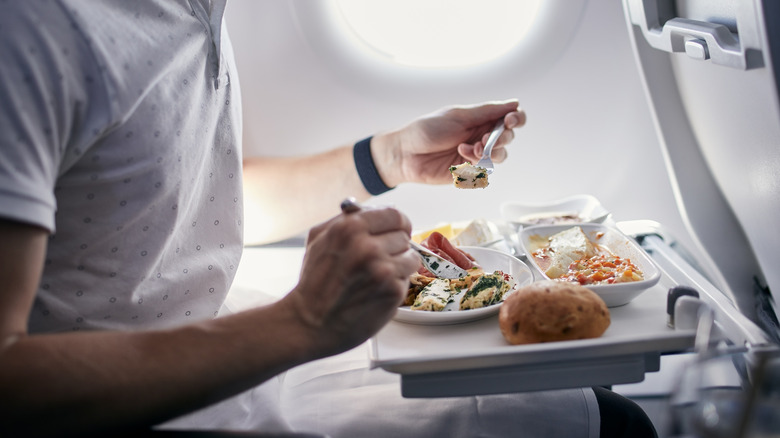
Let's face it, one of the best parts about taking a long flight is enjoying several hours of uninterrupted snack time. But what you consider mouthwatering may make nearby — or distant, depending on what you're eating — passengers wish they had taken another flight. When packing your carry-on bag for your next flight, think twice about throwing in your favorite crunchy, messy snack or a salad made with stinky raw onions. Although your comfort food may make you smile, it will very likely have the opposite effect on your travel companions.
Some of the infamous foods and drinks on this list could make you feel sick as well, and aren't worth the momentary joy that they bring. Although you can find many of these items on an in-flight menu, that doesn't mean that you should order them. In fact, a few of them can cause discomfort and plenty of turbulence — in your stomach, not in the sky. That may leave not only you, but also your fellow passengers, wishing you hadn't ordered the food or drink.
Gas-inducing foods
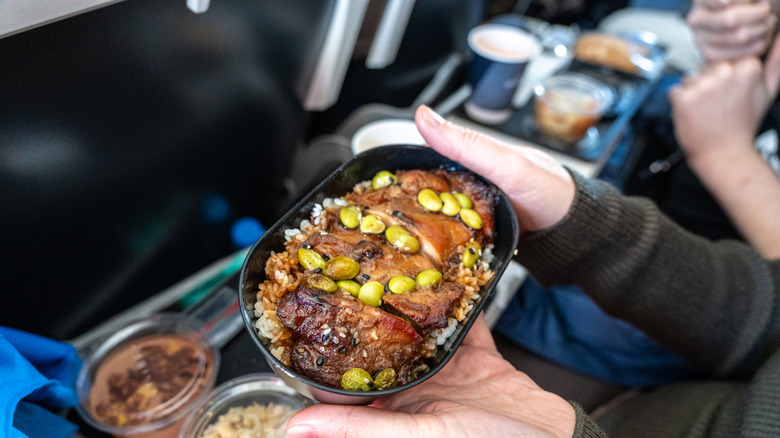
Everyone knows that passing gas in the car is bad, but it's about 10 times worse on a plane. Not only are you possibly sitting next to a stranger, but you can't open a window to air out the stink. The best way to ensure you won't fart 30,000 feet in the air is to avoid ordering certain foods during your flight. Both your stomach and your fellow passengers will thank you for passing — pun intended — on the top gas-producing foods. Common foods that frequently cause gas include beans and lentils, of course, but also dairy products containing lactose, bran, and fructose, which is present in some fruits. Other things that can make you gassy are cruciferous vegetables such as broccoli, cauliflower, bok choy, and Brussels sprouts.
At home, there is one pantry staple you can add to ensure that beans are toot-free — a pinch of baking soda. This may be hard to achieve on a plane, however. Another thing to avoid ordering from the in-flight menu is carbonated beverages, which can make your stomach upset due to the gas bubbles and a change in cabin pressure. Stay on the safe side by choosing non-fizzy drinks such as bottled water and juice, which won't make your stomach expand with air. If you know that you experience tummy troubles on flights, bring anti-gas medications in your carry-on bag.
Coffee and tea
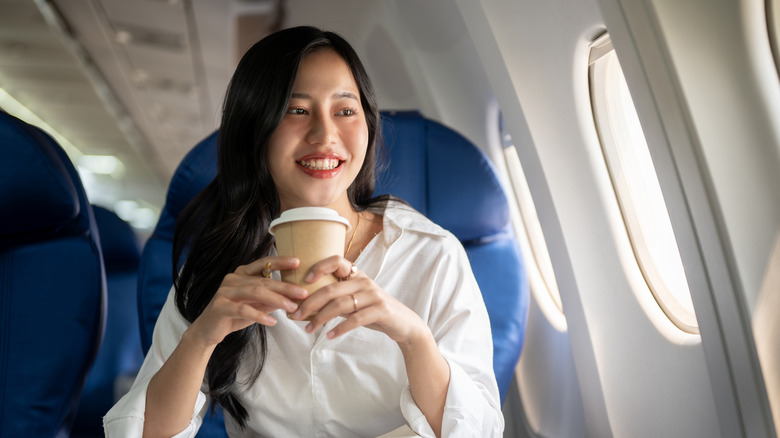
While sipping some hot coffee or tea may seem like the perfect way to relax and unwind on a long flight, your seatmates may have another opinion on this ritual. There are two reasons why ordering coffee and tea on a flight is a bad idea, and one may gross you out.
According to flight attendants, it's best to bring your own caffeinated beverages because airplanes use potable water tanks. The water can sit in these tanks for a long time, making them a potential breeding ground for bacteria. That water is used to make in-flight coffee and tea, so there is no telling how the hot drinks may affect your gut while you're mid-air. Stick with cans of soda (or "pop," if you prefer) if you need a caffeine fix while traveling to stay on the safe side. You can also buy your coffee or tea in the airport after going through security and before boarding.
Another reason that other passengers may not want you to order coffee and tea on a flight is that they may make you have to use the bathroom frequently. If you prefer window seats, that means you'll have to scoot out into the aisle, bothering the flyer next to you if you do it often enough. If you know you'll be ordering a lot of coffee and tea, and/or have a small bladder, be courteous and book an aisle seat.
Pungent cheeses
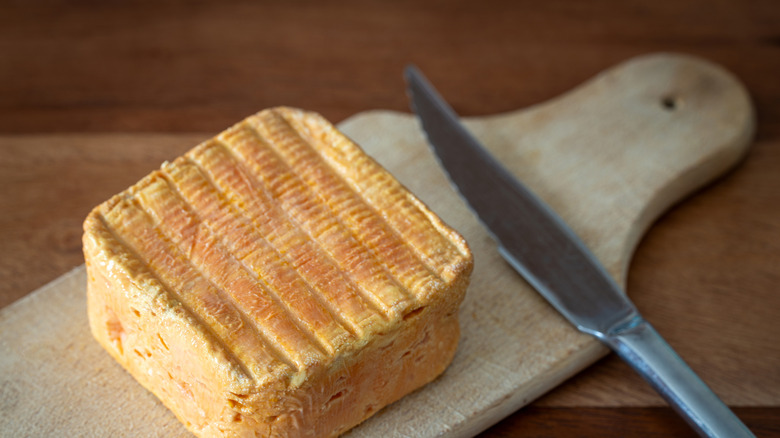
Sitting on a cross-country flight isn't the time to slice into the new, pungent cheese you got at a shop while on vacation. Stinky cheeses such as horseradish cheddar, bier kase, aged brick, and the smelliest of all — limburger — are so aromatic that they'll fill the plane cabin with the stench of dirty socks, or even worse. If you're looking for the best way to anger fellow passengers, snacking on one of these foul-smelling cheeses is the best way to do it. Some say that Minger cheese is the world's stinkiest cheese, but what makes it so smelly? Part of the problem is that as cheese ages, the breakdown of the fats in proteins, bacteria, yeast, and molds creates volatile compounds that release a pungent odor.
Since the air inside airplanes is constantly circulated and never fresh, the smell of your stinky, pungent cheese would not go away during the duration of the flight. If you have to bring smelly cheese on the plane with you, keep it wrapped up tightly, and don't order any snacks or meals containing it, either. You don't want any of your fellow passengers asking "Who cut the cheese?"
Seafood
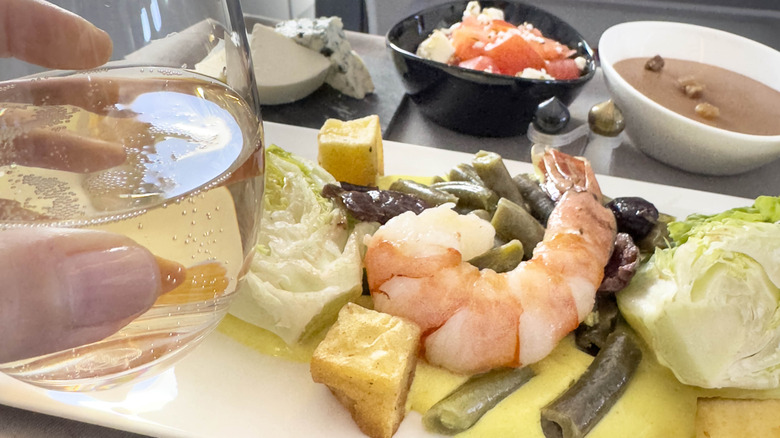
When traveling by airplane, a good rule of thumb is to keep seafood entrees contained to restaurants and avoid ordering them from the in-flight menu. Although shrimp scampi or grilled fish may sound like a tempting lunch or dinner when you're en route to your destination, eating the highly aromatic food while sitting in a tight plane cabin may make you more than a few enemies. If you dig into a crawfish boil, a plate of fried catfish, or seafood gumbo at 30,000 feet, be prepared to catch a lot of side-eye from fellow passengers as you enjoy your meal.
Strong-smelling food, such as seafood, may be off-putting for others on board your flight, and even cause them to get queasy, especially if they have a shellfish allergy or aversion. If you crave protein and don't want to wait until the plane lands to get your fix, consider eating hummus and pretzels, mild cheese and crackers, or a sunflower butter and jelly sandwich instead of smelly seafood or meat. In a pinch, you can also ask a flight attendant for a protein bar to up your intake without offending seatmates. Airplane menus typically offer a variety of options to help your hunger satiated, and your fellow passengers happy — until you reach your destination.
Tuna salad sandwiches
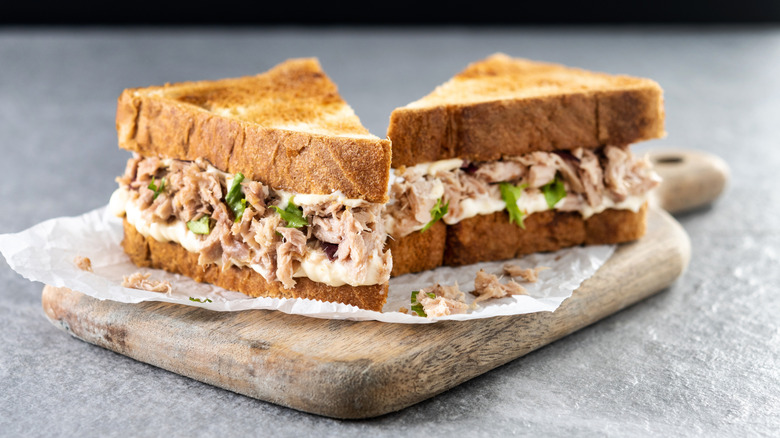
There's a time and a place for tuna salad sandwiches, and on a flight isn't it. Ordering a single tuna fish sandwich from the plane menu can fill the entire cabin with a foul odor. In fact, some might consider reeling in a tuna sandwich, or any fish dish, for that matter, as the ultimate flight etiquette faux pas. Due to a plane cabin's poor airflow, it's important to consider those around you when ordering your lunch or dinner from the in-flight menu. The reason that tuna smells so offensive to a lot of people is that it contains the compound trimethylamine, or TMA, which alerts our noses to the stench of rotting fish.
If you absolutely must consume a tuna fish sandwich while traveling, consider ordering it in the airport lounge or a restaurant before boarding the plane. And please don't bring any leftovers on the flight, as the fishy smell may be strong enough to leak out of a flimsy bag or container. Other non-offensive in-flight sandwich choices include cheese and tomato, turkey, ham, or veggie — minus raw onion.
Egg-based dishes
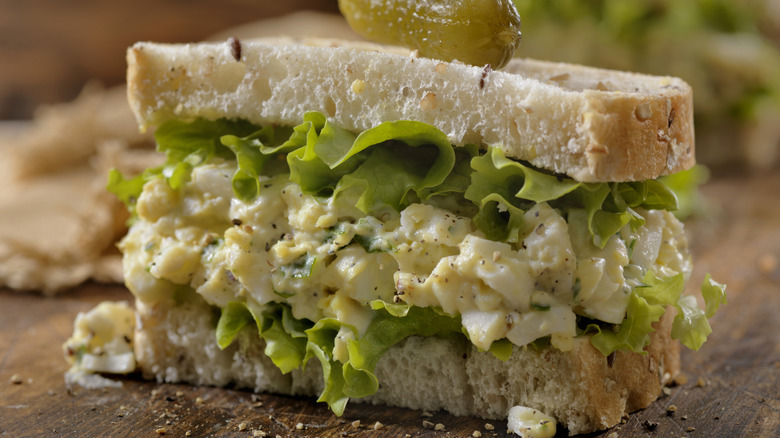
Hard-boiled eggs are high in protein, satiating, convenient — and stinky. And when you're stuck in an airplane cabin with no fresh air and plenty of strangers for hours, that last factor trumps the first two. No one wants to sit next to, or even a few rows down from, for that matter, a person eating an egg salad sandwich. That's why it may not be the most courteous decision to order any egg-based dish while traveling on a plane. Since the plane uses recirculated air in a confined environment, eating eggs will keep your fellow passengers breathing in your lunch or dinner even after it's long gone.
Eggs are also known to cause flatulence, so the smelly fun may actually continue after you take your last bite of the sandwich or other menu item. Due to cabin pressure, being on an airplane for hours can upset your stomach and cause air to get trapped in your diaphragm, so eating gassy foods such as eggs isn't recommended. Consider ordering a simple wrap made with turkey, cheese and crackers, or low-odor fruits and vegetables instead of an egg salad sandwich for a flatulence-free flight.
Leftovers from an airport restaurant
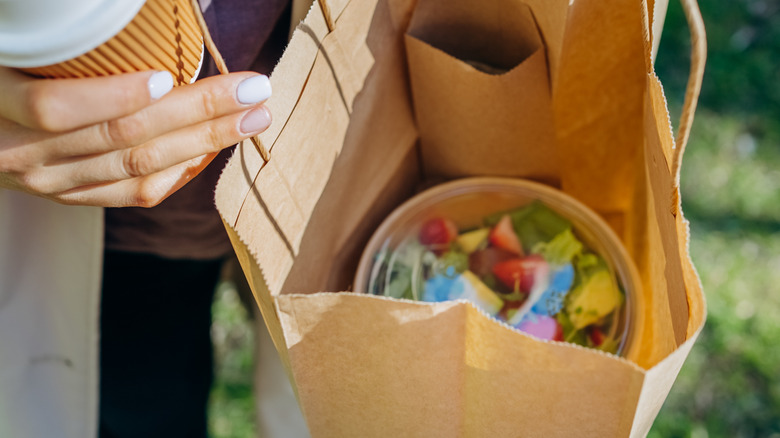
Airport food isn't cheap, so it's understandable why you wouldn't want to waste a drop. Before you package up the rest of your spaghetti dinner, however, consider how your leftover meal may affect the rest of the passengers. To stay on the courteous side, don't subject fellow travelers to super-smelly food, such as onion rings or any type of seafood dish, during the flight. Other foods to avoid on flights include cooked broccoli or any other cruciferous vegetable, eggs, or anything containing a lot of garlic. If you're worried about wasting money or food, order a smaller portion from the airport restaurant instead of boxing up leftovers.
Another concern about bringing leftovers on a plane is foodborne illnesses. According to the United States Department of Agriculture (USDA), many foods should be refrigerated within two hours of cooking. Bacteria grow the fastest between 40 and 140 degrees Fahrenheit, which puts your leftovers at risk if you're on a long flight in a room-temperature cabin. So not only do they stink up the airplane, but leftovers can also make you sick if not eaten promptly. And you don't want to deal with an upset stomach mid-flight. Your fellow passengers don't want you to, either.
Noisy and messy snacks
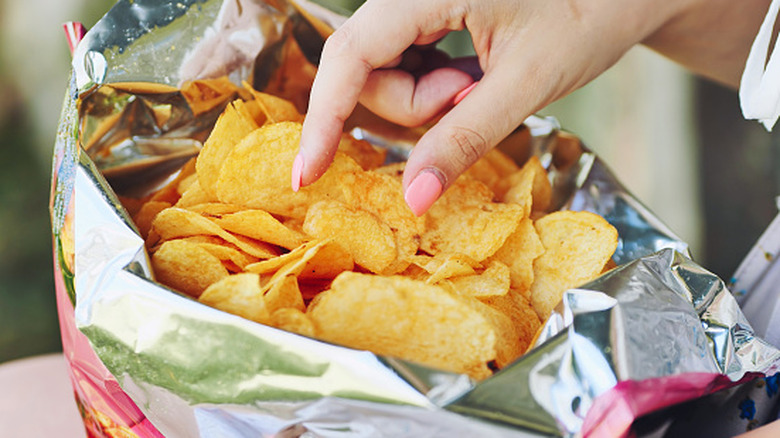
When it comes to annoying your fellow airplane passengers with food, a bad odor isn't the only issue. The people seated around you may also get annoyed if you order or bring noisy, messy snacks that interrupt their peace. No one wants to hear someone ripping into a crinkly foil bag of chips and then loudly crunching them as they're trying to relax or fall asleep. Some of the biggest airplane no-nos include super-crispy potato chips or other types of snacks, sunflower seeds in shells, and anything in a bag that rustles each time your hand reaches in to pull a bite out.
Some of the worst airplane snacks are double offenders: both too loud and too smelly. These include any hard and crunchy onion-flavored chips or crackers, and even popcorn, which some say has an offensive odor when eaten in cozy areas. Not only are peanuts loud and messy when they're in their shells, but they can also be a hazard if your seatmate is allergic to them. If you must consume messy snacks on a flight, bring a plastic bag to contain the clutter.
Onion rings
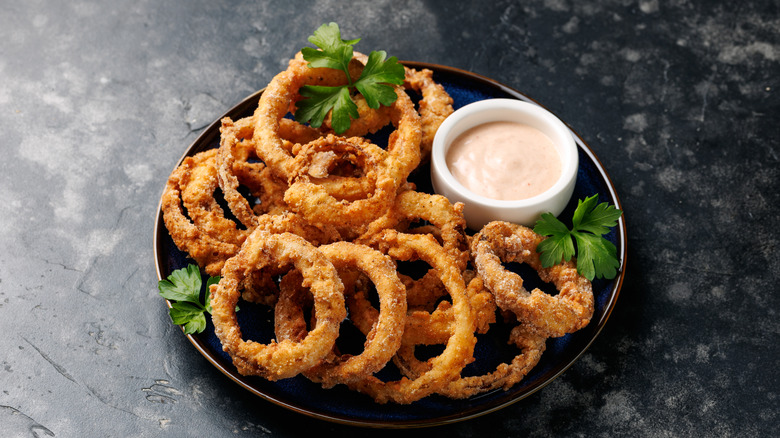
Onion rings seem innocent enough, with their cute, round shape and crispy, crunchy batter, but these fried snacks are one of the biggest flight food offenders. Everyone knows how pungent raw onions are, but their deep-fried counterparts can smell just as bad when consumed in a small cabin with recycled air. They may also be noisy and messy, making them a triple threat if the batter is extra-crumbly. Not only are onion rings stinky, but the dipping sauces, such as ranch or blue cheese dressing, can be hard on the nose as well.
If you must order onion rings on an airplane, consider keeping them in their container and enjoying them when you touch down. Due to their high fat content, fried food may also cause heartburn, and trigger gas and bloating. So, on top of the onions producing a foul odor, they may give you gas and make you burp as well. And that would be no fun for anyone sitting near you to experience. Flying can be an uncomfortable experience as it is, and tasty fried onions aren't worth the painful bloating — and trips to a cramped bathroom — they may cause. This is true even if they're top-ranked ones from your favorite fast food joint.
Nuts and peanut butter
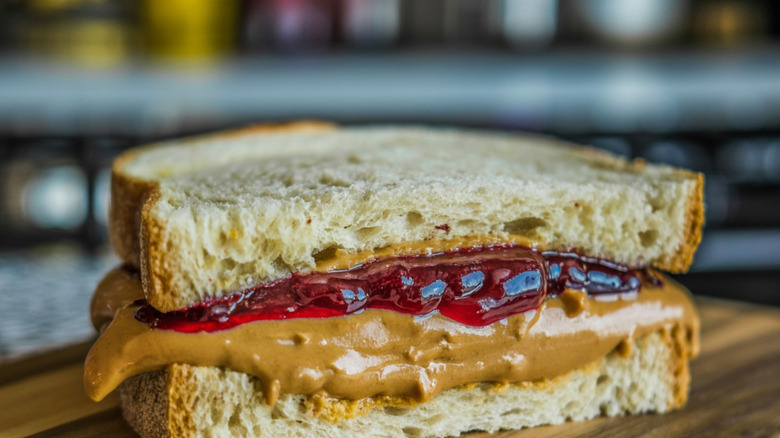
Unless you or a loved one is highly allergic to peanuts and other tree nuts, you may not know how serious it is to sit next to someone who is eating them on a cramped flight. Although a basic peanut butter and jelly sandwich won't offend fellow passengers with an offensive odor, it may trigger deadly anaphylaxis in people who are very sensitive to tree nut allergens. They may be banned on some airlines, but even if you're able to order them on an in-flight menu, declining to do so is the most courteous option.
If you're absolutely craving peanut butter and jelly and no other sandwich will do the trick, consider an alternative spread instead. Choose a sandwich made with soybean or sunflower butter instead. The nut-free spreads still have the creamy texture that pairs deliciously well with a fruity jelly or jam, but you won't be putting other travelers at risk with your meal. Other safe and non-smelly sandwich fillings include plain hummus, cream cheese and apples, and avocado and tomato.
Pizza in large, bulky boxes
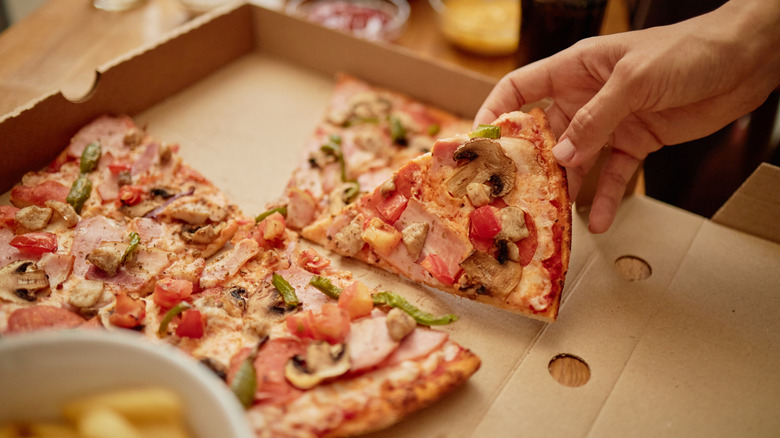
According to flight attendants, pizza in large, bulky boxes is among the most annoying food items passengers can bring on a plane. They dislike them because the boxes take up a lot of space in their small trash cans, and other passengers don't appreciate having to share cramped quarters with a pointy cardboard box. Not only that, if you order a savory pie from the in-flight menu or board the plane with your leftovers, it may offend your seatmates if it contains smelly ingredients such as pepperoni, onions, or the dreaded anchovies.
If you do decide to bring a large pizza box on a flight, be prepared to keep it on your lap for the duration of the trip. Some flight attendants may refuse to throw it away for you if there isn't enough room in their garbage receptacles. As an alternative option, order one or two slices of non-smelly pizza during the flight if it's offered. It's much more courteous to other passengers to enjoy your meal on a plate rather than in a big box, since no one wants to feel a pointy cardboard corner pressing into their torso or arm while in their seats.
Raw onions
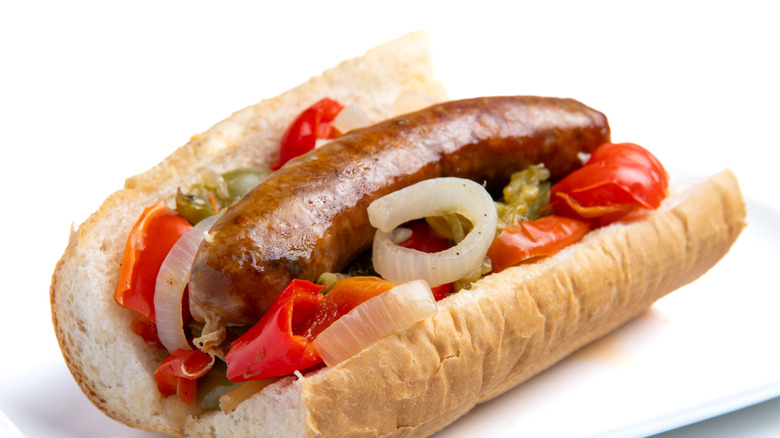
This should go without saying, but it's not recommended to eat stinky raw onions when sitting next to strangers in a small, cramped airplane cabin. No one sitting next to you wants to smell them while you're eating, or have to endure the lingering stench on your breath after they're gone. Onions contain sulfur compounds that make them smell especially offensive when they're raw, although their cooked counterparts may not be the best in-flight food, either.
If you're ordering food such as a sandwich, hot dog, or hamburger during your flight, ask them to hold the raw onions out of respect for your travel companions. You can replace the stinky vegetables with other, less odorous ones, such as tomatoes and lettuce, if you crave a fresh crunch. In addition to raw onions, you should also avoid any dishes containing fresh garlic, such as traditional Caesar salad dressing, while on a flight.