

Are You Eating At Dirty Restaurants? Here's How To Find Official Health Inspections
Maybe you've found yourself wondering if an upscale, Instagram-famous restaurant is really so clean behind the scenes. Or maybe you'd like to know if the burgers at your favorite dive are really worth the risk. Whatever the reason, a peep at health inspection records can be an illuminating experience. But how do you find those records in the first place?
The good news: Many U.S. localities publish detailed, readily available health inspection information. The bad news: Restaurant inspections aren't federally regulated, so there's no easy, one-size-fits-all solution. Sometimes, you can find inspections in one centralized statewide database, while others are only available on the county or city level. The Association of Food and Drug Officials provides a comprehensive list, though some states only list inspections from certain cities or localities.
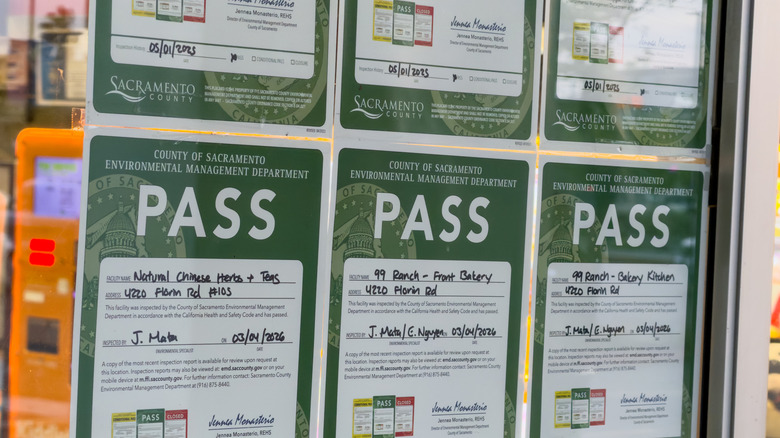
Some websites are more user-friendly than others, and there are no standardized scoring methods. Some localities rely on a simple pass/fail system, while others rate the restaurant on a 100-point scale or give it a letter grade. Third-party sites are often easier to navigate: Diners can check a restaurant's estimated health score under the "amenities and more" section on Yelp. Clicking the link will provide more information, like specific citations.
If you can't find health information for a specific restaurant online, you may be able to access records by reaching out to your health department directly. In many cities, calling 311 connects you with non-emergency services; you may be able to find your health department's number online, too.
What health inspection information does (and doesn't) tell you
It's important to remember that restaurant inspections only provide quick snapshots. Typically, health inspectors only visit restaurants a few times per year, so they don't always get the full picture. The inspector might've come when the restaurant was understaffed — or they might've visited on a rare clean day. Some infractions, like blown lightbulbs, may have little to no bearing on actual food safety.
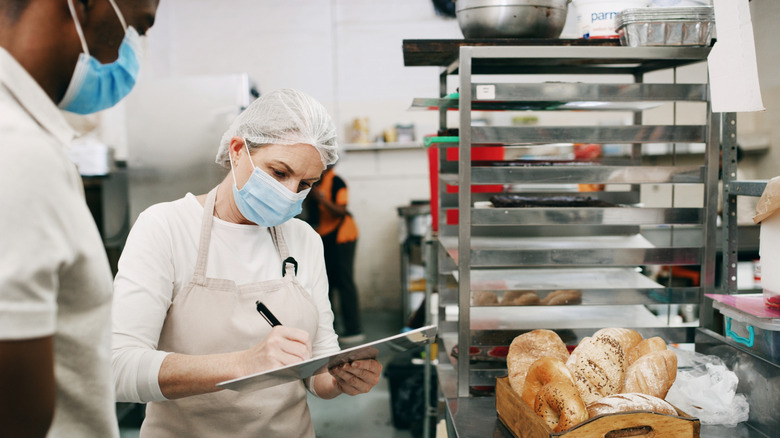
Inspectors check to make sure that food is properly stored with no signs of spoilage or cross-contamination. Ideally, food should be clearly marked with a best-by date and kept outside of the danger zone — the temperature range between 41 and 135 degrees Fahrenheit, where food spoils fastest. Restaurants should be clean, but improper use of cleaning chemicals can cause a safety hazard, too. The most common restaurant safety violation? Improper hand washing stations.
Even if you don't see anything blatantly wrong, you can check for subtle signs that something is off. While relying on your senses doesn't guarantee safety, you should still trust your gut. Don't dine at a smelly fast food joint, and feel free to walk out of a restaurant with dirty tables and floors. While smell and grime alone may not be enough of a reason to call the health inspector, consider reporting any serious or obvious violations. You should be able to find your health department's information online, whether scores are readily available or not.