

The 4 Elements Ruining The Flavor Of Your Coffee Beans

Using fresh coffee beans will usually get you a better cup of coffee, but sometimes it results in a subpar brew due to a few important but often-forgotten variables. More specifically: Moisture, heat, light, and oxygen are the first place to look when your coffee beans aren't in tip-top shape.
That's right, while we always recommend using ground coffee beans over Keurig's K-Cups for the best coffee possible, it's important to remember that coffee beans are susceptible to degradation. Which is to say, coffee beans will lose their flavor and aroma over time due to these factors. Now, it is true that whole beans will degrade much more slowly than ground coffee will, but it's in your best interest to properly store coffee beans from the start if you want to enjoy the best cup of coffee you can.
These four elements often work together to worsen the quality of coffee beans over time, but they can also individually inflict damage to your brew in unique and noticeable ways. For this reason, it's worth taking a look at each of these four variables to see how they impact coffee beans and how we can prevent them from doing so in the future so the flavor of your coffee never wavers again.
Moisture leads to less flavor
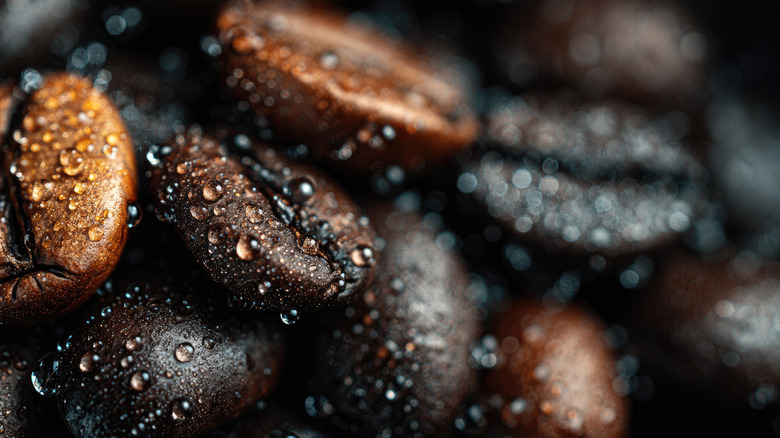
The first variable to discuss when talking about coffee beans and their degradation is moisture — something that impacts just about every food you could imagine. In the case of coffee beans, exposure to moisture makes them more susceptible to mold growth, but even before that your beans can get soggy and clump up; throwing off their texture. Moisture also has the ability to soak up and dilute the unique flavor compounds in coffee beans, leaving you with a worse-tasting cup of coffee in the end.
Although moisture is certainly damaging to coffee beans, it's one of the easier things to avoid when it comes to preserving them. For starters, never put coffee beans in the fridge as they tend to absorb the moisture and also the aromas of nearby foods when you do. Beyond that, ensuring they don't come into contact with water and are kept in a dry area with minimal humidity are both good steps to take. Your best bet is to get a moisture-controlled canister for your coffee beans to ensure they are as dry as possible whenever you go to use them.
Heat can quickly degrade coffee beans
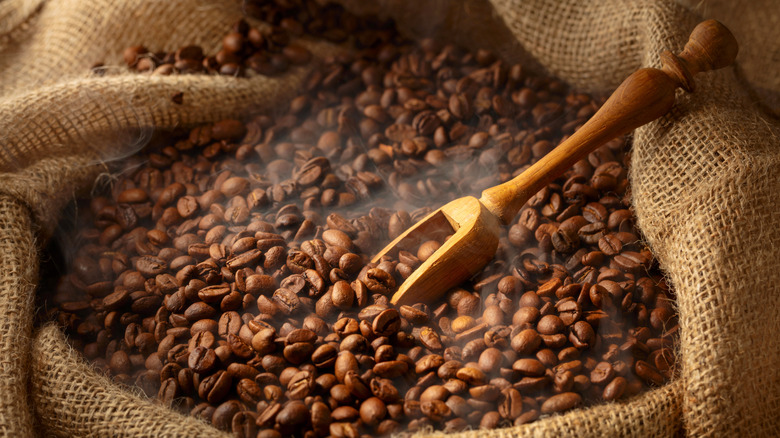
Heat's impact on coffee beans is often overlooked when people think about how to store this ingredient, but it can play a major role in its overall degradation if you're not careful. While the beans are initially roasted before they're sold, they are greatly worsened when exposed to high heat anytime after that. This is because the heat makes the oils within the beans evaporate and break down prematurely, stripping them of their flavors and aromas in the process. What's more, if the beans are kept at excessively hot temperatures for too long, they can even acquire a burnt, bitter taste. Allowing your beans to be exposed to fluctuating temperatures can also be a major mistake, as this lack of consistency can lead to increased oxidation and condensation.
Since you shouldn't put coffee beans in the refrigerator to keep them at a cool, consistent temperature, where should they go? Well, keeping them in a generally cooler area of your house would work fine, but the ideal temperature range to keep coffee beans at is between 59 and 77 degrees Fahrenheit. For best results, look for somewhere that can remain within this temperature range consistently to avoid heat-related degradation.
Light exposure will turn coffee beans dull
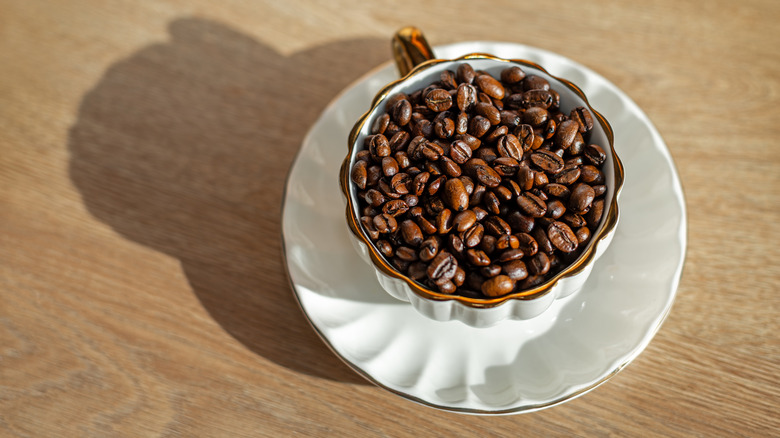
Light exposure is another unexpected hindrance to coffee beans. Many people likely don't think about the impact light can have on the ingredient when they choose where to store it. However, this doesn't make the variable any less detrimental to the quality of your coffee. While both artificial light and natural light can have an impact, UV rays in particular are known to accelerate the breakdown of the vital chemicals within coffee beans. Similarly to heat, light exposure leads to a loss of flavor and thus needs to be avoided at all costs.
Storing coffee beans in a dark cabinet or tucked-away in the corner of your kitchen could be good options. If you absolutely must leave them in an area where they might interact with light, put them in an opaque container rather than a clear one as this can help keep them away from as much light exposure as possible.
Oxygen is the most difficult element to avoid
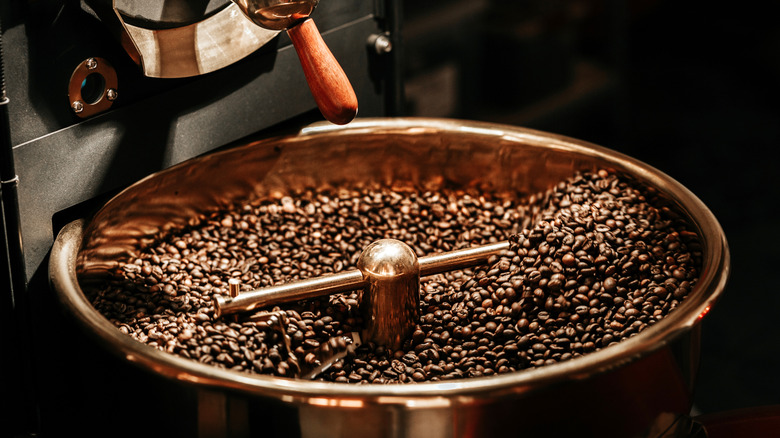
Arguably the biggest enemy of coffee beans, air is also the hardest to avoid. Exposure to air causes coffee beans to lose their freshness as the process of oxidation makes them increasingly stale over time. While oxidation becomes even more rampant once the beans are ground, it first begins to impact them as soon as they've been roasted. What's more, it's impossible to halt oxidation entirely. Delaying its effects as much as possible is all you can really do to maintain your coffee beans' freshness.
So, how do you fight back against oxidation's aggressive impact on coffee beans? The most obvious answer is using an air-tight container, but even that won't preserve your coffee beans for much longer than a month. Some people opt to freeze their coffee beans to slow down oxidation, which does technically work to prolong freshness long-term, but it needs to be done using an air-tight package or container and can make it less convenient to make coffee on a day-to-day basis. In the end, oxygen is inescapable, so your best bet is to buy small amounts of coffee beans frequently rather than large amounts in order to make sure what you have doesn't go bad. To put everything together, simply store coffee beans in an air-tight container placed in a dark, dry area of your home with a consistent temperature for best results.