

Why An Iconic Sweet Snack Cake In The US Was Banned In Parts Of Europe

When you hear the word Twinkies, it's impossible not to picture the tubular, golden sponge cake with a creamy filling. The popular snack cake has been a lunchbox staple and a pop culture icon in the United States for decades, with fans celebrating National Twinkie Day to commemorate the day James Dewar invented it. But while the treat enjoys indisputable fame in America, it once faced bans and restrictions in parts of Europe because of two controversial ingredients: Yellow No. 5 and Red No. 40.
Known scientifically as tartrazine, Yellow No. 5 is a synthetic food dye commonly used to give processed foods a bright yellow hue. On the other hand, Red No. 40 (which is different from Red No. 3) adds a red tone to snacks and beverages. Both additives have been approved by the U.S. Food and Drug Administration (FDA) for use in commercially sold products. As a result, they can be found in almost everything, from candies and chips to cereals, soft drinks, and even meat products.
Meanwhile, European countries have had a far more cautious approach toward artificial food dyes. Norway, Germany, and Switzerland banned Red No. 40 over potential health risks, including cancer. Norway and Finland also banned Yellow No. 5 over health concerns. The European Food Safety Authority even introduced labeling requirements for foods containing synthetic dyes which warned consumers about their potential adverse effects. Norway and Switzerland aren't members of the European Union, but both adopted similarly strict food safety standards, which pushed manufacturers to reformulate their products for European markets.
The risks that come with the food dyes in Twinkies
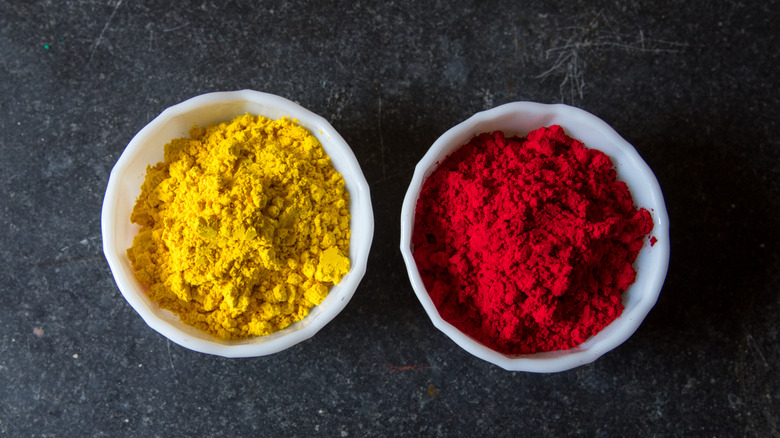
Concerns over the presence of Yellow No. 5 and Red No. 40 in Twinkies largely stem from research on the potential negative effects of the dyes on the human body. As per the FDA, the yellow additive may cause allergic reactions such as itching, coughing, and hives in certain individuals. Additionally, a study has explored a possible connection between Yellow No. 5 and increased cancer risk, particularly colon cancer. Meanwhile, Red No. 40 has been associated with worsening symptoms of attention-deficit hyperactivity disorder (ADHD). Researchers have suggested the dye may trigger or intensify hyperactivity and irritability in susceptible individuals.
Neither of these food dyes are banned in Europe today after a reevaluation of the risks involved, but the history of Twinkies reflects the broader scrutiny American products have faced overseas due to the risks that come with food dyes. Other American products containing similar dyes, including Skittles, Froot Loops, Lucky Charms, Pop-Tarts, and Little Debbie Swiss Rolls, have also faced criticism and many have undergone reformulation efforts so they could be sold in European markets. Which is to say, manufacturers had to create alternative recipes using natural coloring to comply with European regulations. Surprisingly, the company behind Twinkies and other snack brands may soon face similar pressure in the United States after the FDA and the Department of Health and Human Services announced their latest food dye ban, with plans to phase out petroleum-based synthetic food dyes by the end of 2026.