

Why Old-School Fish And Chips Were Wrapped In Newspaper
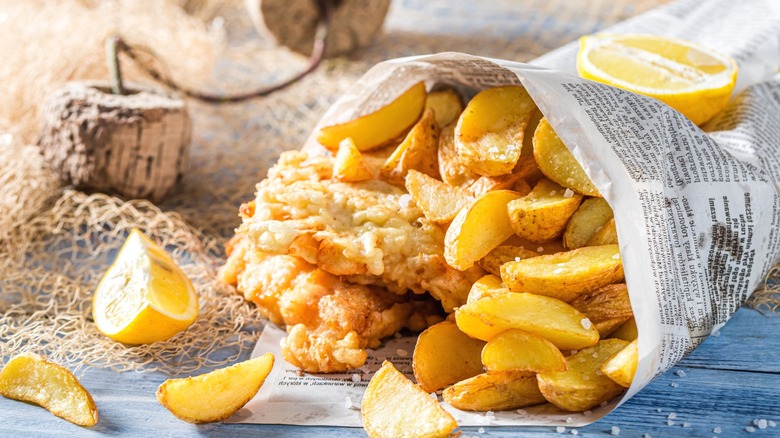
What could be a more classic dish than old-fashioned fish and chips? Even those who think British food is boring and bland can get on board with this British cuisine staple. It's fried fish and potatoes, after all, perfect for seasoning with some malt vinegar or dipping in a ramekin of tartar sauce. And it's so quaint picturing it wrapped up nice and tight in oil-soaked newspaper, isn't it? But where did that start, anyway, and why don't you see it so often anymore? Well, at the beginning of the 20th century, fish and chips were often served wrapped in newspaper, but that practice largely ended in the 1980s due to health reasons.
Fish and chips may not have been responsible for the Allies' victory, but the dish played a unique role in both world wars. You see, during World Wars I and II, fish and chips were one of the few food items that were never rationed, with the British government going to considerable trouble to keep fish readily available even as the enemy patrolled waters. But while fish and chips were available, the paper used to wrap them up was not. So people made do with whatever was available, which in most cases was newspaper. It was a practice that persisted even once the war was over and paper rationing ended in the 1950s.
People were getting ink with their fish and chips
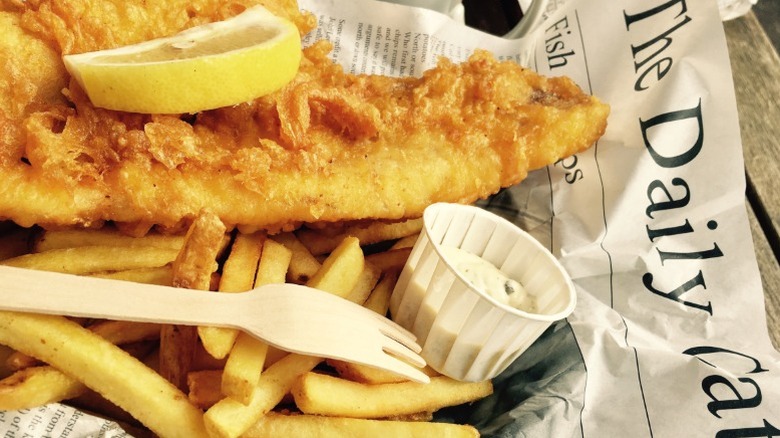
So why did this tradition stop? It's not like the Brits to stop doing something once it's become a standard part of a ritual — heck, they still keep the Tower of London's ravens from flying because of ancient folklore saying Britain would fall if they did so. Well, here's a little bit of inside baseball for you: newspapers are commonly printed using a sticky black substance known as ink. And inside that ink are all sorts of things you'd rather not ingest, like petrol. European Union regulations put a stop to the practice in the 1980s, well before the decline of print media would make such regulations redundant.
Still, all is not lost if you're looking for fish and chips with some vintage flair. Specialty paper for fish and chips is often printed to resemble newspaper, usually with fish and chips-related pictures and headlines. And those pesky EU regulations don't mean much when Britain is no longer in the EU. Brexit may be bad news for British chocolatiers on Easter, but it means chippy newspapers are just a grandstanding future prime minister's pen stroke away from returning.