

The Best Way To Keep Kitchen Appliances Running Smoothly Is Something Hardly Any Of Us Do
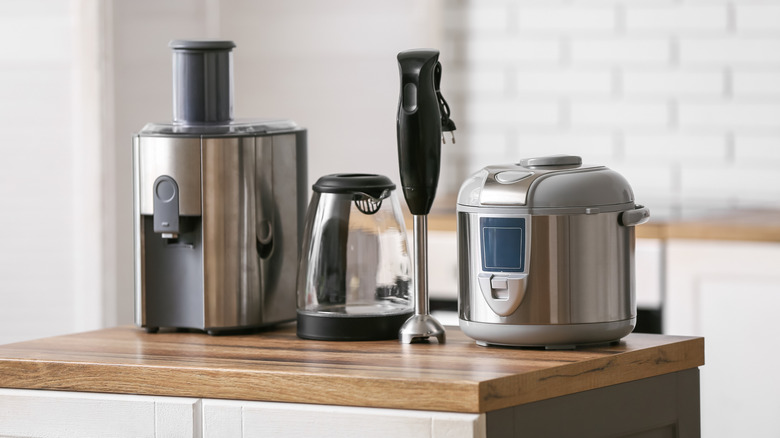
If you're like many people, then your tiny amount of kitchen counter space hasn't stopped you (or the folks you live with) from loading up the counter with all those small kitchen appliances you can't help but grab on a Costco run. If you're constantly shuffling them around to make space and plug new things in, you might actually be wearing them out faster. We spoke to Matthew Morrison, a JustAnswer Appliance Repair Expert, who explained there's a strategy to keeping appliances running smoothly which you may not be doing (if you are doing it, you probably aren't thinking about it).
In essence, the best strategy is to be deliberate about which appliances you move and when you move them; if you want a gizmo to last long, simply try to avoid moving it as much as possible. "For appliances that are used more frequently, the countertop is preferable, as it will reduce wear from constant movement, will likely be cleaned more often, and prevents issues from lack of use that may damage internal components," Morrison said. If you get a lot of bang for your buck from an Instant Pot, it will last longer if you keep it one place rather than moving it back into the cabinet after every use (still unplug it when it's not in use, though).
Don't move useful appliances
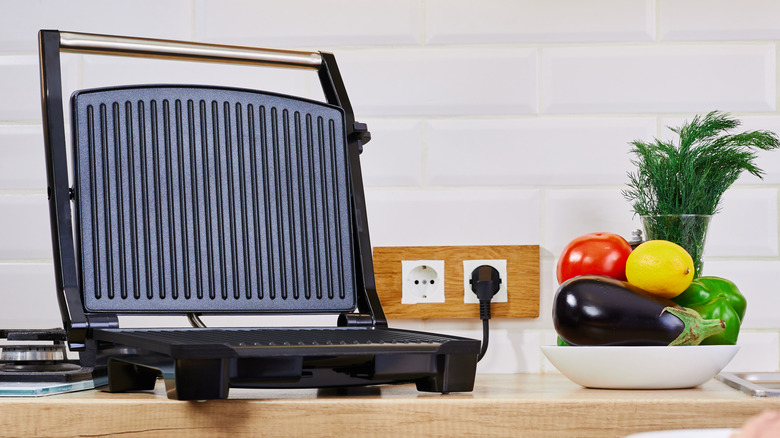
Perhaps you do this with appliances already, but making a dedicated space for what you use the most will keep your equipment in better shape. Meanwhile, those niche, specialty gadgets you only pull out once in a blue moon are the ones you should move in and out of storage. According to Morrison, "For the occasional use of appliances such as that panini press you own or the waffle maker that only comes out when there is family visiting, store them in the cabinet, but only if the shelves are strong and readily accessible."
Your response to this might be: What if you don't have strong and readily accessible shelves? One easy DIY job would be to add slidable wood shelves like you'd see in a pantry. "Pull-out shelves would be best to aid in the loading and unloading of the appliance when space is limited," said Morrison. "Another common trick is to store lighter units up high and heavier items down low to prevent the appliance from tipping over or landing on you. Rolling carts or open baker's racks can also be used to store those less frequently used models."
A slightly more elaborate job would be an appliance garage, which is more or less a cabinet designed for things like food processors and blenders. It's one of the best places in the kitchen for a microwave because it's easy to use and you're less likely to bump or bang it against the walls as you put it away.