

Here's Why Fast Food Burgers Never Look Like The Picture
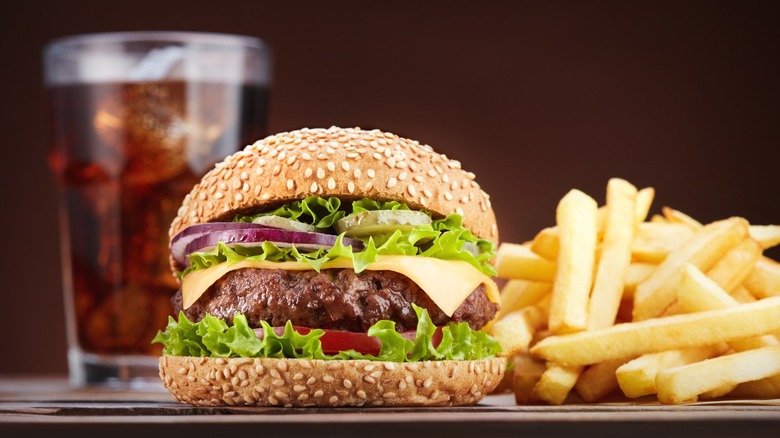
It's happened so many times that it almost doesn't even register as a problem. You see an ad for a juicy, succulent hamburger at your nearest fast food place and rush to buy it, only to find upon unwrapping it that the genuine article bears as much relation to the beautiful picture as that one weird-looking Spanish fresco of Jesus does to Leonardo's "The Last Supper."
The fictionally thick, juicy patty is grey and deflated; the robust slices of red tomato are slimy and paper-thin; and the less said about the lettuce, the better. Just what the heck are they doing to those burgers to make them look so good, and how do they get away with it? Basically, the industry gets fast food photographers to work their magic and fool you, and the law says the consumer should simply know better.
The burgers you see in fast food ads are not fresh off the griddle at your local McDonald's, as you can probably guess. They've been carefully molded by food stylists, and while they need to stay true to the product to a certain extent, they're able to, shall we say, massage reality. Those patties, for instance, are usually significantly undercooked so as to appear juicier, and the ingredients are often held together with pins to make sure they're arranged as enticingly as possible. There are subtler ways to misrepresent the burger, too. Stylists may go through countless ingredients to find the most picturesque bun or tomato, and of course Photoshop is a handy tool. (Hopefully not AI, though — here's how to spot AI-generated recipes and pictures on social media.)
A certain amount of puffery is expected in fast food advertising
So, how on earth is this allowed? There are laws against false advertising, aren't there? That's how Barilla got sued for claiming its pasta was made in Italy. Why hasn't somebody taken these fast food conglomerates to the cleaners? Well, there have been lawsuits, but they've had limited success. The argument goes that customers should be able to recognize that ads are prone to exaggeration, or "puffery." It's the same argument that Tito's Handmade Vodka, America's favorite vodka, made when they were sued for not really being handmade.
As the Federal Trade Commission sees it, customers should be able to evaluate for themselves without too much trouble the difference between puffed up marketing and reality. All you need to do is step inside a Burger King and glance at the burgers other people are eating to know that they don't look like the ads, after all. It's a buyer beware kind of situation, and at this point the buyers really should be well aware they're not going to be eating the Rolls-Royce of burgers every time they go through a drive-thru.