

Everything You Need To Consider Before Splurging On An Expensive Coffee Maker
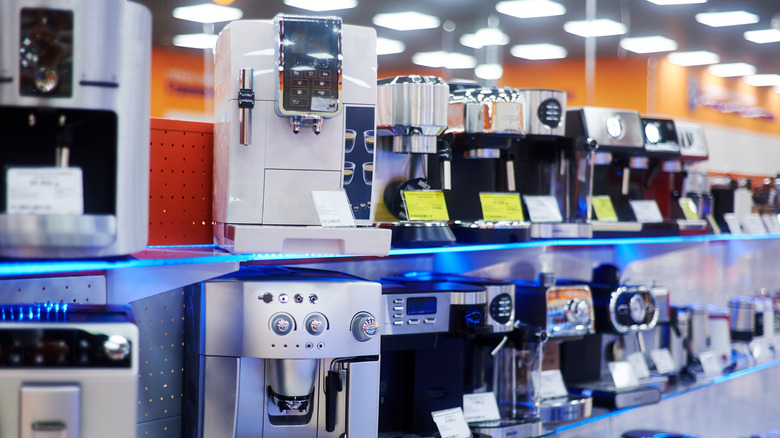
One minute you are online checking out the best home espresso machines, and the next you are deep in the trenches arguing about grinder burrs and discussing budgets that exceed your monthly rent or mortgage. The coffee machine market is vast and designed to make you feel like you need more than you do. Brands compete with specs that sound impressive and are meant to overwhelm.
This guide helps cut through that noise. Before you spend anything, we wanted to make sure you were looking in the right direction, so we reached out to a panel of experts. Luke Barham of Espresso Insiders, Jay Arr of JayArr Coffee, Jennifer Coleman of Gigawatt Coffee Roasters, and Muhammad Saqlain of RoastAroma all had a lot to say about how you choose the perfect machine for your coffee needs. With decades of experience between them, across roasting, brewing, and equipment testing, they gave us honest, experience-backed answers and pulled no punches.
Cheap is bad, but expensive isn't always better
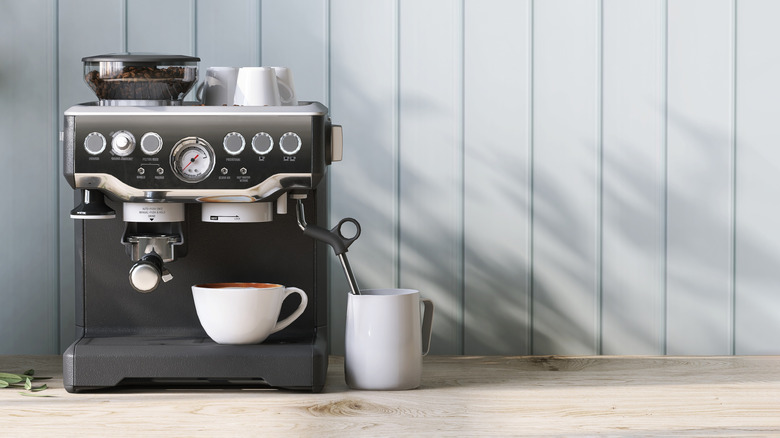
If you have ever fallen down the internet rabbit hole of scrolling past coffee machines — wondering what could justify the price range from $50 to $5,000 — join the club. Here's the thing about coffee makers: The price tag is one of their most misleading aspects. And more often than not, it matters less than you would think.
While a $50 supermarket model probably won't revolutionize your morning brew, Jennifer Coleman encourages you to start looking at drip brewers in the $150 to $200 range. For her, this is the sweet spot where machines start hitting the consistent water temperature the Specialty Coffee Association recommends for proper extraction. "Above $500 for a standard drip brewer, you are mostly paying for aesthetics, smart features, and brand name," she says.
When it comes to making the perfect espresso (and we are not talking about making the best instant espresso at home, that's a whole different ballgame), Luke Barham sees substantial improvement in the $400 to $700 range. Beyond the $1,500 mark, the machines come with higher-quality bells and whistles. But Barham admits this is also the point where diminishing returns creep in. Jay Arr corroborates, saying, "Above about $2,000, the curve bends hard. You're paying for convenience features (auto-dosing, dual boilers, flow-control paddles) and bragging rights, not espresso quality." So, before you fall hard for that gleaming steel finish, remember that the price tag doesn't give you the entire picture of what to expect for your morning cuppa.
The machine may be the least important thing you'll buy
Our experts explain why the machine you buy is not, in fact, where the magic happens. Odd statement to make, you might think, but stick with us. Instead, it's where the magic gets finished. And that too, only if everything that happened before has done its job properly. If the important elements, such as water, beans, and grind, are not taken care of properly, no amount of Italian engineering is going to save your coffee.
Think of it this way — a $2,000 espresso machine will still ultimately take what you give it and extract it under pre-set controlled conditions. "If you are putting stale, pre-ground coffee through a $2,000 espresso machine with unfiltered tap water, you are not going to get a $2,000 cup of coffee," says Jennifer Coleman. In many cases, fresh, specialty-grade beans ground well will amount to a far more enjoyable result from a simple pour-over coffee maker or French press. Jay Arr frames it as a matter of physics. "The machine can only extract what the grinder delivers," he says, adding that the most common and costly mistake he sees is putting $1,500 into a machine and pairing it with a $200 grinder. So yes, by all means, buy that beautiful machine, but also know that it is the last piece of the puzzle, not the first.
Budget for the grinder first
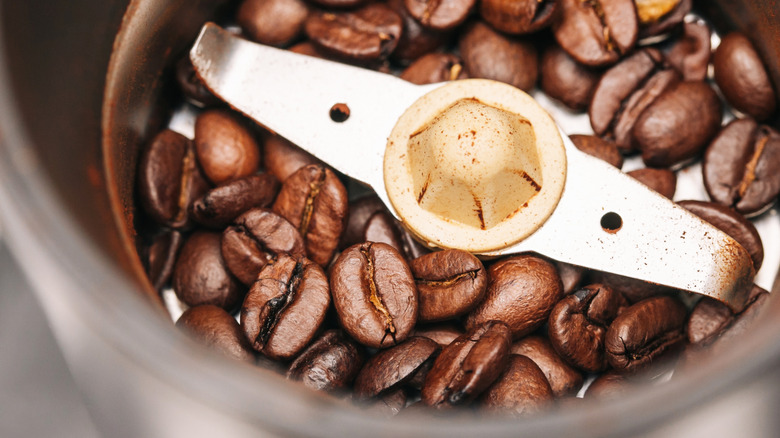
If there's one piece of advice in this entire article that you must take to heart, it's this one. Before you decide how much to spend on a machine, you must first decide how much you are willing to spend on the grinder. Once that's done, you can work backwards.
Every expert we spoke to landed in the same place. Fresh ground coffee will always taste better, and grinding at home immediately before brewing keeps coffee at its peak flavor and aroma. This is not something that pre-ground coffee could ever match. It also opens up your brewing options considerably. Each method — pour over, cold brew, drip, French press, espresso — requires its own specific grind size, and that flexibility is impossible when you're buying pre-ground.
Jennifer Coleman emphasizes, "A consistent grind is the foundation of good extraction, and no brewer can fix what a bad grinder gets wrong." According to her, investing more in a conical burr grinder will do more for your cup than spending extra on the machine. Jay Arr shares the math behind his recommendations on investing in a good grinder. "My rule is a 50-50 minimum split between grinder and machine for any total setup over $800, and weighted even more toward the grinder below that." A $400 grinder paired with a $300 machine will outperform a $1,500 machine paired with a $50 grinder. Every time.
Know how you actually drink coffee
Let's take a step back before we go deeper into specs and technicalities. You need to first ask yourself: Why do you drink coffee, and how do you actually drink it? If this sounds almost too simple, let's look at it like Muhammad Saqlain does. He frames it as a spectrum. "Do you enjoy the ritual of grinding your beans, enjoying the warmth of the aroma, and spending time to get your coffee," he asks, "or do you want to press a button and have your jolt of energy ready for consumption?" Neither answer is wrong. But they lead to very different purchases.
Jay Arr poses some other honest sub-questions you should ask yourself. For example, "What's your actual daily volume?" One shot a day doesn't justify a $2,000 machine. He adds, "Are you really a milk-drink household? Plenty of buyers splurge on a steam wand they end up using twice a year." Understand what you actually enjoy and what your habits realistically are before you spend anything. Choosing the machine comes second.
All-in-one machines are a compromise
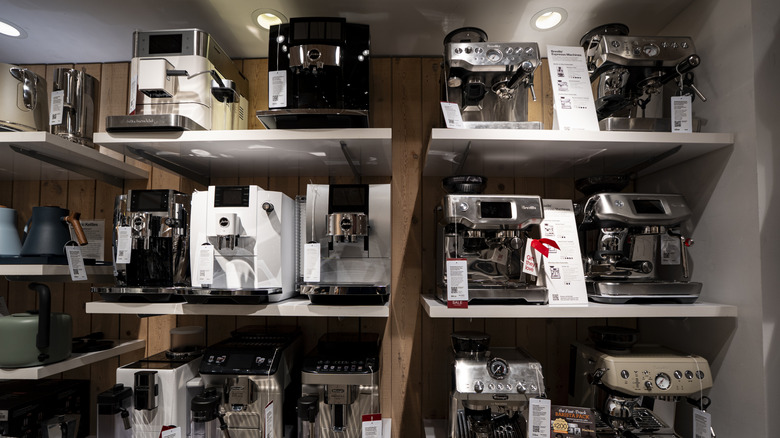
The appeal of an all-in-one coffee machine is understandable. After all, what could be wrong with something that grinds, brews, steams, and froths? Turns out, quite a lot, according to our panel of experts. The real draw of an all-in-one machine is convenience, and convenience in coffee almost always comes at a cost to quality. Muhammad Saqlain has watched this play out countless times. People get taken in by the long list of features because it feels like exceptional value in one package. For Saqlain, this lure must be resisted. "If you buy yourself a cheap espresso machine and pair it with a good grinder, then you can get everything that the all-in-one machine advertised in a more modular, upgradable, and superior-quality format," he recommends. We'll also add the Moka pot as a reliable espresso machine swap without the palaver.
The built-in grinder is another place where most of these machines fall hardest. Jennifer Coleman notes that smaller burrs or fewer grinder settings can result in a less satisfying, more uneven cup of coffee. Especially when compared to the quality you would get from a standalone grinder at the same price point. The same logic applies to automatic steam wands and complex digital displays, Luke Barham argues. "They look great initially, but date fast and don't add much to the overall experience."
Features worth paying for versus marketing fluff
Buying a coffee machine is not for the weak. Today, open any listing, and you'll be met with a wall of specs, from pressure profiling and ThermoJet technology to app connectivity and pre-infusion. The list goes on without telling you the one thing you actually need to know. What do you need to make a better cup of coffee?
Luckily, we have the answer. There is only one feature that experts unanimously agree has a direct, meaningful impact on what ends up in your cup. It's PID temperature control. And while it may sound technical, PID regulates the brewing temperature and keeps it steady for cup after cup of coffee. The Specialty Coffee Association recommends roughly 197 to 205 degrees Fahrenheit as the optimal brewing temperature. Muhammad Saqlain calls PID control the feature with "some of the largest effects on your coffee."
Now let's move on to one feature you can safely ignore: pressure profiling. In simple terms, this refers to the ability to control how much pressure is applied to your coffee during the extraction process, meaning it doesn't just run at a fixed pressure throughout. This ability sounds thrilling and, no doubt, in expert hands and on a $4,000 machine, it genuinely is. Jay Arr is candid about its limitations, however. If your grind is inconsistent and your prep uneven, according to him, pressure profiling "just gives you a more expensive way to make inconsistent espresso."
That 15-bar claim on the box means nothing
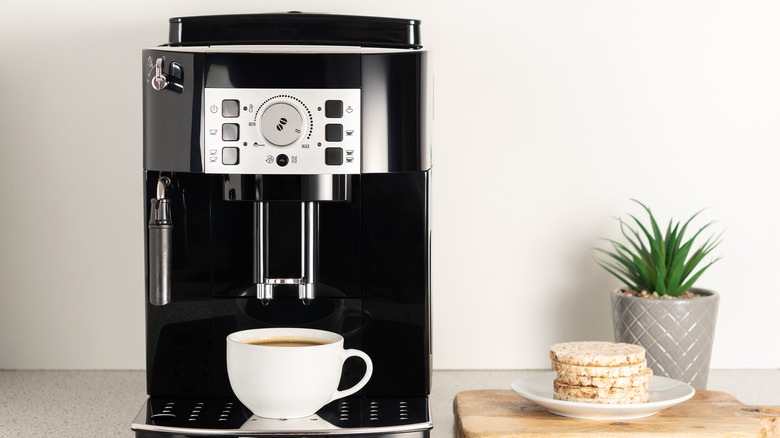
If you've been shopping around for a coffee machine, you may already be familiar with the bar feature noted on any listing. 15 bar. 19 bar. 20 bar. Sounds powerful, right? The more, the better? In fact, it means almost nothing, and here's why. Think of it this way: A good cup of espresso tastes best when water passes through your coffee at a specific pressure. Too little and the coffee is weak and not worth your time. Too much and you end up with a bitter brew. So what's the sweet spot then? According to every expert we spoke to, it's 9 bars. Muhammad Saqlain is direct about what happens if that pressure isn't regulated properly: You end up extracting bitter, woody compounds that have no business being anywhere near your morning cup.
Jennifer Coleman explains what these higher numbers mean, and it's not to say that they're not real. They just describe the pump's ability to exert more pressure before the actual important part, brewing. Many machines regulate brewing at 9 bars anyway. "It sounds impressive in marketing, but makes zero difference in your cup," she says. Luke Barham puts these high-pressure claims in the same category as app connectivity and fancy digital displays. These features look good on a box but do very little to improve your daily coffee habit.
Which machine type suits home use
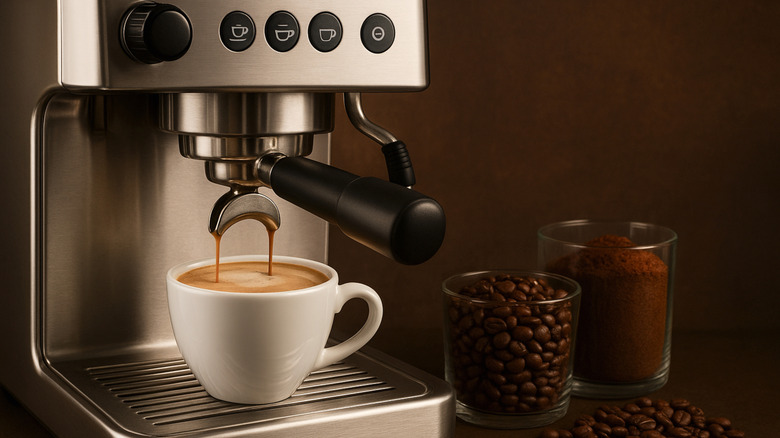
By now, it's evident that there is no single best coffee machine. Instead, there is the best machine for how you actually live and for how you enjoy your cup of coffee. Muhammad Saqlain urges you to start with how you already drink coffee. If you are used to drinking it black from a drip maker, he recommends pour-over makers that will give you an exceptional cup with the minimal fuss you obviously value. If you're just starting out and want the lowest barrier to a genuinely good cup, Saqlain's pick is a French press. For him, the machine is simple and far better than its reputation suggests.
Jennifer Coleman feels that many buyers overcomplicate the coffee machine shopping process. For her, a solid drip brewer paired with a good standalone grinder will outperform almost any all-in-one machine at twice the price. Straying into technical territory, Jay Arr has a clear recommendation: The Gaggia Classic Evo Pro at around $449. This, according to him, is a machine people still run 15 years after buying it. One final option worth mentioning for Arr is the super automatic. Machines like the Jura get a bad reputation in serious coffee circles, but if all you want is great-tasting coffee with zero friction and zero learning curve, a super-automatic may be the best machine for the job.
High-end comes with a maintenance commitment
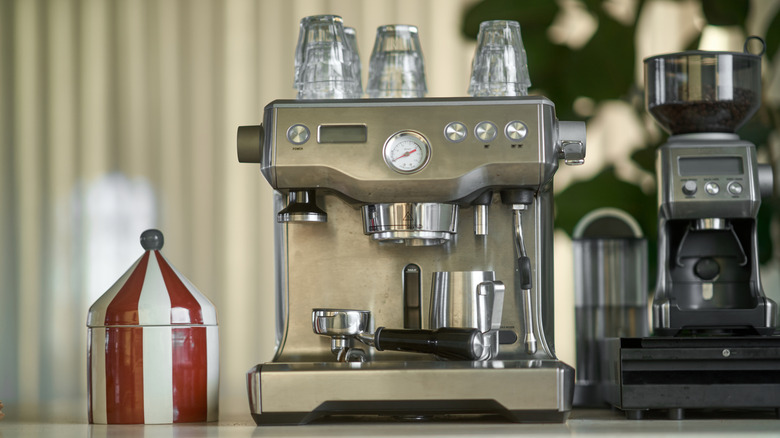
We may have to hold your hand when we tell you this, but a high-end coffee machine is not just a one-time purchase. It's a practice. If you are not planning to treat your machine with the respect it deserves, it will quietly deteriorate on your counter, leaving you with a very expensive machine that makes a mediocre cup of coffee.
Unsurprisingly, this conversation rarely happens at the point of sale — but it should. Factor maintenance needs into your setup from the beginning, in terms of both time and money. If you plan on giving your machine heavy use, you need a proper cleaning strategy in place. This will help you solve problems before they start rather than after. Your machine requires upkeep, and you should go in knowing what that looks like. Jennifer Coleman insists that when it comes to maintenance, "if you skip it, performance drops and the machine's lifespan shortens significantly,"
So, what can a typical maintenance schedule look like? Jay Arr breaks it down for us. Daily, it should include purging the group head, wiping the steam wand, and emptying the portafilter. Additionally, plan for a weekly detergent backflush and a monthly strip and clean of the screen and gasket. Descaling can happen from once a month to once a year, depending on your water hardness. None of this is insurmountable as long as you are prepared and ready to put in the work.
Don't overlook your water
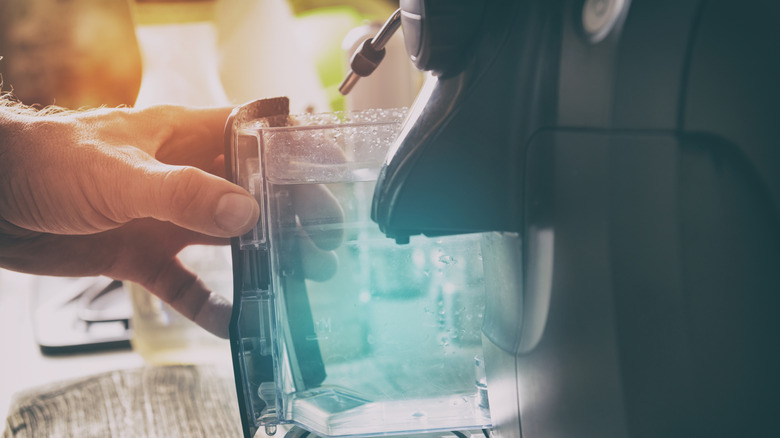
There's a question that needs answering even before you buy your coffee machine: What's in your water? Yes, really. Because whatever is in it is going into every single cup you make. When brewing the best cup of coffee at home, water can work against you in two ways. Flavor is the first. Since coffee is approximately 98% water, the mineral content, pH levels, and overall quality of the water you use to brew your coffee directly impact what you will ultimately drink. Jennifer Coleman flags good water as a non-negotiable part of any serious home setup. "Fresh whole beans, a good grinder, and filtered water will do more for your cup quality than upgrading from a $200 machine to a $500 one," she says.
The second way water works against you is a longer-lasting (and more expensive) impact. Tap water contains calcium and bicarbonate, and over time, causes scale to build up in the boiler and other internal parts of the machine. Scale, if not cleaned regularly, gradually degrades performance and shortens the machine's lifespan. Muhammad Saqlain explains that even filtered water only slows this process rather than stopping it. His recommendation is to choose distilled water combined with coffee-specific mineral solutions like Third Wave Water, a pairing that delivers optimal extraction conditions while protecting the machine.
A $200 setup may outperform a $2,000 one
This might be the most counterintuitive point and also the most liberating one. More money does not always mean better coffee. "A temperature-controlled kettle paired with a V60 pour-over cone will get you some of the best coffee possible, ever," Muhammad Saqlain states. Notice that he is not saying, "Best coffee at a good price." The reason behind his confidence is control. A manual pour-over puts variables such as water temperature, grind size, and pour speed (to name just a few) directly in your hands. Automated machines, however sophisticated, actually remove many of those variables from you in the name of convenience. What you gain in consistency, you lose in adaptability and refinement.
Jennifer Coleman mentions that a basic drip machine's strength is its predictability. There is no technique required, and as a result, no troubleshooting. "If someone wants to explore beyond drip, a simple pour-over setup is incredibly affordable and produces an exceptional cup once you learn the technique," she adds. Jay Arr suggests looking into budget manual lever machines. "Every serious home espresso journey should start with eight weeks on a lever before deciding what to actually buy," he says. This tells you something no spec sheet can: Whether you actually enjoy the craft or you just want the result.
The math case for ditching your daily café run
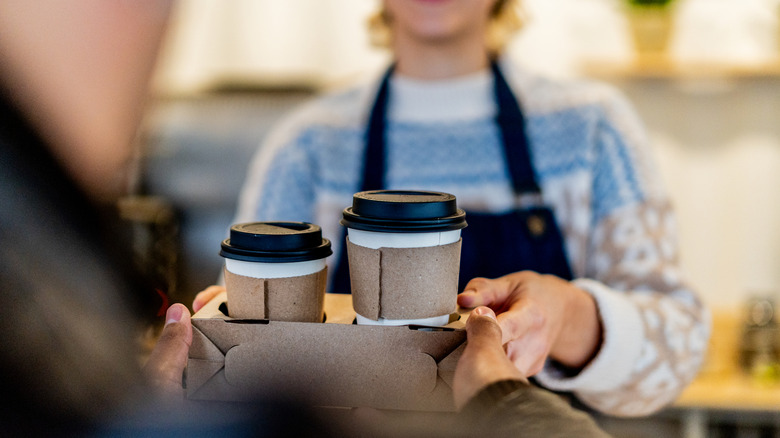
In many cases, coffee shop espresso just hits different than homemade. But without getting into the technical nitty-gritty, let's talk about what this coffee shop habit translates to financially. Jennifer Coleman states that if you average $6 to $7 a day at the coffee shop, that amounts to over $2,000 a year. " A great home setup with a solid brewer, a good burr grinder, and fresh roasted beans can cost $250 to $400 upfront and maybe $15 to $20 a month on beans. It pays for itself in a few months," she says.
Muhammad Saqlain adds an honest caveat, though: The coffee hobby has a way of expanding to fill whatever budget you give it. "Anyone that has invested in a home coffee setup will confidently tell you that they make better coffee at home vs coffee from a cafe," he notes. "They'll also tell you that they spent a lot of money to get to that point."
Go in clear-eyed about where the rabbit hole may lead. Luke Barham offers perhaps the most grounded starting point of all: Before committing either way, go to a genuinely good specialty café, pay attention to what you're tasting, and ask yourself honestly whether that's something you want to recreate at home or simply savor someone else making for you.