

Florida Oranges Are Disappearing From Store Shelves (And They Might Never Come Back)
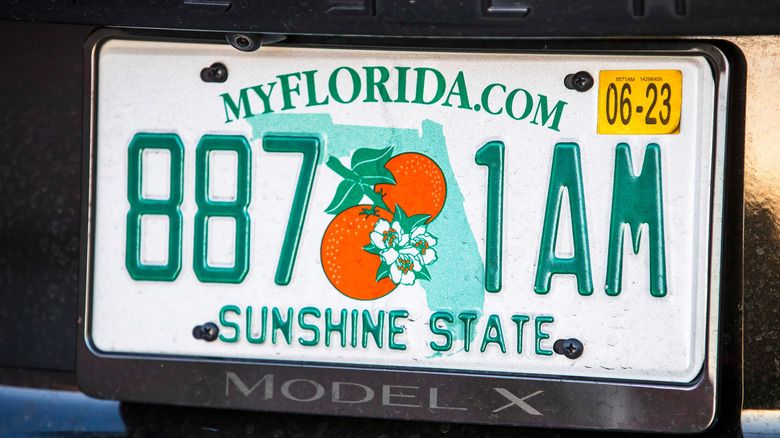
Florida has long been the hub of American citrus, but the bright orange fruits on the state's license plate may soon get scratched off so as not to torment the locals with memories of what had once been. You see, Florida's citrus orchards are dying, and the industry that once thrived on their produce is dying along with it. Orange juice is now a luxury item, and it's not because of inflation.
Yes, Florida is currently experiencing a devastating drought. And yes, those historic cold snaps that hit the East Coast earlier this year reached down to Florida, which saw record low temperatures in February this year. Neither of these is helping the situation, but unfortunately, the weather isn't really the problem. The real reason Florida has gone from producing 242 million boxes of oranges in 2003 down to an estimated 12 million boxes in 2026 (an astounding 95% drop in just over two decades) is because of a bacterial disease known as citrus greening.
Citrus greening (aka huanglongbing) was first discovered in the 1950s in China. The bacteria responsible for the disease travel from tree to tree with the help of the Asian citrus psyllid. Oranges aren't actually from Florida, and neither is the Asian citrus psyllid, but the small, sap-sucking pest is here to stay, which is causing real problems for citrus farmers in the Sunshine State.
Citrus greening kills orange trees
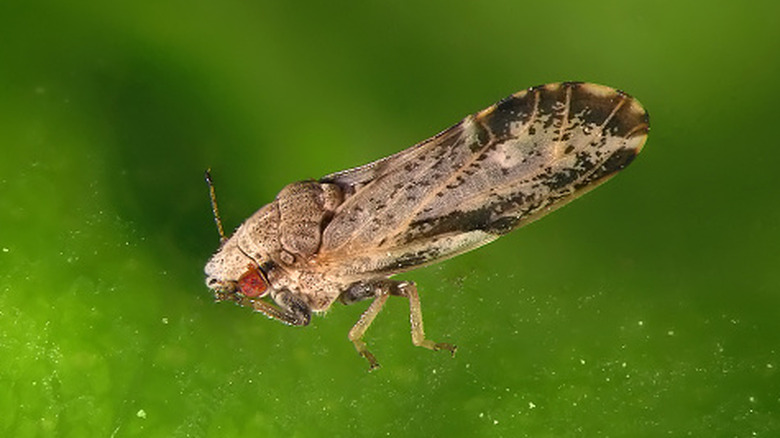
A lot was going on in 1998. At the beginning of the year, California became the first state to ban smoking in bars. By the end of the year, Bill Clinton had been impeached. With so much happening, it was easy to overlook the arrival of an insect that only grows to be 1/10 of an inch. The summer of 1998 marked the first documented instance of the Asian citrus psyllid in Florida. These tiny bugs are the only ones capable of transmitting citrus greening bacteria, but they've apparently been working overtime.
Although the bugs arrived in 1998, it wasn't until seven years later, in 2005, that citrus greening was first detected in Florida orange trees. A decade later, 80% of the citrus trees in Florida were infected. Another decade more, and today that number has crawled up past 90%.
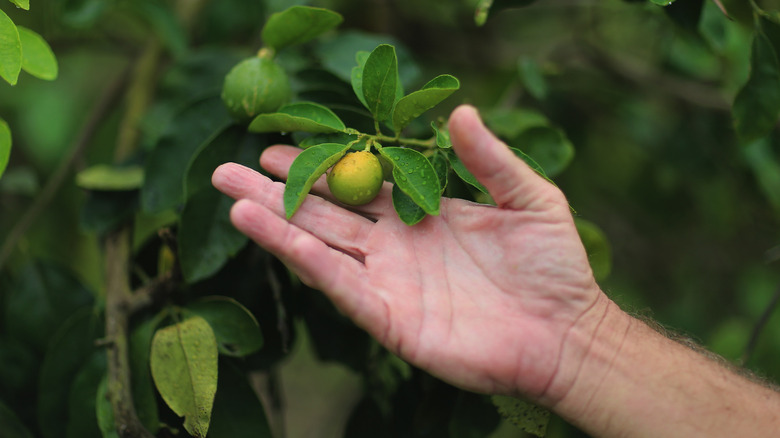
Once a tree has been infected with citrus greening, the tree has five years at most before it becomes completely unproductive or dies. In the meantime, the fruit it manages to produce becomes smaller, greener, and more bitter-tasting. By the time the disease has run its course, the entire orchard looks little more than a barren wasteland. There is no known cure, and preventative measures have proved difficult, leading many farmers to douse their crops with pesticides in the hopes it keeps the psyllids away. One method that seems to be gaining traction is to spray oxytetracycline (OTC) on the trees night and day. OTC is a tetracycline antibiotic prescribed by doctors for a range of diseases, including chlamydia and severe acne. Downstream effects of this practice are unknown.
What will happen to Florida's orange orchards?
Florida isn't the only orange-producing region facing this disease. When the Asian citrus psyllid arrived in Florida, the disease was already wreaking havoc across the globe, including in Vietnam, China, Indonesia, India, and Africa. Without a cure in hand, the devastation is likely to continue. As you might imagine, there's plenty of research money being invested in the hopes of finding a solution.
In the meantime, orchard acreage is rapidly diminishing as citrus farmers flee what they understandably perceive to be a dead-end profession. With all of their citrus trees either unproductive or flat-out dead from the disease, there's no real reason to stay. Once a cure is found or an effective preventative measure is established, things could turn around, but it's difficult to imagine a scenario where Florida will once again be the citrus powerhouse it was in the 20th century.
As citrus farmers sell their orchards and leave, developers are coming in with money to spare. Once that land has been cleared, paved, and built on, is there really any way we're going to see orange trees growing there again? Development is a one-way street. Even if the citrus greening problem is solved once and for all, the heyday of Florida's Valencia oranges may well and truly be over.