

How Many Onions It Takes To Make A Cup Of Caramelized Onions
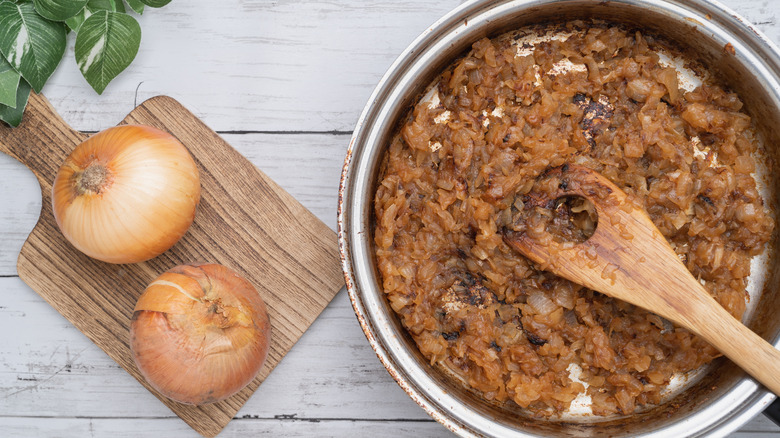
Sugary and super soft, caramelized onions are pretty much the polar opposite of their crunchy, pungent raw kin. In texture, flavor, and color, they are wholly different, but caramelized onions are still bold in their own way. That meaty, nutty, and sweet taste is unmistakable, and the concentrated onion flavor comes about, in part, because the onion's natural moisture is released and evaporates. This also means the bits of onion will shrink down, but how much does the volume actually decrease? To find out, we asked Dennis Littley, chef and culinary expert at Ask Chef Dennis.
"Generally, you'll use 2 to 3 medium onions to produce 1 cup of caramelized onions," Littley told The Takeout, indicating that you can expect the raw vegetables to reduce in size by about a third as they cook. "What was originally a full pan of uncooked onions eventually becomes much reduced after all of the water has evaporated and the natural sugars have concentrated," he explained.
The onions need to cook at a low temperature — browning and sweetening through caramelization and the Maillard reaction — for an hour or two, though there are tricks you can use to caramelize onions faster. Littley said that sweet onions soften more rapidly, while red onions tend to better maintain their structure. If you're trying to get that coveted cup of beautifully caramelized onions in a jiffy, Littley shared this guidance: "Thinner cuts will cook faster and will be easier to achieve uniform results; larger cuts will require longer cooking times and may add additional textures to your finished product."
Caramelize more onions than you think you'll need
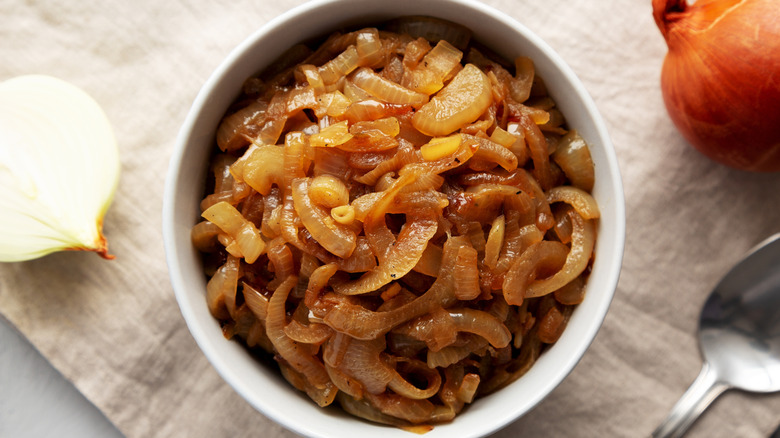
The estimate of three medium raw onions yielding 1 cup of caramelized onions is just that — an estimate. "Ultimately, every onion will caramelize if allowed sufficient time to develop the natural sugars," Littley explained. "However, the quantity of caramelized onions, taste, and intensity produced will greatly depend on both the type of onion and the consistency of slicing and cooking."
Just to be sure, Littley offered this suggestion: "Practically speaking, it's usually best to begin with more onions than you anticipate needing." Having more deliciously sweet and complex cooked-down alliums on hand is never a bad thing. Aside from using them in the recipe you prepared them for, you can throw any leftovers into an omelet, sandwich, or an easy onion dip appetizer. If you stash them in ice cube trays in the freezer you'll have perfectly-sized portions ready for when you think of even more delicious ways to use caramelized onions.