

The Secret Behind How Bartenders Make Drinks So Fast
On a busy night, your bartender is going to be juggling multiple drink orders at once, so when customers don't know their ideal martini order, service slows down — causing bartenders to pick up the pace. So how does a bartender move so fast? We asked Yu Jiang Zhao, the founder of Kobayashi Bar, how a good bartender can put together cocktails so quickly. The answer lies in efficiency.
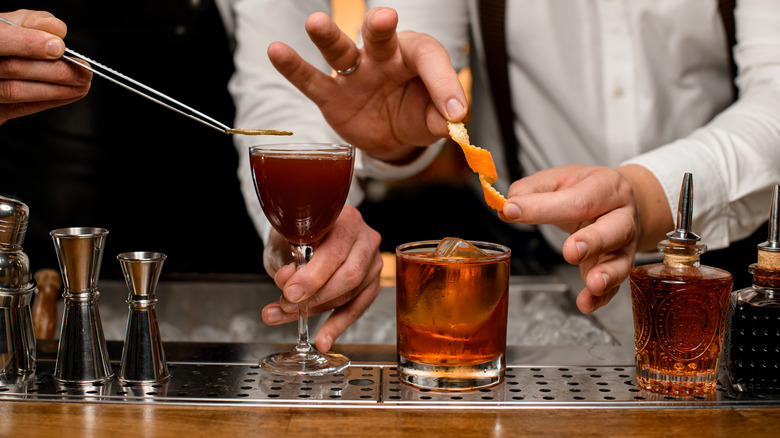
Zhao was clear that a fast-moving bar is the result of good tools that are properly prepared. "Before service starts, all stations in our restaurant are organized the same way: jigger/bar spoon in the bartender's dominant hand, shaker tin and Hawthorne strainer just one step away from the well, ice well topped up, citrus juiced and labeled, syrup portioned and poured into speed bottles, garnish prepared and covered."
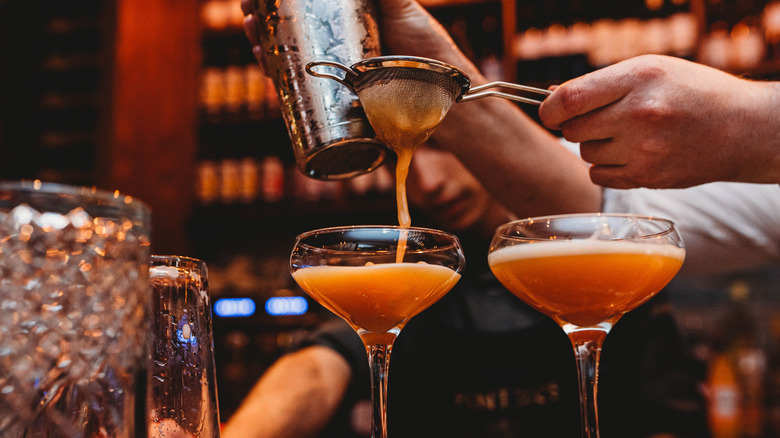
To help with that bartender lingo, a bar jigger is a tool resembling two metal triangles, which is both a measuring cup and a way to pour the liquor into the cocktail. The shaker is a specialized metal container for shaken-not-stirred cocktails like sours or some martinis, which would separate if they were simply stirred together. The Hawthorne is a disc-shaped cocktail strainer for filtering out fruit pulp and other solids from a drink. Having all of these tools at the ready helps a bartender juggle multiple orders on the fly.
Cocktail bartenders need tools and prep
It can be challenging for a good cocktail bar to move as fast as a quieter dive bar, where most customers simply want beers (not to say there isn't finesse required at these establishments, as there's a proper way to pour beer that you likely aren't doing). Zhao explains that there's less math and measuring involved with pouring beer or shots, compared to the many steps and several ingredients found on a full cocktail menu.
On top of getting bartending tools in order, there are plenty of other preparation steps that bar staff might perform before the regular crowd shuffles in to offset these challenges. According to Yu Jiang Zhao, "Craft bars can spend up to three hours preparing syrups, infusing, and slicing garnishes before service starts." This means every container of mixer should be refilled and topped off, and every lime should be sliced beforehand.
Bartenders need to be ready for specific call drinks and well drinks alike, and they need to have a firm command of where everything is behind the bar. The biggest risk for a bartender is often smaller problems piling up over the course of the night. "What causes the slow service is mostly small issues, not the drink itself, like running out of pint glasses, looking for a muddler, searching for a recipe, or being distracted due to the seven tickets up," Zhao said. In general, many bartenders will try to stay moving the entire time to ensure momentum doesn't shift during the rush.