

Say Goodbye To Bland Boiled Eggs With This Flavorful Technique
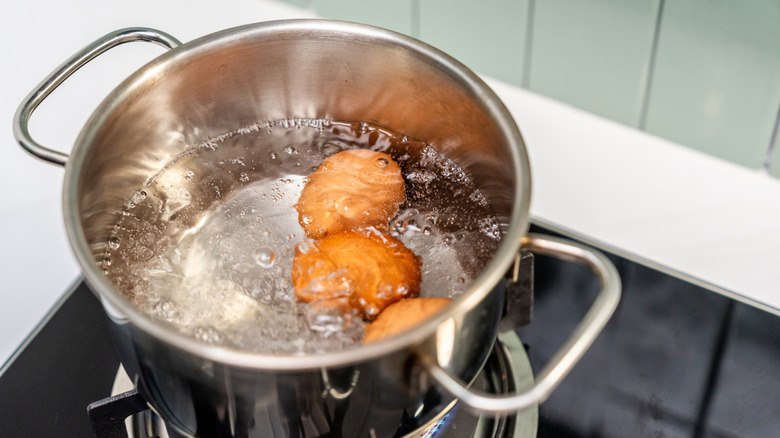
Eggs are great. They're essential to a variety of bakes, often a key ingredient for many breakfasts (like these high-protein burritos), and if you boil them, they even come in their own convenient packaging. The only issue? After eating hard-boiled eggs for a couple of days straight, they can get a bit boring.
According to Adam Gallagher, co-founder and recipe developer at Inspired Taste, it's easy to make boiled eggs more exciting. All you need is a good marinade, and when it comes to flavors, there's a lot of room for personal taste and cooking skills. Gallagher suggests a lightly spiced broth or soy sauce to keep things simple. "Garlic and herbs are all you need," he says. Other delicious marinades for eggs include Chinese spices and teas; dill, cloves, and the brine from pickled beets; or the fish sauce, herbs, and spices used for Vietnamese mayak eggs.
Once you've chosen your marinade, peel and submerge the eggs. Over time, the eggs will take on the liquid in which they're soaking. This gradually deepens their flavor, with maximum absorption happening between a few hours and a few days depending on your marinade.
Just be aware that tea eggs, eggs soaked in pickling brine from beets, and soy eggs will also change color during marination. Soy eggs, which are sometimes called ramen eggs, expand on Gallagher's soy sauce suggestion by combining it with salt, sugar, mirin, and vinegar.
Prepping and marinating your eggs

However, adding flavor to eggs can also be a little difficult due to their shells. "Because the shell is so surprisingly protective," Adam Gallagher notes, "flavored liquids typically don't penetrate the egg while cooking. There can sometimes be a subtle effect if the shell cracks slightly while boiling. Still, the insides usually stay pretty neutral." All this to say: If you want delicious soy or garlic and herb eggs, you need to deal with that protective layer.
Of course, Gallagher has some suggestions. When boiling the eggs, he says, "You can try water with a splash of vinegar or a pinch of salt." The former, in particular, should make it easier to remove the shells without destroying your eggs, as the acid softens the shells slightly. Cooling your eggs completely — first in an ice bath and then the fridge — may also help. Also, eggs that are a little older (ones that have been refrigerated for several days) tend to release their shells more willingly.
Although marinated eggs are usually ready to eat (and should be eaten) relatively quickly, some marinated eggs can last much longer. While a fresh batch of regular hard-boiled eggs will last a week in your fridge, soy eggs, for example, remain safe to eat for up to a month when kept refrigerated and in an airtight container. Admittedly, the whites may get a bit rubbery after a few days, but they're so delicious you probably won't keep them that long anyway.