

12 Grocery Staples Boomers Bought For Cheap (That We Now Pay A Lot More For)
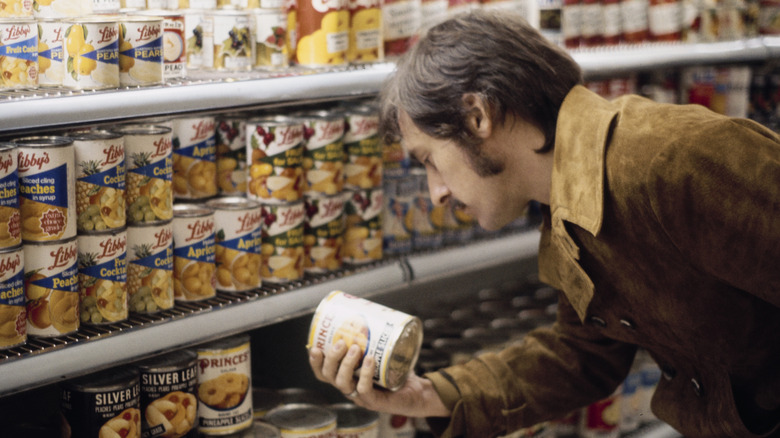
The Baby Boomer generation started buying groceries for themselves from about the mid-1960s to the mid-'80s. That's the period in which Boomers started entering their twenties, which is a significant stretch of time in itself. Younger Boomers would have seen significant price differences in products than what elder Boomers were used to — let alone the contrast between their era and the current era of shopping.
But it's easy and misleading to take a superficial look at supermarket prices from past decades and assume it was all just dirt cheap. (Less than a buck for a gallon of milk! Candy bars for 10 cents!) That's where our old frenemy inflation comes into play. A dollar today does not hold the same value as a 1976 dollar, especially when you consider the average household income in 1976 was only around $14,000 a year (nowadays it's around six times that much).
Still, even after taking inflation into account, some shopping items were just easier on the wallet for working-age Boomers than they are for contemporary working-age Millennials and Gen Zers. Let's take a dive into some of those products and, if you have the stomach for it, see how inexpensive basics like coffee, flour, produce, and meat once were. Maybe Boomers didn't know how good they had it. Maybe they're just ignoring us completely while they golf and watch "Blue Bloods." Either way, here are 12 grocery staples Boomers bought for cheap that ain't so cheap anymore.
1. Chuck roast
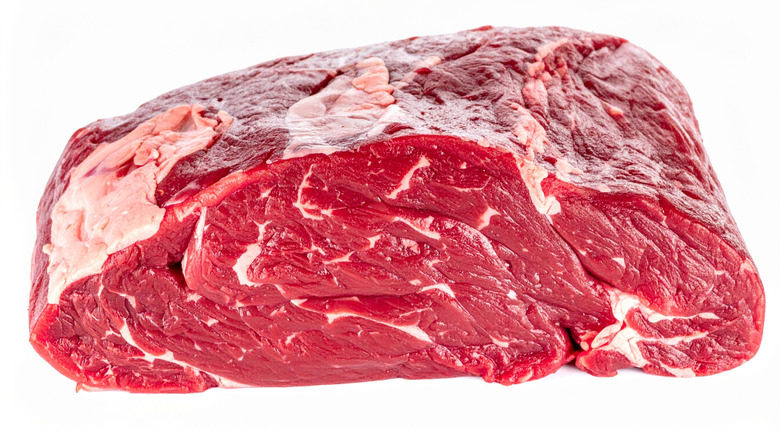
A cut from the cow's shoulder, chuck roast has been an inexpensive slab of beef for many a hungry family. Requiring patient, moist cooking techniques to break down the connective tissues, chuck roast tenderizes when stewed, braised, or prepared in a slow-cooker (although some experts think your best approach to chuck roast is a pressure cooker).
It's a popular cut of meat for that classic, Boomer-era dinner, the pot roast. And it's easy to see why pot roast was in a lot of Boomer meal rotations. In 1972, you could buy chuck roast for 65 cents per pound. Taking into account inflation, that equals about $4.50 in today's money. Not a bad deal for something that could feed a family.
As of 2025, in contrast, chuck roast will run you about four dollars more than the inflation rate per pound: roughly $8.50. Sure, that still makes it way cheaper than a ribeye or New York strip in the meat section, but it costs shoppers today effectively double what it did more than 50 years ago.
2. Coffee

No, it's not just you. Coffee prices have risen. It's difficult to find a decent package of beans or grounds at the supermarket for less than $10 these days — and even that's pushing it. But what are you supposed to do, not drink coffee? Absurd. After all, revolutionaries didn't throw coffee into the Boston Harbor, did they? (If it was a coffee, we might still be part of the British Empire.) We love our daily cup of joe, just as our Boomer forebears did. But what did it cost them?
You could get a pound of coffee in the early 1970s for around 66 cents. Inflation makes that the equivalent of a little over $4.50 today. Granted, there wasn't the selection in supermarkets back then that there currently is — probably little more than Folgers, Maxwell House, and the like. Even Café Bustelo would've been something exotic and possibly fear-inducing to many Americans.
Regardless of brand diversity — or maybe because of — in 2026, a pound of coffee costs, on average, about $9.60. That's a lot of beans for some beans. Coffee may have been a less complicated enterprise decades ago, but it was also a lot cheaper.
3. Broccoli
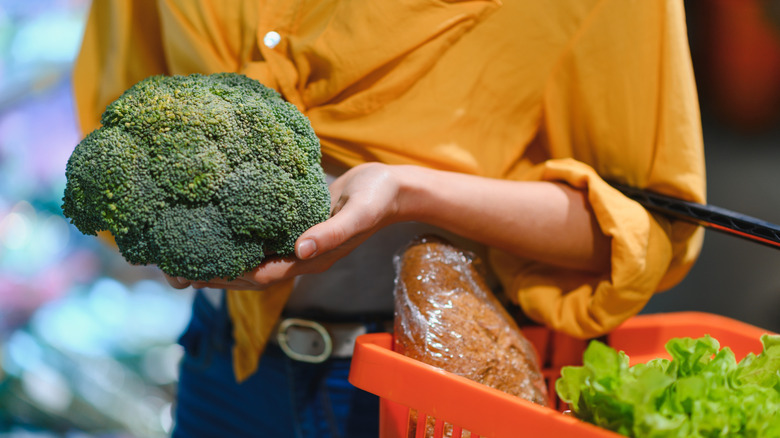
Whether it's Boomer or Millennial parents, the struggle to get your kids to incorporate broccoli into their diets seems to be a timeless one. Despite broccoli's potential to make dreamy pastas and solid stir-fries, tricks, deception, and obfuscation seem to be the modus operandi for family mealtime with the staple green. The two generational sets of parents have this in common. What they don't have in common is the price they pay for the cruciferous veggie.
Boomers were set back about 40 cents per pound of broccoli in the 1980s. A quick detour to an inflation calculator equates that amount to $1.22 in 1985. The going rate for broccoli at Walmart, at time of writing, is $2.17 per pound. That's nearly a dollar difference per pound when inflation is taken into consideration — if you're buying it from the biggest retailer in America.
You may not realize this when perusing the produce section, as broccoli feels like one of those food items we take for granted. But today's shopper is dropping a lot more dough on it than their parents or grandparents did. So, next time you're holding a head of broccoli, try not to get caught up in the irony of how much green is in it.
4. White flour
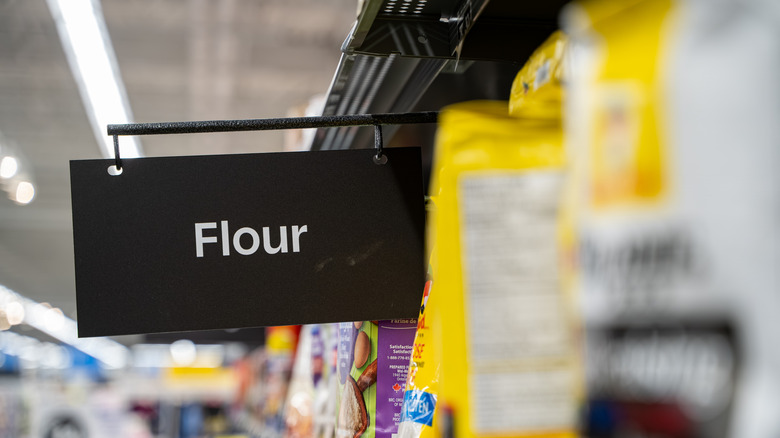
All-purpose flour is one of those grocery store buys that's grabbed unthinkingly and seldom wrestled over. You need a sack of Gold Medal and you toss it into your cart (gently, please), no questions asked. It was certainly no-different for Boomers, especially when you consider how much cheaper white flour was for them. And it's not that it'll break the bank nowadays. It's just that, back in the day, it barely even touched the bank.
Until around 1986, a pound of white flour was selling for as low as 20 cents on average. It must have been great to hand a cashier a quarter and actually get change back. Adjusting for inflation, that 20 cents equals only 60 cents in 2026 moolah.
Problem is, if you hand a 2026 cashier 60 cents and walk out of a store with a pound of flour, you might get apprehended for shoplifting. Because the going rate for Gold Medal now is roundabout $1.50 per pound — although you can find it for less if you're grabbing generic brands. Still, chalk up another W for the Boomers in the cost-saving column.
5. Bacon
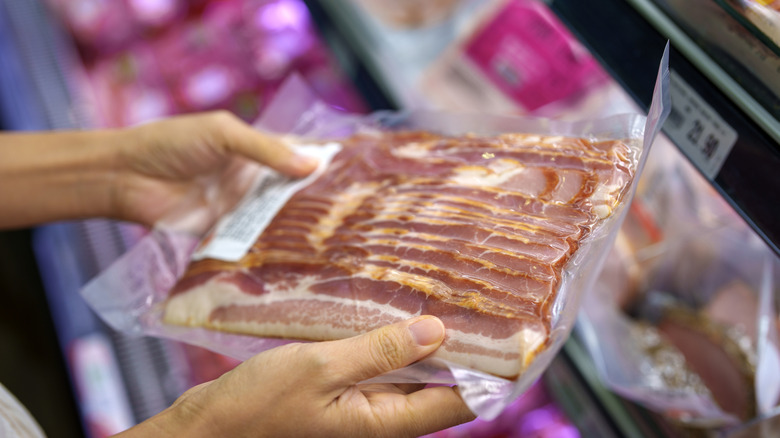
Bacon never seems to go out of fashion, and it probably never will. Some half-AI humanoid will be writing this same article 40 years from now, talking about how little this generation had to pay for bacon back in 2026, and how bacon wasn't even adapted for robot stomachs yet. It's easy to look back and lament. Anyway, on to looking back and lamenting — at how much Boomers had to pay for bacon in their day.
In 1972, you could buy bacon for around 80 cents a pound, and that's on the high end. By 1980, the average price was $1.40 per pound. Fast forward to 2026, and we're looking at a mean cost of $6.80 per pound. Taking into account inflation, this is still sniffing close to a dollar more per pound.
The younger generations of bacon-eaters may have an advantage over the older generation as there are many more ways bacon is now utilized. But that's probably where the Boomer envy stops, as it used to cost almost 20% less out of their pockets on grocery trips. You can keep your bacon shortbread cookies, they'd probably say. They'll take their bacon no-frills while keeping their saved, inflated dollar. Can't blame them.
6. Ground beef
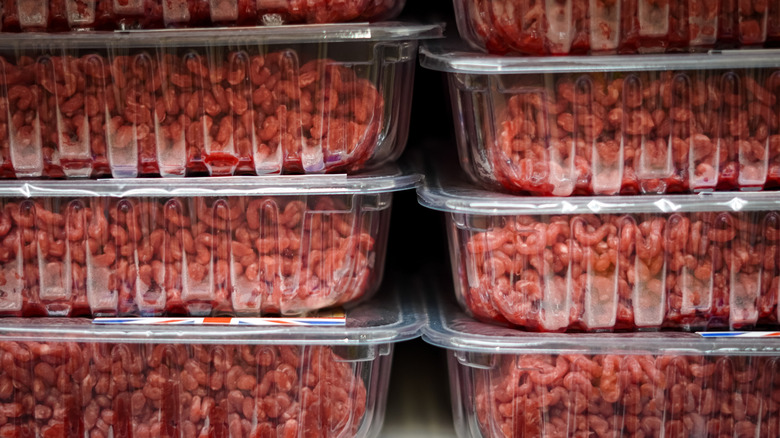
It seems like if you're out of ideas for dinner (and you're not vegan or vegetarian) you can always just do something with ground beef. Pastas, burgers, rice bowls, tacos, sandwiches, all can be fashioned from minced cow meat. It was a go-to for Boomers and it's a go-to now. One big difference: Boomers were dropping a lot less cash on the stuff.
Accounting for inflation, a pound of ground beef cost the average shopper a little over $4 a pound in 1984. Again, that's the inflation total. (The actual cost was around $1.27 — which is a number that should immediately be ignored as it might hurt your brain.) And Boomers took advantage, evident in their heavy reliance on beef stroganoff as an all-too-common, affordable meal. Hey, if it was good enough for pre-Soviet Russian elites then it was good enough for American families in the 1980s.
What's the average retail price of a pound of ground beef in 2026, you ask? Answer: $6.70. That's almost three inflation-adjusted dollars more than Boomers shelled out. What happened? Have cows acquired agents? What was once an extremely cost-effective protein that needed little thought put into its purchase, now prompts humming and hawing in the meat section. At least now you can also curse out Boomers under your breath too.
7. Corn on the cob

If Boomers knew how much much corn on the cob would cost in the future, they might have hoarded crates of the husked, yellow starch and cryogenically frozen them in remote bunkers. True, the time, cost, and energy involved in such an endeavor might have canceled out the eventual price difference between 2020s corn and 1970s corn, but hey, Americans have wasted money on more ridiculous things.
In 1972, an ear of corn cost a miniscule five cents. And miniscule is not a qualified term. Even calculating that cost through 50-odd years of inflation, it still works out to only 40 cents an ear. Name a single thing you can buy for 40 cents right now. Anything. It doesn't even have to be edible. Go ahead, we have time.
What does an ear of corn actually cost you at, say, Walmart in 2026? At time of writing: $1.25. That is more than 300% the Boomer-age price, if percentages are your thing. If it isn't, that's okay, because percentages can be downright frightening. Try not to focus on that. Just enjoy the many different ways you can cook sweet, delicious corn on the cob.
8. Milk
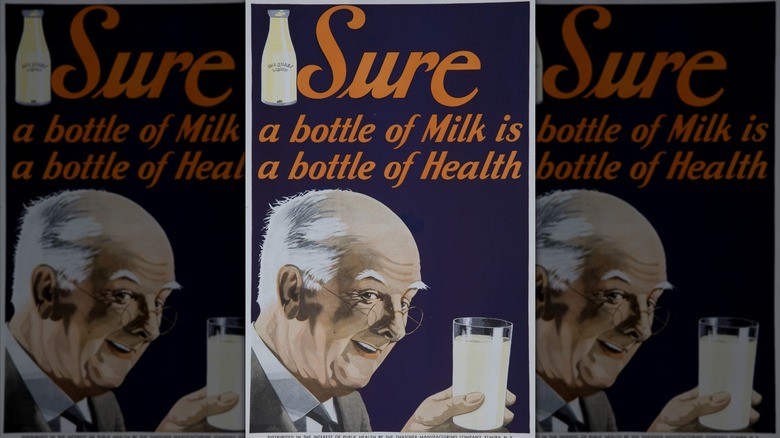
Because of the frequency with which Boomers drank milk – often with every meal of the day, especially for those born in the 1960s — it's easy to think that they were a generation representative of an even older habit. Truth is, that level of milk consumption is unique to that age group, thanks to a post-Great Depression campaign push by the American government.
The drinking of whole cow's milk has certainly dropped in the subsequent decades due to younger generations' nutritional attitudes and the many non-dairy alternatives on grocery store shelves. Yet, people are still buying classic milk, and they are paying the price. At least in comparison to their predecessors. The average cost of a gallon of milk in 2026 is a little over four dollars. In 1980, it was below 90 cents. What does that come out to in today's dollars? You might not want to know.
Although, since you're reading this article and made it this far, you probably do want to know. Even adjusted for inflation, that 1980 gallon of milk only costs about $1.24. Ouch. There may not be any use crying over spilled milk, but it's probably the Boomers that invented that expression.
9. Cantaloupe
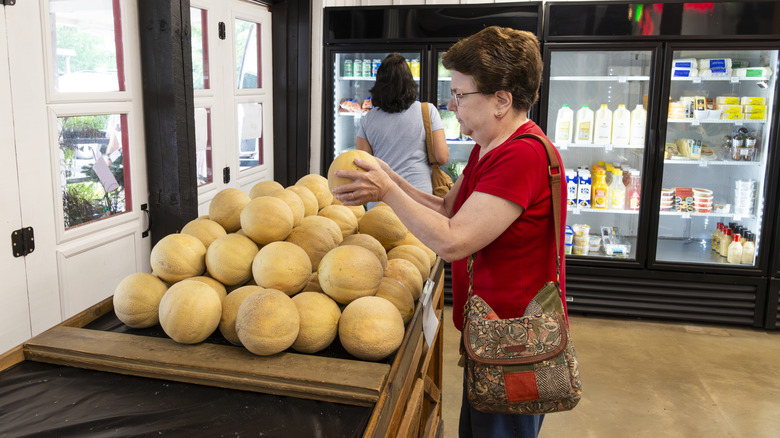
Cantaloupe is a bit of a divisive fruit. Not because of its politics or anything. Mainly because there are a number of missteps one can make when trying to buy cantaloupe. Plus (and this opinion is admittedly subjective though not isolated), the orange-meated orb with the frankly odd, dinosaur-like scaly skin often pales in comparison to honeydew when it comes to sweet delectability — despite the former's ubiquity in fruit salads and the like. Why do you think heavy hitters like prosciutto have to come in and save it sometimes?
Regardless, cantaloupe often greatly outsells honeydew and many other melon varieties in the U.S. Those buyers today might not be aware — whilst they're fondling, knocking, and listening (?) to find the ideal cantaloupe in the produce section — that Boomers were paying significantly less for the popular melon back in their day.
In the early 1970s, cantaloupes were going for about 11 cents a pound. That works out to an inflation-considered sum of 88 cents. A 2026 cantaloupe, per pound, can range anywhere from $2 to as high as almost $4. And forget if you want to buy it pre-sliced, then you're looking at close to $5 a pound. Although, you do avoid the ripeness guessing game that way.
10. Chicken
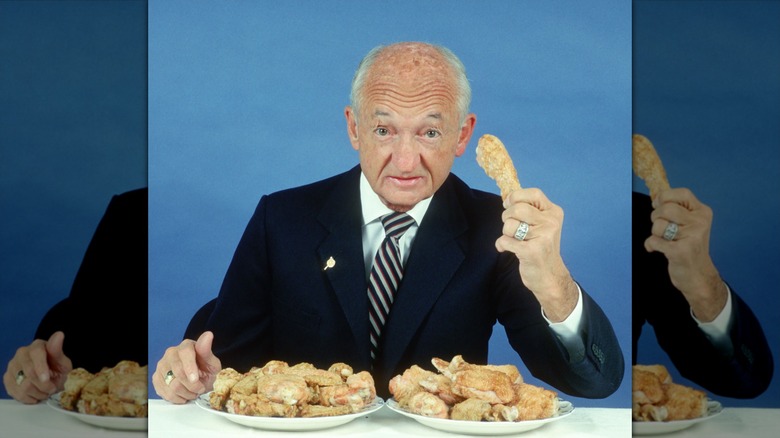
Chicken has long been seen as a budget-friendly meat, especially when compared to beef and pork. This hasn't always been the case, even in relatively recent times. Prior to the mid-20th century, people ate an average of about six chickens a year. It was mostly a meal for Sunday roasts and special occasions.
Thanks to the mass industrialization of chicken-farming, however, Americans were annually eating about 30 pounds of chicken each by the mid-1960s. By the 2020s, 8 billion chickens a year were consumed in the U.S. (Sorry, chickens.) Both Boomers and today's gens enjoy the clucker — but who paid, or is paying, less for it in the grocery store? Spoiler alert due to the very title of this article: it was the Boom-Boom crew.
In 1975, you could buy chicken for as low as 53 cents per pound. Add a half-century or so of inflation to that, and you're looking at a still-reasonable $3.36 per pound. In 2026, the average price of boneless chicken breast, per pound, is around $4.17, though it's been as high as almost $5 as recently as 2022.
11. Potatoes
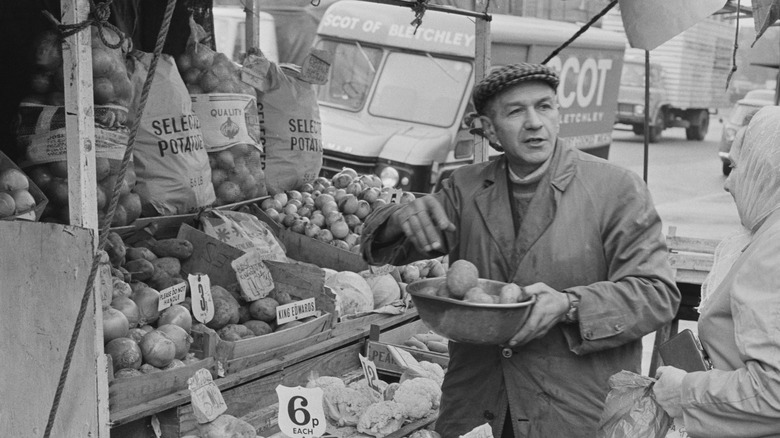
Next time you meet an ancient person from the Andes, give them a big, hearty thanks. The South American mountain range is where, thousands and thousands of years ago, potatoes were first cultivated. Can you imagine a world without potatoes? Most of us can't. The Irish even left Ireland because they ran out of potatoes (not that the English helped). Generations upon generations have realized there's nothing the potato can't do (including be an actual freaking battery). This appreciation certainly extends to Boomers, and they paid a good deal less for it than folks nowadays.
Although the average cost per pound of potato has gone down from recent highs of $1.09 in 2023, it still runs about 85 cents in 2026. By comparison, the mean retail price in 1986 was around 20 cents a pound. Even with inflation that shakes out to only 63 cents in current money.
That worked for Boomers, since they were extremely reliant on spuds. What's more Boomer than a side of mashed potatoes? They paired it with everything. Boomer moms would literally just dump mashed potatoes on their toddler's high-chair tray and let the kiddo go to town. And, according to "Close Encounters of the Third Kind," they could even be used to model alien-visited geological structures. Again, what can't they do?
12. Eggs
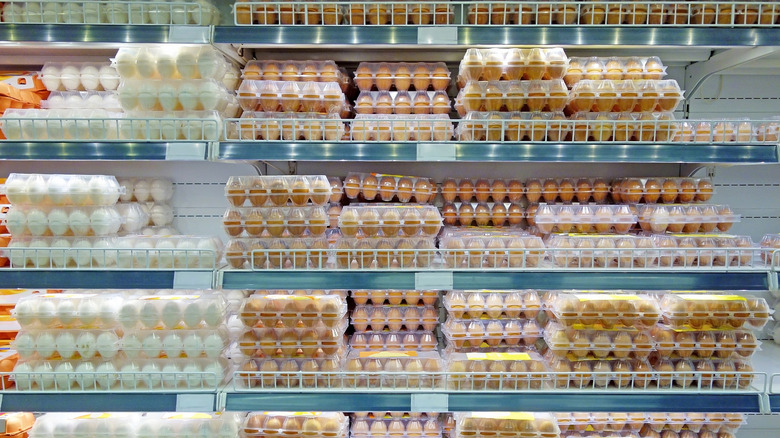
There's a bit of a caveat with this entry, but it's a caveat that comes with a caveat. Yes, egg prices have, thankfully, gone down since the absurd cost heights of 2025. It's not that difficult now to find a dozen eggs (at least the non-organic variety) for less than $2 – especially if it's at a large grocery retailer. In fact, the average price of an egg carton in the U.S., as of March 2026, is around $2.35.
But as mentioned, it was only a year before that the average price soared to an eye-watering $6.23, due to the avian flu and, ahem, shameless price-gouging by major producers like Cal-Maine. And if there are two things that we know will never really go away in the world, it's disease and human greed. (Depressed yet?)
In comparison to those potential cost hikes, Boomers had it pretty good when it came to eggs, especially the younger class. In 1988, the average dozen retailed for less than 75 cents. That works out to below $2 through the lens of inflation. So, even in the current best of egg times, there were Boomers that had it better. Yay, them.