

Yes, Bananas Are Radioactive — But They're Still Safe To Eat
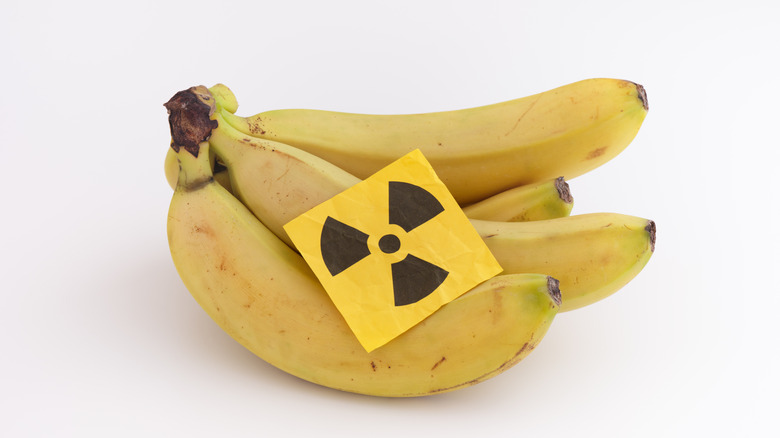
If bananas are a staple of your diet, you're probably aware of the biggest red flags to avoid when picking them at the store. As it turns out, radioactivity isn't one of them — at least not with the low amounts of that energy found in bananas. No, your bananas weren't involved in a nuclear disaster, either. One of the key elements in bananas, and one of the main reasons people eat them, is potassium, which also makes them radioactive.
A small amount of the potassium found in bananas is the radioactive potassium-40 isotope. This radioactive potassium exists because, like everything else, the potassium element is made up of atoms. Over time, atoms decay, and in doing so, release radiation. However, only a very small amount of the atoms in potassium are radioactive — around 0.012%.
Depending on the size, a single banana contains around 0.1 microsievert of radiation. A microsievert is the unit used to measure levels of radiation absorbed that are harmful. To put that number into perspective: Experiencing one day on Earth will expose you to the same amount of radiation as found in 100 bananas, and if you travel, the airport security scan will add an additional 2.5 bananas on top. The number of bananas needed for fatal radiation levels is 100 million. So, yes, it's still safe to enjoy this delicious fruit.
Radiation exposure can happen in a variety of ways
Other ways foods like bananas can gain radiation are through outside factors, like radioactive air particles coming into contact with the food as it grows, or through the roots absorbing radiation from the soil. Really, the main thing to be worried about is what to add to make banana bread better.
Besides, bananas aren't the only radioactive thing in your kitchen. The potassium in Brazil nuts makes them another mildly radioactive snack. And while not a snack in the literal sense, humans emit radiation as well. Eight hours of sleep next to another human will generate the same amount of radiation as the same as 1 ½ bananas due to the radiation generated by potassium in our bodies.
It's also good to keep in mind that radioactivity in foods isn't the same as irradiation. Irradiation is a cleaning process used by food manufacturing facilities to eliminate bacteria and other unwanted substances by using a radiation beam. This cleanses the food without directly exposing it to radiation. So while you might be cooking with irradiated meat, don't panic, because it's as safe to eat as a bunch of bananas.