

You're Using The Wrong Mustard For Potato Salad — Here's The Best One
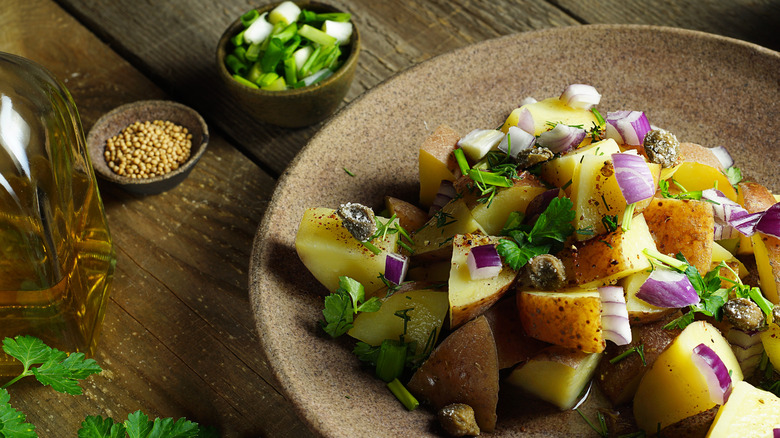
Mustard does a great job of enlivening a lackluster potato salad, bringing a touch of heat and piquancy to the classic, creamy side dish. But if you always find yourself reaching for the same mild yellow mustard, you might want to raise your game and try something a little bolder. The Takeout asked Joanne Gallagher, co-founder and recipe developer at Inspired Taste, for her expert advice on the matter.
While Gallagher appreciates what both yellow mustard and whole-grain can offer potato salad in terms of taste and texture, she prefers to use Dijon — which also happens to be the condiment Alex Guarnaschelli can't live without. "You'll want a complementary mustard, not a dominating one," Gallagher told us. "Dijon is my favorite type of mustard for potato salad because of its smoothness and tang. I love how it adds depth and a perfect golden color without overwhelming the recipe."
What sets fancy French Dijon mustard apart from its yellow American counterpart is the ingredients. The yellow variety is made from yellow mustard seeds that have been ground into a powder, along with vinegar and spices. Dijon is made from crushed brown and sometimes black mustard seeds and also includes white wine. This gives it an elegant complexity — bright yet less obviously acidic than yellow mustard — which serves to enhance and elevate even the most basic potato salad. "It'll add just enough sharpness to balance out all of the creamy elements, letting those potatoes shine," explains Gallagher.
Balance the flavors for the best Dijon-dressed potato salad
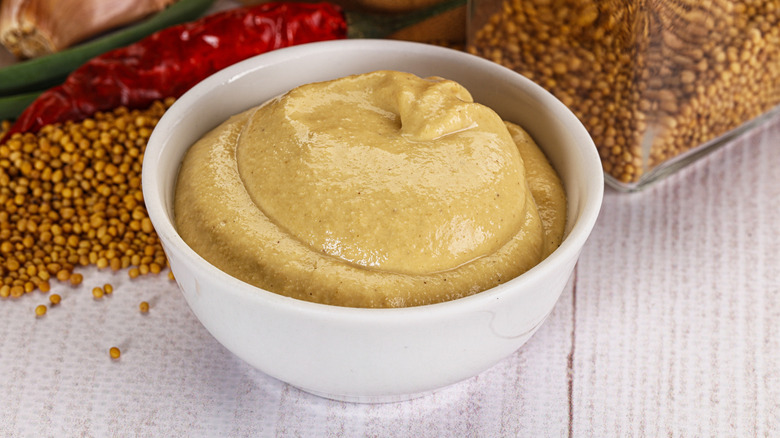
While tubers are obviously the main component — Yukon Golds are considered the best potato for potato salad — the other ingredients matter. The dish is all about striking a balance between creaminess, tang, and subtle heat. So if you're switching your usual mustard for robustly flavored Dijon, should you adjust your usual recipe? "Absolutely, because different mustards bring different strengths and acidity," explains Joanne Gallagher. "Always start small, tasting as you go. You'll probably need less Dijon than yellow mustard, for example."
If you find that the flavors are a little out of sync when using Dijon, then it's easy to restore equilibrium. "Tweak it with a splash of vinegar or a bit of sugar to keep everything balanced," suggests Gallagher. Fancy extra umami depth to your dressing? Try stirring grated parmesan into your mayo, cider vinegar, Dijon mustard, salt, and spices or switch the mayo for tahini for a rich, nutty dressing that goes great with earthy Dijon.
If you prefer a mayo-free dressing for potato salads, you can still use Dijon to amp up the flavor. The mustard works perfectly in a French-style vinaigrette with olive oil and wine vinegar. You could even add a splash of white wine to really complement the wine-spiked Dijon; Ina Garten is a fan of making potato salad this way. Additionally, Dijon mustard is especially good at emulsifying the oil and vinegar, so there's no need to worry about it splitting.