

Your Scrambled Eggs Are Being Held Back By One Temperature Mistake
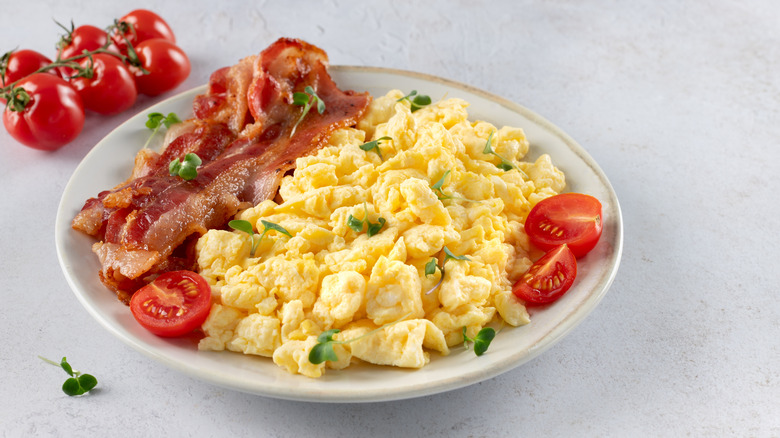
What's the key to the ultimate brunch? A great plate of scrambled eggs. We aren't knocking other brunch dishes, mind you. Cinnamon rolls and frittatas are also essential. But no number of mimosas can make guests forget soggy, flat, or overcooked eggs. And in our mission to make the best scramble, we've tried plenty of tricks for the fluffiest scrambled eggs and investigated how to make luxurious eggs in 40 seconds. We've noticed one thing that almost all those hacks have in common — a heated stainless steel or cast iron pan. Its importance was explained to us in our exclusive interview with restaurateur and content creator Chef Billy Parisi.
"It's important to make sure your pan is properly heated," says Parisi. "You don't want to add cold or room temperature beaten eggs to a cold pan." Heat causes the proteins and compounds in raw eggs to unravel and then bond and rearrange themselves — ultimately solidifying the gelatinous egg whites and runny yolk into opaque, scrambled eggs.
But if you heat eggs for too long, the proteins create far too many bonds and turn your eggs rubbery or gray. Starting with a hot pan ensures that this chemical transformation starts immediately, and lessens the chance for overcooking. High heat also converts water in the beaten eggs to steam, creating that signature fluffy texture.
Preheat stainless steel pans for 1 to 2 minutes over medium heat and test for the right temperature by adding a dash of water. If it balls up into droplets and then evaporates quickly, the pan is ready. It'll take a little longer for cast iron to heat up — about 3 to 5 minutes. Look for a little smoke coming off the pan to show that it's ready for action.
More tips for the perfect plate of scrambled eggs
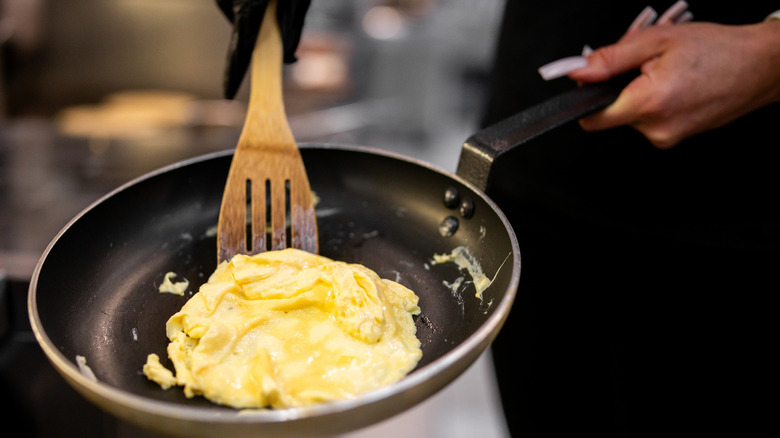
A hot pan starts scrambled eggs in the right direction, but your eggs will dry out if you blast the heat for their entire cooking time. Once the pan is hot, turn the burner down to medium or low and then add the eggs to prevent them from turning into a rubbery, overcooked mess. For the rest of the cooking process, you can use the heat in different ways to achieve different results.
Gordon Ramsay removes the pan from the heat at 20-second intervals to make perfect scrambled eggs every time. Adam Richman takes them off heat entirely while they're still just a bit raw to prevent overcooking, while Andrew Zimmern's secret for perfect scrambled eggs relies on keeping the heat at its lowest setting throughout the cooking process. The way you stir your eggs impacts the texture as well. More frequent stirring will create fluffier and more textured eggs, while fewer stirs make more uniform eggs, but also ones that can end up on the dry side.
How you prep your eggs impacts the flavor and texture as well, and Chef Billy Parisi says his egg-beating process involves an extra step. Parisi puts his eggs through a strainer after they've been scrambled to make them even more velvety and smooth. He also says you'll give yourself a couple of tiny advantages if you use room temperature eggs. "One, they will cook slightly more quickly," he says, "And two, they will emulsify better if you are mixing them with things like milk or cream."