

Never Overcook A T-Bone Steak Again With This Cooking Method
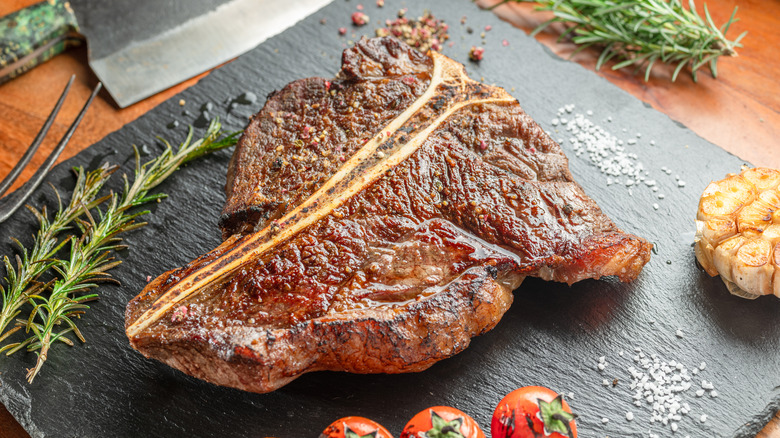
A T-bone steak is a thick cut of beef, to the point that it's often considered two different cuts combined into one massive T-shape. Split it apart and you'll have both a New York strip and a tenderloin. Being such a heavy, fatty cut, it's challenging to cook and takes a while before it's ready. This leaves a lot of time to overcook by accident, which is daunting for such a popular, expensive cut of meat. Some chefs suggest that cooking a T-bone via sous vide can be easier, but will this get you a good quality steak at the end? We asked chef Sam Hazen, the executive chef at Palladino's Steak & Seafood.
Although he clarified that sous vide is not how he personally prefers to cook steak, Hazen said, "It's a great method for thicker cuts like rib eyes, T-bones, and cowboy chops. Sous vide will ensure perfect cooking from end to end and prevent overcooking. It also simplifies the process by only having to do a final fast sear on the outside for a great crust." Due to the extremely precise way that sous vide cooks steak, the harder-to-reach insides of a thick steak will be evenly cooked just like the exterior. If you've never given it a shot, sous vide cooking really is for everyone and it's less fancy than it sounds: The term simply refers to placing food in a sealed bag and submerging it in water while lightly cooking it.
Sous vide that T-bone steak for precision
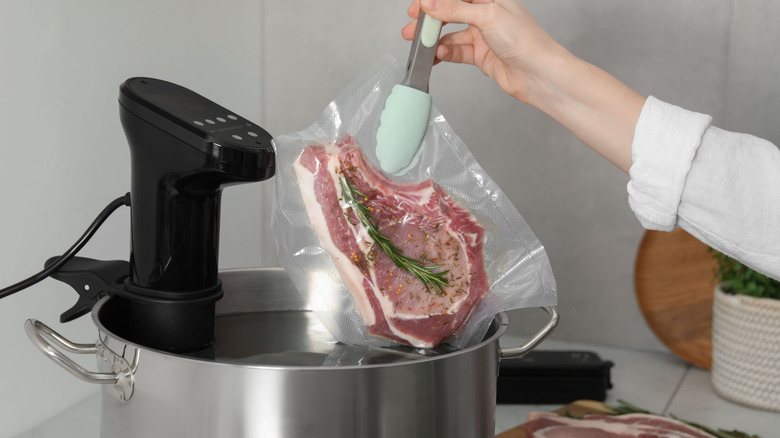
The benefit of a sous vide machine is its precise control thanks to an immersion circulator which keeps the water at a steady temperature. Because of this, the steak can't surpass the water temperature, which helps immensely with overcooking. You should use sous vide to cook thick steaks because this method of vacuum sealing the steak allows it to retain its juices (they can't escape by steam when inside an airtight bag), helping it come out tender. You can sous vide a T-bone at 130 degrees Fahrenheit for a couple of hours for a decent, medium-rare steak.
You'll still need to sear the T-bone, but this can be done in just a few minutes afterward. Hazen did share a few downsides, though: "[Sous vide] takes a significantly longer cooking time, about one to three hours. You also need certain equipment, and you lose that natural pan sauce plus flavoring as well." To that last point, you can season or brine the steak while cooking sous vide, meaning the seasonings can go into the bag with the meat.
Sous vide is possible without a special machine, but it's riskier and you have to stay vigilant. This cooking method requires a certain level of precision to ensure the steak is heated correctly to avoid over- or undercooking. The best alternative is cooking the T-bone in a skillet, but then you'll have to make sure you don't burn it.